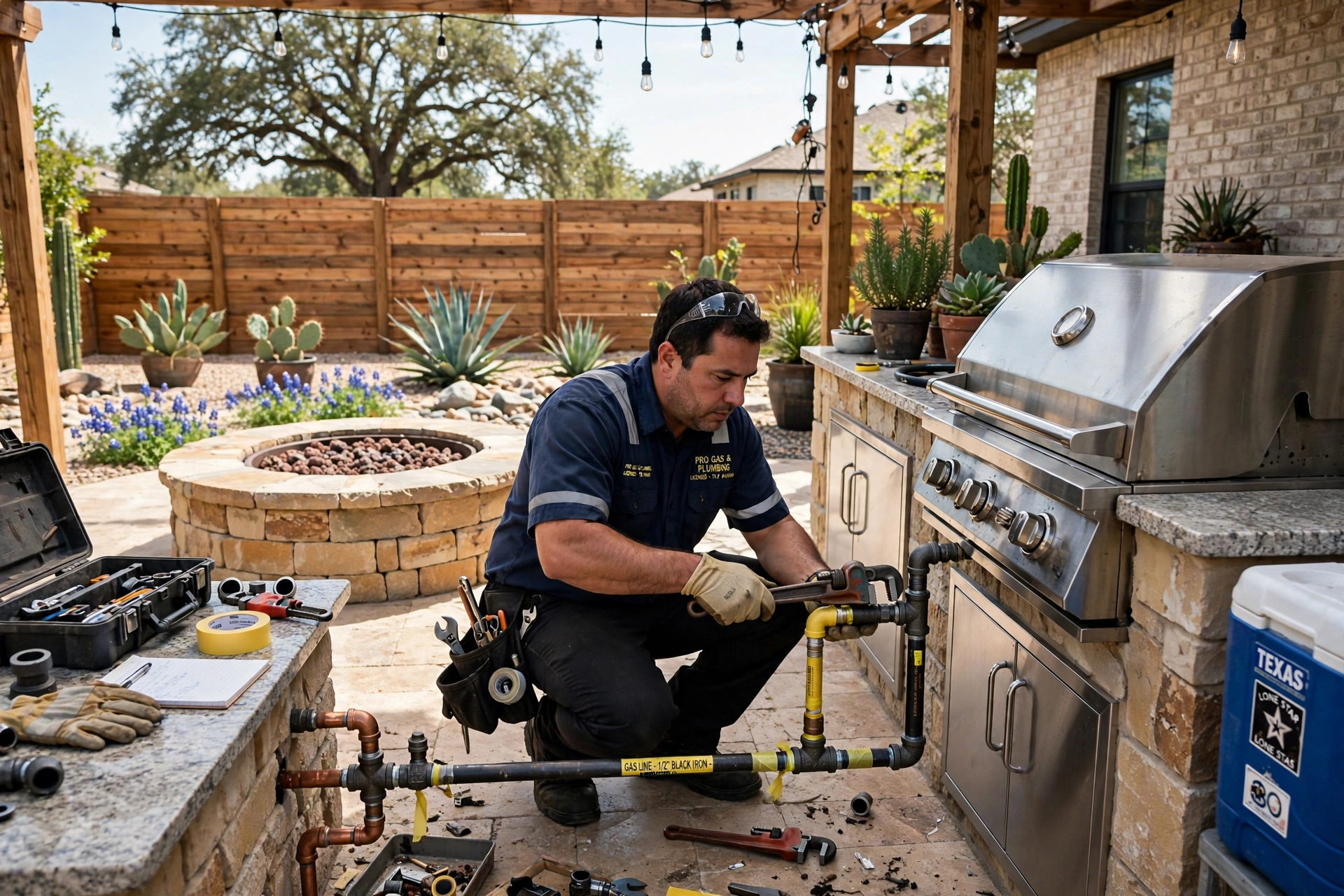
Gas Line Repair Leander TX
Get Estimate

Gas Line Repair in Georgetown, Texas

Georgetown's gas story is written in its housing stock: pre-1970 homes around the historic downtown Square still running on original black-iron gas lines, now corroded after half a century; mid-century neighborhoods where galvanized pipe and outdated appliance connectors are the norm; and fast-growing areas north along I-35 — Wolf Ranch, Sun City — where newer homes add outdoor kitchens, pools, and fireplaces to the gas load. Underneath it all, Central Texas clay swells with the rains and shrinks through drought cycles, shifting foundations and stressing every rigid joint. Gas Line Repair Leander TX handles gas line repair, leak detection, installation, and inspection across Georgetown — for historic homes, family neighborhoods, and the businesses that serve them.

Get a Free Estimate Call Us Now
Serving Georgetown & Williamson County Emergency Service Available Residential & Commercial
Local Service Georgetown & Williamson County
Fast Scheduling prompt appointments
Emergency Help Gas leak response available
Careful Workmanship Work done to local code requirements
Gas line repair in Georgetown

Why Choose Gas Line Repair in Georgetown?


Georgetown is the Williamson County seat, and its gas piping reflects well over a century of building history. Around the historic downtown Square — with some of the oldest commercial buildings in Central Texas — and through Old Town's pre-1970 neighborhoods, original black-iron and galvanized gas lines have now spent half a century or more in our humidity, and corroded joints, thinning walls, and outdated appliance connectors are the norm rather than the exception. Much of the city's rental housing dates to the same era, and deferred maintenance means we often find slow leaks that have gone unnoticed for years. Meanwhile Georgetown keeps growing north along I-35: Wolf Ranch, the Sun City Texas community, and the subdivisions filling in around them bring newer CSST piping and a different kind of gas work — outdoor kitchens, pool heaters, and fire pits adding load the original lines were never sized for. Under everything, Central Texas clay swells with the rains and shrinks through drought cycles, shifting foundations and stressing every rigid joint. From the San Gabriel River corridor to the neighborhoods around Southwestern University and Inner Space Cavern, we plan every repair around those realities — the right pipe material for the soil and exposure, proper sizing for the appliances served, and testing that confirms the system is sound before we leave.

  • Historic-home expertise: pre-1970 black-iron and galvanized systems around the Square
  • Fast diagnostics with written estimates before any work starts
  • Work planned for clay soil, drought cycles, and aging materials
  • Serving Old Town, Wolf Ranch, Sun City & the San Gabriel corridor

Gas Line Repair Services Available in Georgetown

Georgetown needs several kinds of gas work at once: careful repair for pre-1970 piping around the historic Square and Old Town, inspections for buyers and landlords dealing with aging rentals, and new gas runs for the outdoor living that Wolf Ranch and Sun City homeowners expect. These are the services we provide across Georgetown and nearby Williamson County.

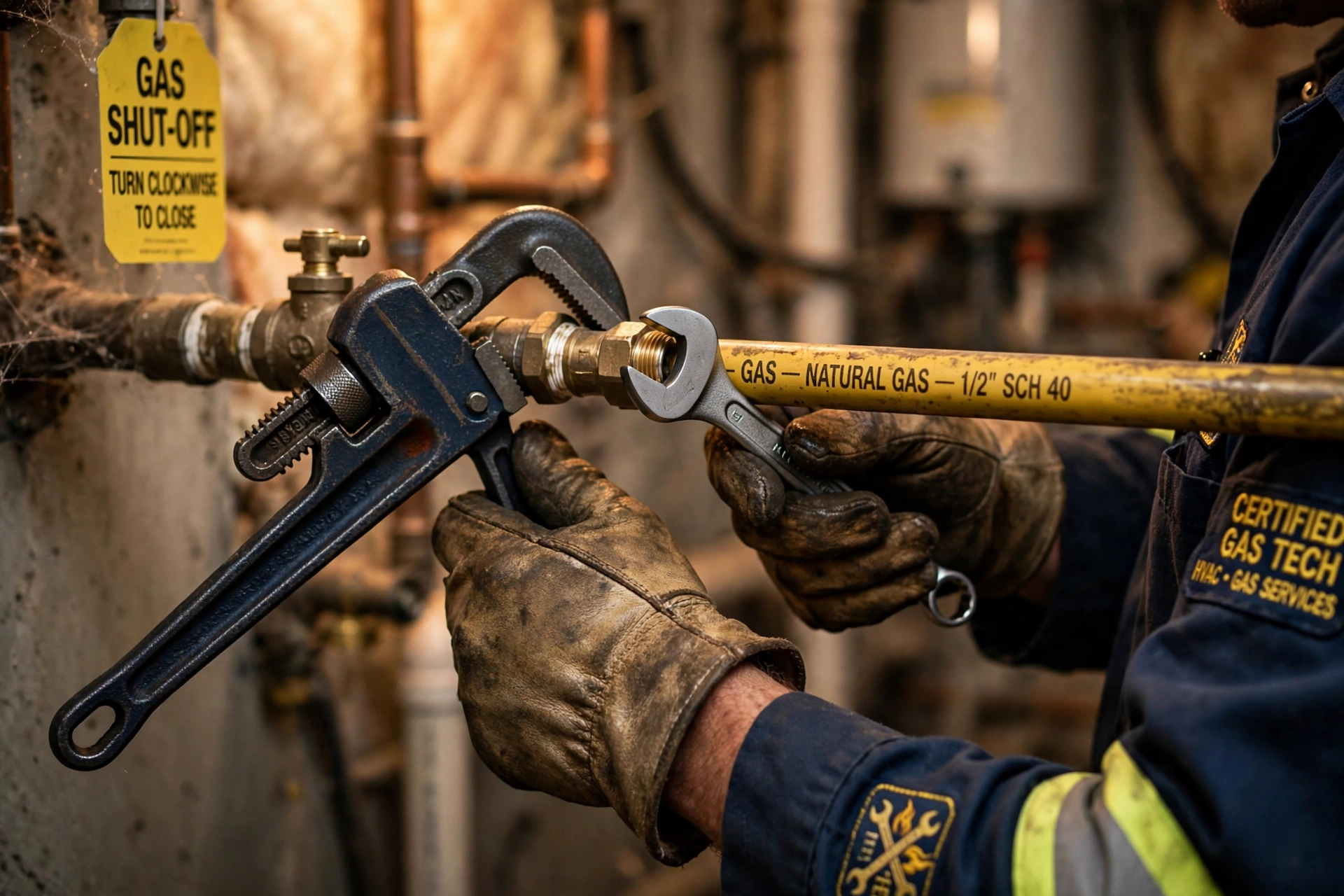
Gas Line Repair in Georgetown: gas technician applying pipe thread sealant to a new galvanized steel elbow fitting

Gas Line Repair

Most residential repair calls in Georgetown come down to age: original black-iron and galvanized lines in pre-1970 homes around the Square and Old Town, corroded at threaded joints after 50-plus years in Central Texas humidity. Drought-driven foundation movement adds a second failure pattern — rigid pipe stressed at the meter riser and house entry until a joint gives. We start with electronic leak detection and a pressure test to map the full extent of the problem, then cut out the failed sections and replace them with properly sized modern pipe, adding accessible shutoffs the original layout skipped. When failures show up in multiple places, we'll give you a straight answer on whether a targeted repair or a full replacement is the better long-term call.

View Details
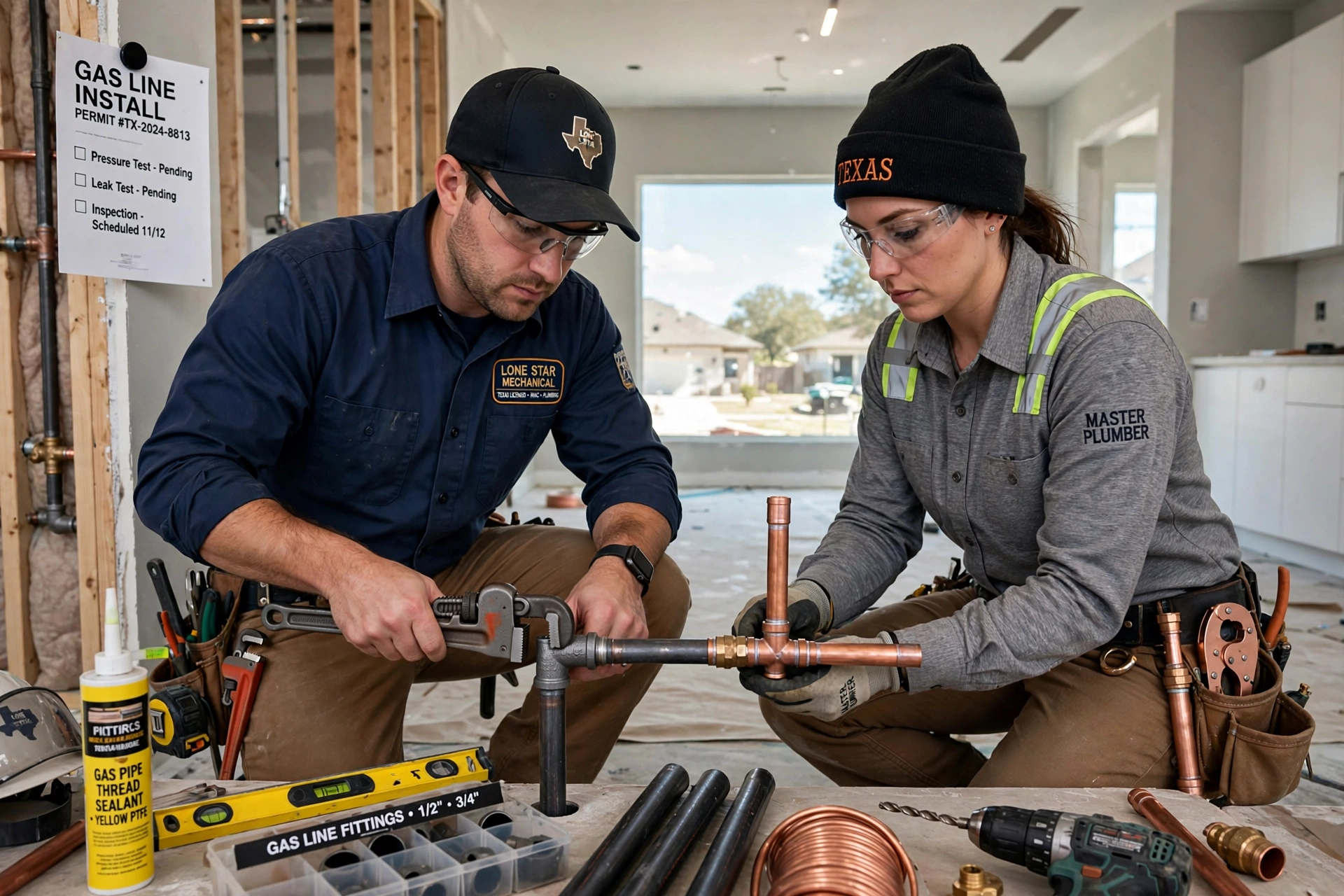
Gas Line Installation in Georgetown: gas technician meticulously routing a new run of yellow flexible corrugated

Gas Line Installation

New gas runs in Georgetown split two ways. In the historic core and mid-century neighborhoods, we route new lines for kitchen remodels, gas dryer conversions, and tankless water heaters — working carefully around old construction and bringing outdated layouts up to current expectations. In Wolf Ranch, Sun City, and the newer subdivisions north along I-35, the work is about outdoor living: outdoor kitchens, built-in grills, fire pits, and pool heaters. Every installation starts with load math — total BTU demand, meter capacity, and pipe sized so everything fires at full strength together. Buried runs go through Georgetown's clay at proper depth with coated materials, and all work is pressure-tested and coordinated with City of Georgetown permit and inspection requirements.

View Details
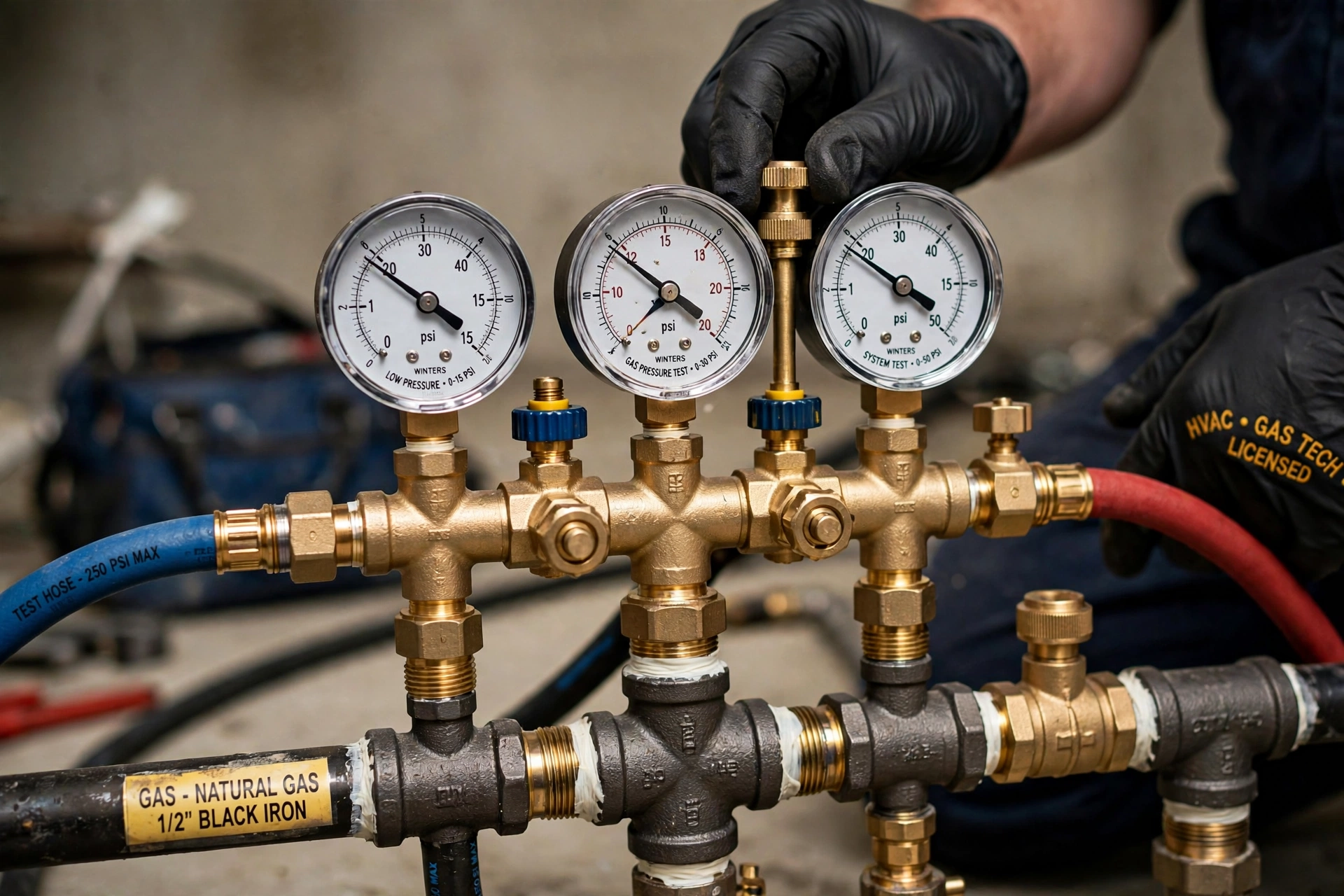
Gas Line Inspection in Georgetown: gas technician carefully inspecting the condition of an underground polyethylene

Gas Line Inspection

A gas line inspection is essential when buying one of Georgetown's older homes — and smart maintenance for landlords turning over rental units. We go through the whole system: the meter, regulator, exposed interior runs, attic piping, appliance connectors, shutoffs, and drip legs. In pre-1970 homes we look hardest at corrosion on black-iron and galvanized pipe, the condition of original connectors behind stoves and dryers, and any lines showing strain from drought-driven foundation movement. You receive a written summary of what we found, what needs attention now versus later, and the recommended next steps — whether you are negotiating a purchase, preparing a rental, or just want to know where a 60-year-old system stands.

View Details
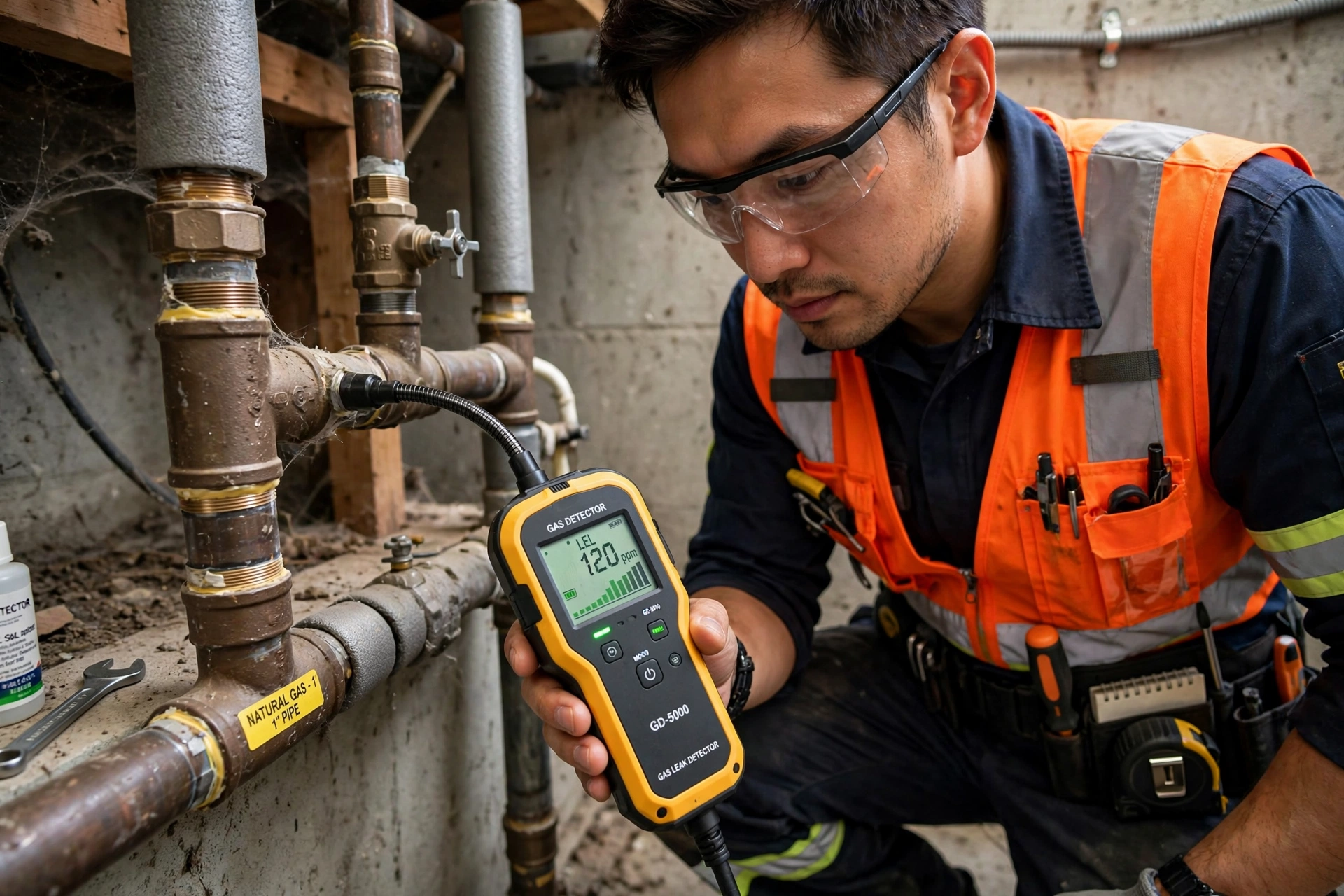
Gas Leak Detection in Georgetown: gas technician slowly moving an electronic gas leak detector probe along a gas

Gas Leak Detection

Georgetown's shifting clay and aging buried lines make hidden underground leaks a real possibility — and they rarely announce themselves. The signs are subtle: a faint odor near the water heater, a strip of struggling grass along the buried line's path, a gas bill that climbs without explanation, or lazy yellow burner flames. We combine electronic combustible-gas detectors that pinpoint leaks down to the fitting with pressure testing and section isolation, tracing the line methodically instead of digging on a hunch. Once we locate the source, we show it to you, walk through the repair options, and fix it — then run a final pressure test across the whole system so you know nothing else is leaking before we leave.

View Details
Gas Appliance Hookup in Georgetown: gas technician connecting a new flexible stainless steel gas connector to the

Gas Appliance Hookup

Safe hookups for gas ranges, dryers, water heaters, outdoor grills, and fireplaces — with Georgetown's mix of historic homes and new builds, no two jobs route the same way. In older homes we often replace the original uncoated connector as part of the job, since decades of heat and humidity leave them rusted or kinked. Every hookup includes its own accessible shutoff, a leak check on every joint, and a combustion test of the appliance. For the outdoor living crowd in Wolf Ranch and Sun City, we connect built-in grills, side burners, patio heaters, and fire pits, routing lines cleanly and protecting them from weather and yard equipment.

View Details

Common Gas Line Repair Problems in Georgetown

Georgetown's historic housing stock, clay soil, and growth corridors create a specific set of gas problems. These are the issues we are called out for most often across the city.

Original black-iron lines corroding in pre-1970 homes

Many Georgetown homes — especially around the historic Square and in Old Town's mid-century neighborhoods — still run on the black-iron or galvanized gas lines installed when they were built. After 50 to 70 years in Central Texas humidity, that pipe corrodes from the outside in: threaded joints rust, walls thin, and pinhole leaks develop in attics, crawl spaces, and inside walls. Rental properties with deferred maintenance are where we find the worst of it, sometimes with slow leaks that have gone unnoticed for years. We replace failed sections with modern pipe, add the shutoffs the original layout skipped, and pressure-test the whole system.

Drought cycles and clay soil shifting foundations

Georgetown's expansive clay swells when the rains return and shrinks through our long droughts, and foundations ride that cycle. Rigid gas piping cannot flex with it, so the stress lands on joints — the meter riser, the penetration where the line enters the home, and buried fittings. Over enough cycles, joints work loose and leak. We see this pattern constantly: a leak at the house entry or meter connection with the pipe itself still sound. The fix is not just sealing the joint but relieving the strain — supporting, rerouting, or adding flexibility so the ground's next cycle does not break it again.

Aging connectors, valves, and drip legs in older neighborhoods

The flexible connectors behind stoves, dryers, and water heaters live hard lives in Georgetown's older homes — warm, humid spaces, moved every time an appliance is pulled out for cleaning. Original uncoated connectors rust, kink, and crack; old shutoff valves seize; drip legs fill with decades of debris. These are among the most common leak sources we find, and the fix is straightforward: new coated connectors, working shutoffs you can actually reach, and a leak check at every joint. If your appliances still have their original connectors, have them looked at.

Growing gas loads in Wolf Ranch and Sun City

Georgetown's growth corridors bring a modern problem: homes where the original gas line was sized for a furnace, water heater, and range — but is now feeding outdoor kitchens, built-in grills, fire pits, and pool heaters on top of that. In Wolf Ranch and the newer subdivisions north along I-35 — and across Sun City's patio-and-fireplace lifestyle — the symptom is familiar: flames drop when a second appliance fires, or the pool heater starves the grill. We recalculate the full BTU load, upsize the run from the meter, and add dedicated branches so every appliance gets full pressure at once.

Signs You Need Gas Line Repair in Georgetown

Gas problems rarely announce themselves loudly. In Georgetown's older homes and growing neighborhoods, these are the warning signs worth acting on quickly.

  • Rotten-egg gas odor

    Natural gas is odorless, so utilities add a sulfur-like smell similar to rotten eggs. If you notice it near a stove, water heater, meter, or anywhere along a gas line's path, treat it as a leak: leave the area and call from a safe distance. In Georgetown's pre-1970 homes around the Square and Old Town, we often trace these odors to corroded connectors or aging joints.

  • Hissing near meters or gas lines

    A faint hiss around a meter, regulator, or exposed pipe usually means gas is escaping under pressure. Don't try to locate it yourself — leave the area, avoid operating anything electrical, and get the line checked promptly. In older Georgetown homes, a hissing joint is often a corroded fitting that soil movement finally worked loose.

  • Dying vegetation along the line's path

    A strip of yellowing or dead grass tracing the route from the meter to the house can signal an underground leak starving the roots of oxygen. On Georgetown's clay lots, escaping gas follows the trench backfill and can surface away from the actual break — so we trace buried runs with detection equipment instead of digging where the grass died.

  • Unexplained jumps in the gas bill

    If usage hasn't changed but the bill climbs, a slow leak or an inefficient, malfunctioning appliance may be burning gas around the clock. Landlords with multiple Georgetown rentals sometimes spot this first when comparing bills across units — a per-unit spike is a strong hint something is wrong.

  • Weak flames or pilot problems

    Yellow, lazy burner flames or pilots that won't stay lit often point to low pressure or a partial blockage upstream — in Georgetown's older homes, that can mean a corroded section restricting flow or a failing regulator. Don't ignore it: incomplete combustion produces carbon monoxide. We check supply pressure at the appliance and trace the line back toward the meter to find what's starving the burner.

Gas Line Repair Pricing in Georgetown

There is no single price for gas line work in Georgetown because every job is shaped by a handful of practical factors. The length of the run and the number of connections set the baseline — a short, accessible repair inside a pre-1970 home near the Square is a fundamentally different job from a long underground run through clay to a detached garage in Wolf Ranch. Pipe material matters too: black steel, galvanized, corrugated stainless steel tubing, and polyethylene each carry different material and labor requirements. Access is often the biggest variable — an exposed line in an open utility room is straightforward, while lines buried under concrete, routed through the tight attics of old houses, or trenched through heavy Central Texas clay take significantly more time. Permits and inspections add steps on many jobs. When we look at a job, we walk through each of these factors and give you a written estimate that shows exactly what your situation requires — no two Georgetown properties produce the same number.

Line Length & Scope

Short, accessible runs versus long or buried lines

  • Single accessible leak repair
  • Multiple connection points
  • Partial line replacement
  • Full replacement or rerouting
Call for an Estimate

Access & Site Conditions

Trenching and access work add time on difficult sites

  • Exposed lines in open areas
  • Attic or crawlspace routing
  • Cutting through concrete or pavement
  • Clay soil trenching and backfill
Call for an Estimate
  • Line length, routing, and scope — A short repair on an exposed indoor line and a long underground run are different jobs entirely. The number of appliances on the line, and whether the fix is a spot repair or a full replacement of a pre-1970 system, sets the scale of the work.
  • Materials and pipe diameter — Steel, galvanized, corrugated stainless steel tubing, and polyethylene each have different material and labor profiles. Matching the material to the exposure — humid attic, damp soil, buried clay — is what makes the repair last.
  • Access, soil, and permits — Trenching through Georgetown's clay, cutting concrete, or working inside the tight spaces of an older home adds labor. Permits and inspections apply to many jobs, and we handle the paperwork and scheduling as part of the project.

Landmarks and Points of Interest in Georgetown

Georgetown's layout is easy to navigate once you know its anchors. Our technicians navigate by the same landmarks locals use when giving directions.

Georgetown's Historic Downtown Square

The Square — anchored by the Williamson County Courthouse and lined with 1800s-era buildings, shops, and restaurants — is the reference point for every call in central Georgetown and Old Town. When a customer says they are a few blocks off the Square, we know the era of the home, the likely piping, and the fastest route in.

San Gabriel Park

San Gabriel Park, where the San Gabriel River winds through the city's west side, anchors our routing for the river-corridor neighborhoods and the areas around Southwestern University. It is also a reminder of what the river can do after heavy rain — we check low-lying gas components here more carefully than anywhere else in town.

Coverage across Georgetown & Williamson County

786267862878633

Our Georgetown coverage runs from the historic Square and Old Town through the San Gabriel River corridor, north along I-35 to Wolf Ranch and the Inner Space Cavern area, and across the Sun City Texas community — plus nearby Leander, Cedar Park, and the surrounding Williamson County communities. Because we work this corridor daily, most Georgetown calls fit naturally into our routing.

How Seasons Affect Gas Line Repair in Georgetown

Georgetown's Central Texas climate doesn't swing the way northern winters do, but storm season, drought, cold fronts, and the occasional hard freeze each put their own stress on gas piping through the year.

Spring

Spring is storm season along the I-35 corridor — hail, high wind, and heavy downpours that swell the San Gabriel River and saturate the clay. Waterlogged clay swells and shifts around buried lines, putting joints at the meter riser and house entry under strain — and flooding can expose or damage low-lying gas components. After major storms, it's worth checking for new gas odors or damage around the meter.

Tip: Walk your property after heavy spring storms and look for washed-out soil along the gas line's path or a new sulfur smell near the meter.

Summer

Long stretches of heat and drought shrink the clay and settle foundations — the reverse of spring's swell, and just as hard on rigid gas piping. Corrosion never takes a season off in our humidity: above-ground piping, connectors, and shutoff valves keep rusting through the hottest months. Summer is also peak season for outdoor gas loads in Wolf Ranch and Sun City — grills, fire pits, and pool heaters all calling at once.

Tip: Check exposed connectors and the main shutoff valve for rust or stiffness during the summer — small problems are cheapest to fix now.

Fall

Fall brings the first cold fronts and the year's most practical weather for planned gas work in Georgetown. Heating equipment that sat idle through summer gets its first real use, which is when small problems surface — a good time to have the system inspected before the cooler months. Temperature swings move the clay again after summer's shrinkage, so joint stress shows up now too.

Tip: Schedule inspections in fall so any issues are handled before winter heating demand arrives.

Winter

Hard freezes are rare in Central Texas but they do happen — February 2021 proved it — and Georgetown's older homes often have gas piping with minimal protection. A sudden freeze can stress exposed lines and regulators, while damp winter air keeps corrosion working year-round. When winter calls come in, they tend to be urgent: no heat, a sudden gas odor, or a furnace that quits on the coldest night of the year.

Tip: Know exactly where your main gas shutoff valve is before winter — in an emergency you shouldn't have to search for it.

FAQs about Gas Line Repair in Georgetown

Straight answers about gas line work in Georgetown — what drives the cost, how to stay safe, and what to expect when you call.

What should I look for in a gas line repair company in Georgetown?
Look for a company with real experience in Georgetown's older housing stock — the pre-1970 black-iron and galvanized systems around the historic Square behave very differently from the CSST runs in newer Wolf Ranch builds, and a technician who knows both will diagnose faster and more accurately. Ask for a written estimate that spells out the scope, materials, and any permit or testing steps before work starts. Confirm that the finished job will be pressure-tested and checked against local code requirements. Familiarity with local ground conditions matters too — clay soil and drought cycles shift foundations here, and the right company plans for that instead of discovering it mid-job.
My Georgetown home was built before 1970 — is the original gas piping still safe?
It depends on its condition, which is exactly why older Georgetown homes deserve a proper inspection. Many homes around the historic Square and in the city's mid-century neighborhoods still run on their original black-iron or galvanized gas lines — pipe that has now spent 50-plus years in Central Texas humidity. We regularly find corroded threaded joints, thinning walls, tired shutoff valves, and outdated appliance connectors in homes this age. A pressure test plus a visual walk of every exposed run tells us whether the system is still sound, needs spot repairs, or shows enough wear across the board to justify a full replacement. If you are buying one of Georgetown's older homes, make a gas line inspection part of your due diligence.
How do drought and clay soil affect gas lines in Georgetown?
Georgetown sits on expansive Central Texas clay, and our long drought cycles make it move. The soil swells when the rains return and shrinks through dry months, and foundations ride that cycle up and down — while rigid gas piping does not flex with it. The stress concentrates at joints: the meter riser, the connection where the line enters the home, and buried fittings. That is why leaks in Georgetown so often trace to a joint that soil movement worked loose rather than to pipe that simply wore out. When we repair these, we relieve the strain and reroute or support the line so the ground's next cycle does not break the same joint again.
Do you handle gas line work in Sun City and Wolf Ranch?
Yes. Georgetown's growth corridors north along I-35 — Wolf Ranch and the surrounding new subdivisions, plus the Sun City Texas community — are a regular part of our routing. The work there looks different from the historic core: newer homes with CSST or coated steel piping, outdoor kitchens, built-in grills, fire pits, and pool heaters adding serious BTU load, and patio heaters and fireplaces that get heavy seasonal use. We size new runs for the full appliance load, add dedicated branches where the original line is undersized, and make sure every addition is pressure-tested and permitted. If your builder's gas stub is not where your outdoor kitchen ended up, we reroute it properly.
Do I need a permit for gas line work in Georgetown?
Anything beyond a simple appliance connector swap — new lines, replacements, reroutes, or trenching — requires a City of Georgetown permit and an inspection of the finished work. Homes in the historic districts around the Square may have additional review steps depending on the scope and visibility of the work, which we factor into the plan. We file the permit paperwork, arrange the inspection, and make sure everything is ready to pass on the first visit. The permit and inspection steps are listed separately in your written estimate, so the process is transparent from the start.
Do you offer emergency gas line repair in Georgetown?
Yes. If you suspect a gas leak, leave the building immediately, avoid operating light switches or anything electrical, and call 911 and your gas utility from a safe distance. Once you are safe, call us at (512) 877-2533 — urgent gas calls are prioritized so a technician can assess the situation, shut things down safely, and plan the repair. We cover the historic Square and Old Town, the San Gabriel corridor, Wolf Ranch, Sun City, and the neighborhoods along I-35.
What should I do if I smell gas in Georgetown?
Take it seriously every time. Don't turn lights or appliances on or off, don't use your phone inside the building, and don't try to find the leak yourself. Leave right away, move to a safe distance, then call 911 and your gas utility. The rotten-egg smell is an odorant added to naturally odorless gas specifically so leaks get noticed — if you smell it, gas is present and the area is not safe until it has been checked. After the immediate danger passes, our technicians can go over the full system, pressure-test the lines, and fix or replace whatever failed.

Reliable Gas Line Repair in Georgetown

From pre-1970 homes near the historic Square to new builds in Wolf Ranch and Sun City, we handle the gas line work Georgetown actually needs — diagnosed properly, pressure-tested, and backed by a written estimate. Call today and tell us what's going on.

Contact Us Now Send a Message

Get in Touch with Us

Tell us what's going on — a suspected leak in an older home, a new appliance, an outdoor project in Wolf Ranch or Sun City, or a system you want checked — and we'll set up a time to take a look.

Prefer to talk? Call (512) 877-2533 and we'll help you figure out the next step.

Gas Line Repair Leander TX


  • Address

    1789 S Bagdad Rd, Leander, TX 78641, United States, Leander, Texas

  • Hours

    Mon–Fri: 7AM – 7PM
    Sat: 8AM – 4PM
    Sun: Emergency calls only

Call (512) 877-2533 Get Quote
Call Quote