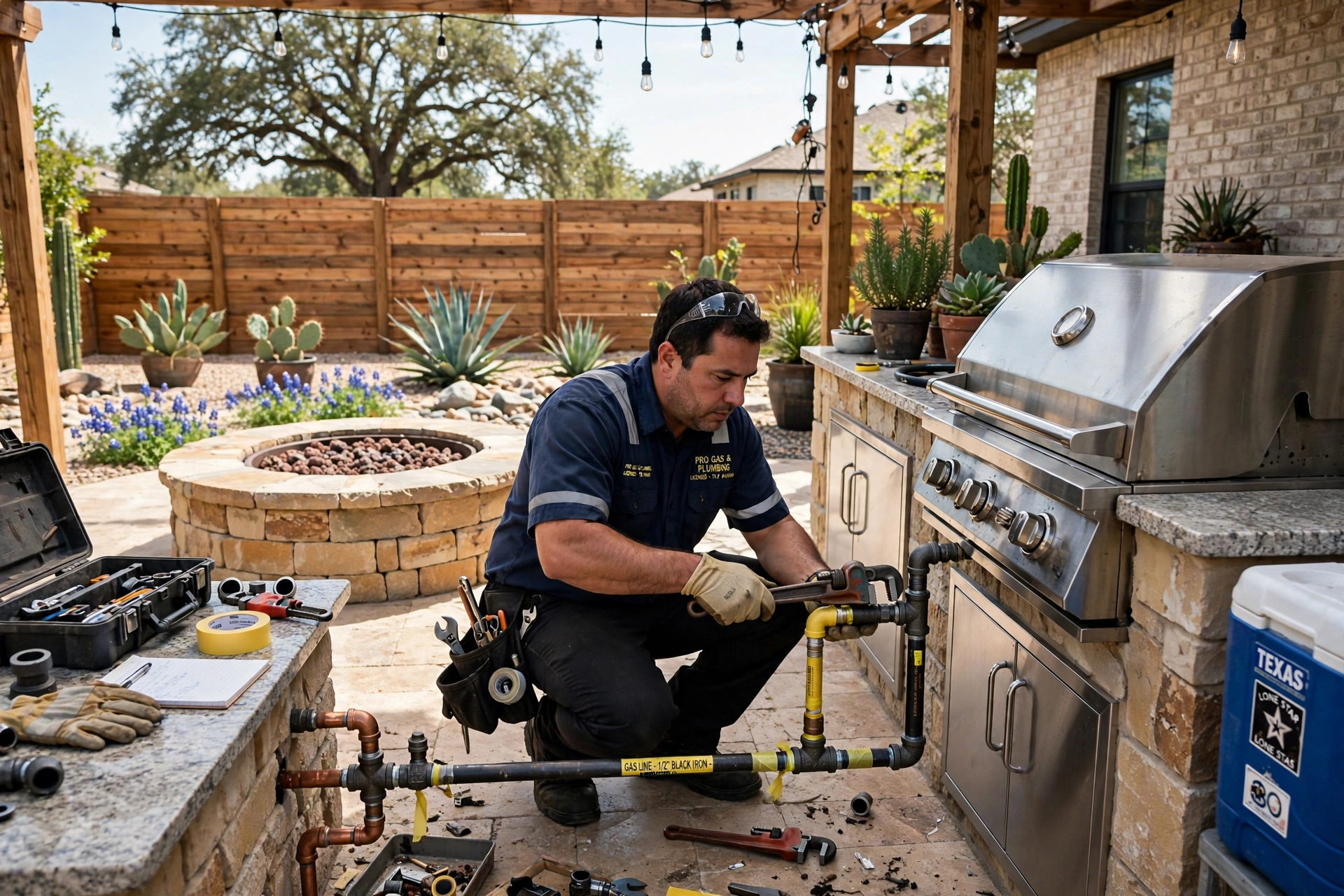
Gas Line Repair Leander TX
Get Estimate

Gas Line Repair in Cedar Park, Texas

From the 1980s brick and ranch homes around Anderson Mill and Cypress Creek to the newer subdivisions along the 1431 corridor and Brushy Creek, Cedar Park's gas lines sit in some of the toughest ground in Central Texas: thin soil over hard limestone bedrock. Trenching a new underground gas run here often means cutting through rock, not just digging dirt — and the original black-iron piping in the city's 1980s and 1990s homes is now reaching the age where threaded joints corrode and leak. Expansive clay pockets in some subdivisions add foundation movement to the mix, stressing rigid pipe at the meter and the house entry. Gas Line Repair Leander TX serves homeowners across Cedar Park and Williamson County with leak detection, repair, replacement, and new gas runs — including the outdoor kitchens, pool heaters, and fire pits that make year-round use of Cedar Park backyards.

Get a Free Estimate Call Us Now
Cedar Park & Williamson County Fast Emergency Response Local Gas Line Specialists
Safety First Gas safety is our focus
Fully Insured Insured & Bonded
Emergency Response prompt scheduling
Warranty Backed quality workmanship in Cedar Park
Gas line repair in Cedar Park

Your Trusted Source for Gas Line Repair in Cedar Park


Cedar Park grew from a small railroad and farming settlement into one of the Austin metro's largest suburbs, and its gas piping tells that story lot by lot. The 1980s and 1990s neighborhoods around Anderson Mill and Cypress Creek still run on much of their original black-iron gas piping, now old enough that threaded joints corrode and pinhole leaks develop in attics and inside walls. Newer subdivisions — around Brushy Creek, Twin Creeks, Buttercup Creek, and Rattan Creek, and along the 1431 corridor — typically run CSST or coated steel, which brings its own considerations around proper bonding and routing. Underneath it all sits hard limestone bedrock with only thin soil above it, so underground work here means rock-capable trenching, not easy digging; in subdivisions with expansive clay pockets, the seasonal swell-and-shrink cycle moves the ground and stresses every rigid joint. Add Central Texas storms, long droughts, and the occasional hard freeze, and Cedar Park gas piping lives a harder life than it looks. We work these neighborhoods every day, so we know which era of construction hides which problems. Whether your home needs a targeted leak repair, a full re-pipe, or a new gas run for an outdoor kitchen or pool heater, we diagnose first, explain what we find in plain language, and pressure-test every job before we leave.

  • Daily service across Anderson Mill, Cypress Creek, Lakeline & the 1431 corridor
  • Rock-capable trenching for limestone lots — underground runs planned for rock, not just dirt
  • Fast diagnostics with written estimates before any work starts
  • Technicians who know Cedar Park's housing eras, limestone ground, and clay pockets

Gas Line Repair Services Available in Cedar Park

Cedar Park homeowners call us for everything from a faint gas odor near the meter to a full backyard gas plan with a pool heater, outdoor kitchen, and fire pit. The sections below cover our core services across the city — each one shaped by local realities like 1980s black-iron pipe in the Anderson Mill and Cypress Creek areas, CSST in newer Brushy Creek-area builds, limestone bedrock that turns trenching into rock work, clay pockets that shift with the seasons, and the high-BTU outdoor loads common in Twin Creeks and Buttercup Creek backyards.

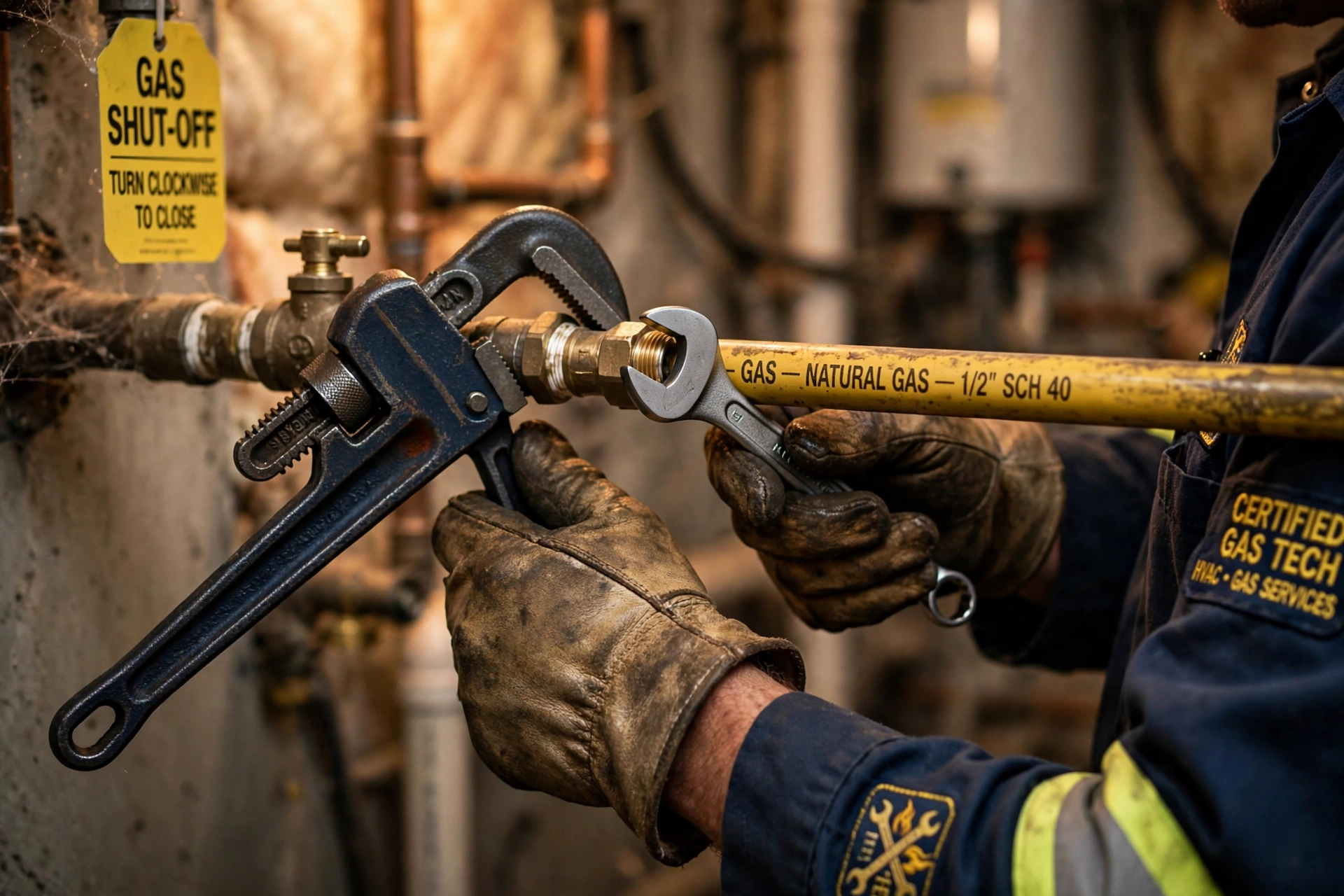
Gas Line Repair in Cedar Park: gas technician applying pipe thread sealant to a new galvanized steel elbow fitting

Gas Line Repair

Most repair calls in Cedar Park trace back to one of two culprits: aging pipe or moving ground. In the Anderson Mill and Cypress Creek areas, 1980s-era black-iron lines develop corrosion at threaded joints and drip legs, especially where runs pass through hot attics or rest against damp rock in thin soil. Elsewhere, expansive clay pockets heave and settle with wet and dry cycles, stressing buried runs and the connections at the meter and house entry. We start every repair with electronic leak detection and a pressure test to confirm the full extent of the problem — not just the first leak we find. Then we cut out the failed section, replace it with properly sized pipe, and re-test the system before restoring service. If a line has failed in multiple places, we will tell you honestly when a partial repair stops making sense and a full replacement is the smarter long-term call.

View Details
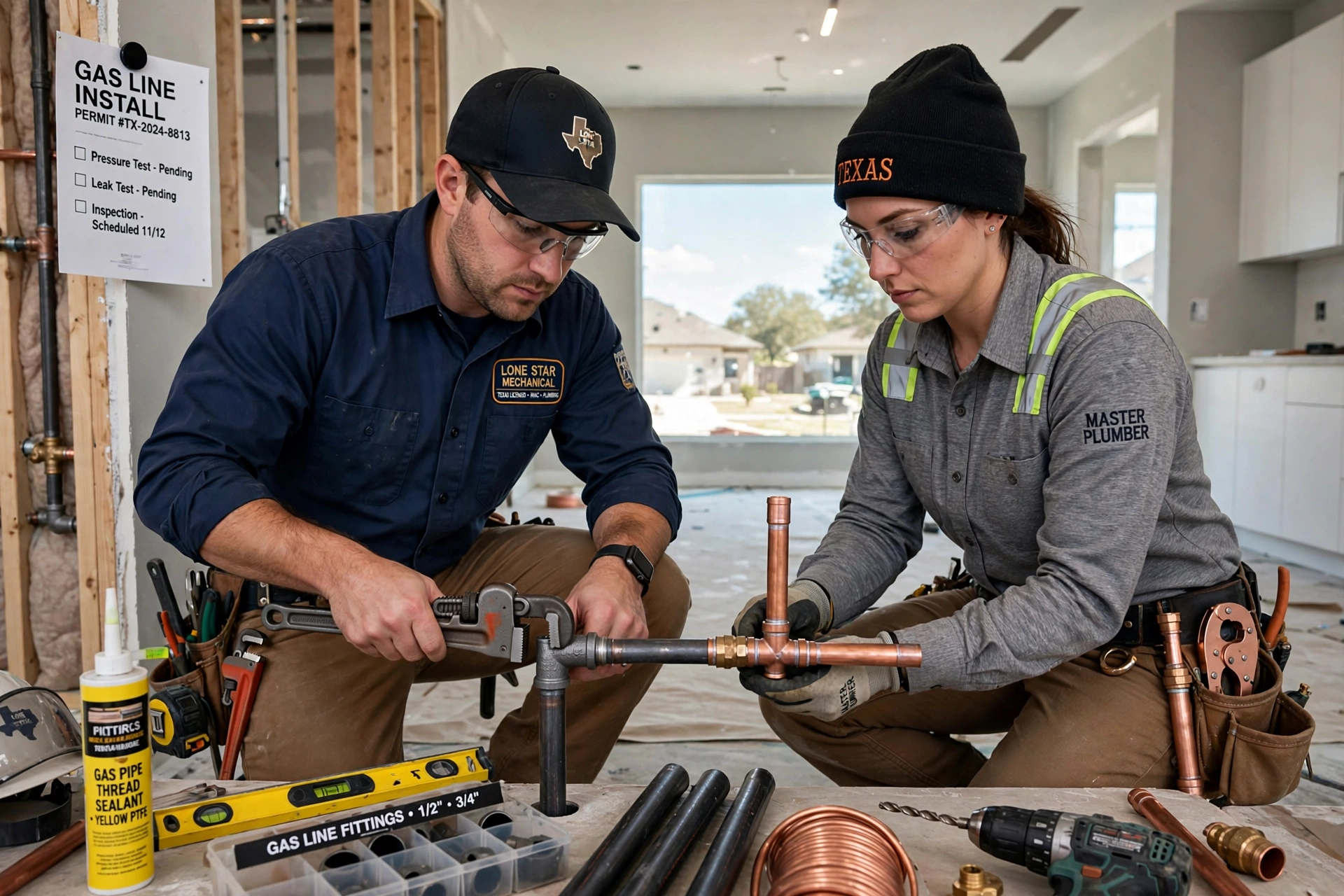
Gas Line Installation in Cedar Park: gas technician meticulously routing a new run of yellow flexible corrugated

Gas Line Installation

New gas runs are one of our most common jobs in Cedar Park's newer subdivisions, where homeowners around Brushy Creek, Twin Creeks, and Buttercup Creek are adding outdoor kitchens, built-in grills, fire pits, and pool heaters to make the most of year-round backyard weather. Every installation starts with load math: we total the BTU demand of every appliance on the run, check the meter's capacity, and size the pipe so the grill still burns strong while the pool heater is running. Because so many Cedar Park lots sit on limestone, we plan underground runs for rock from the start — rock-capable trenching, proper depth, and coated pipe with clean bedding so the stone cannot damage the line. Inside the home, we route new lines for kitchen remodels, gas dryers, and tankless water heaters with accessible shutoff valves at each appliance. All work follows local code, is pressure-tested on completion, and is coordinated with City of Cedar Park permit and inspection requirements.

View Details
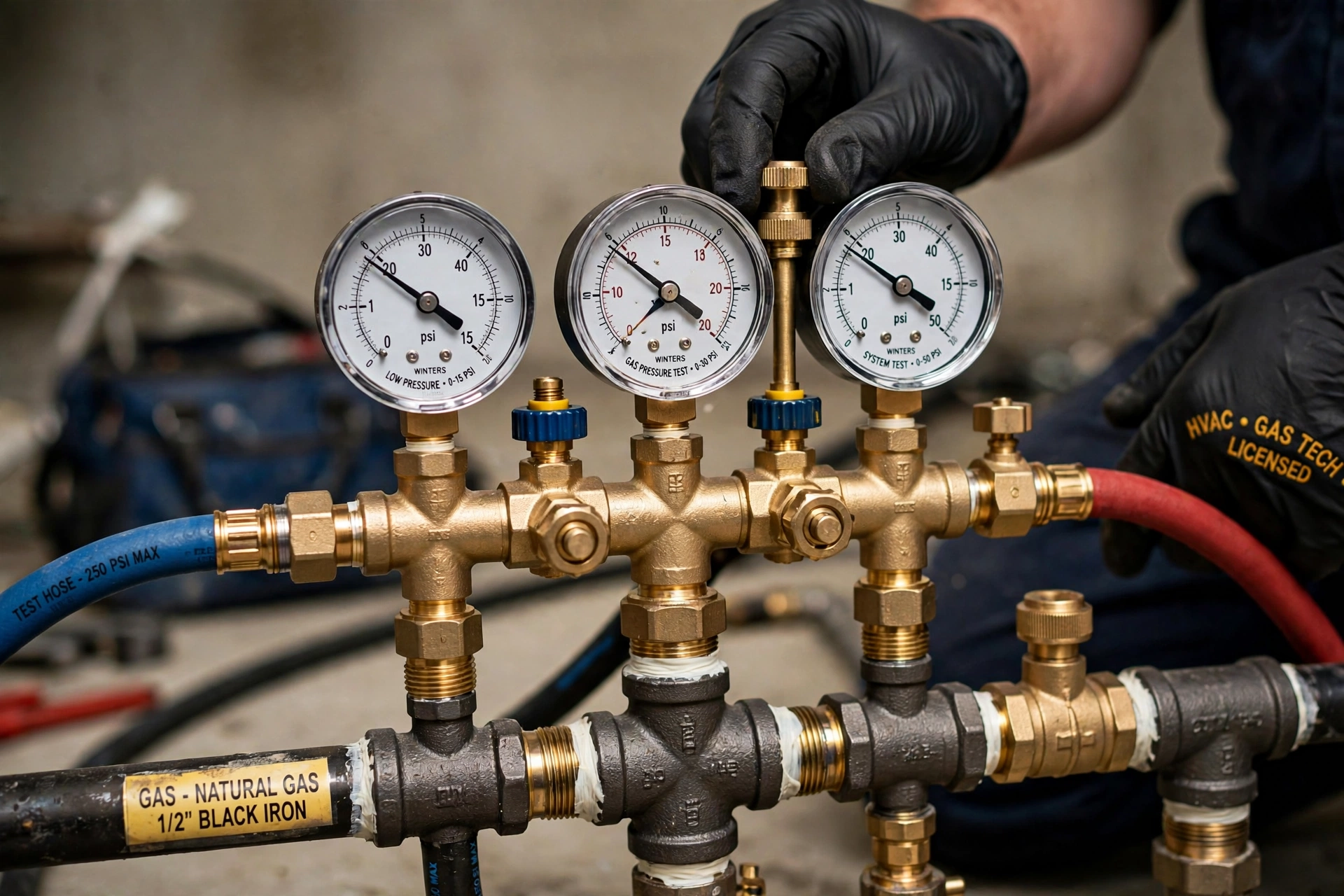
Gas Line Inspection in Cedar Park: gas technician carefully inspecting the condition of an underground polyethylene

Gas Line Inspection

A gas line inspection is the smartest step a Cedar Park homeowner can take before a problem announces itself — and it is essential when buying one of the area's 1980s or 1990s resale homes around Anderson Mill or Cypress Creek. We walk the full system: the meter and regulator, exposed interior runs, attic piping, appliance connectors, shutoff valves, and drip legs. In our ground conditions we pay special attention to corrosion on black-iron pipe, the condition of older CSST runs and their bonding, coating damage where buried steel meets rock, and any lines showing strain from soil movement in the clay pockets. Buried sections get checked for settling and exposed risers for rust. You receive a written report of what we found, what needs attention now versus later, and clear next steps — so whether you are negotiating a home purchase or want peace of mind before storm season, you know exactly where your system stands.

View Details
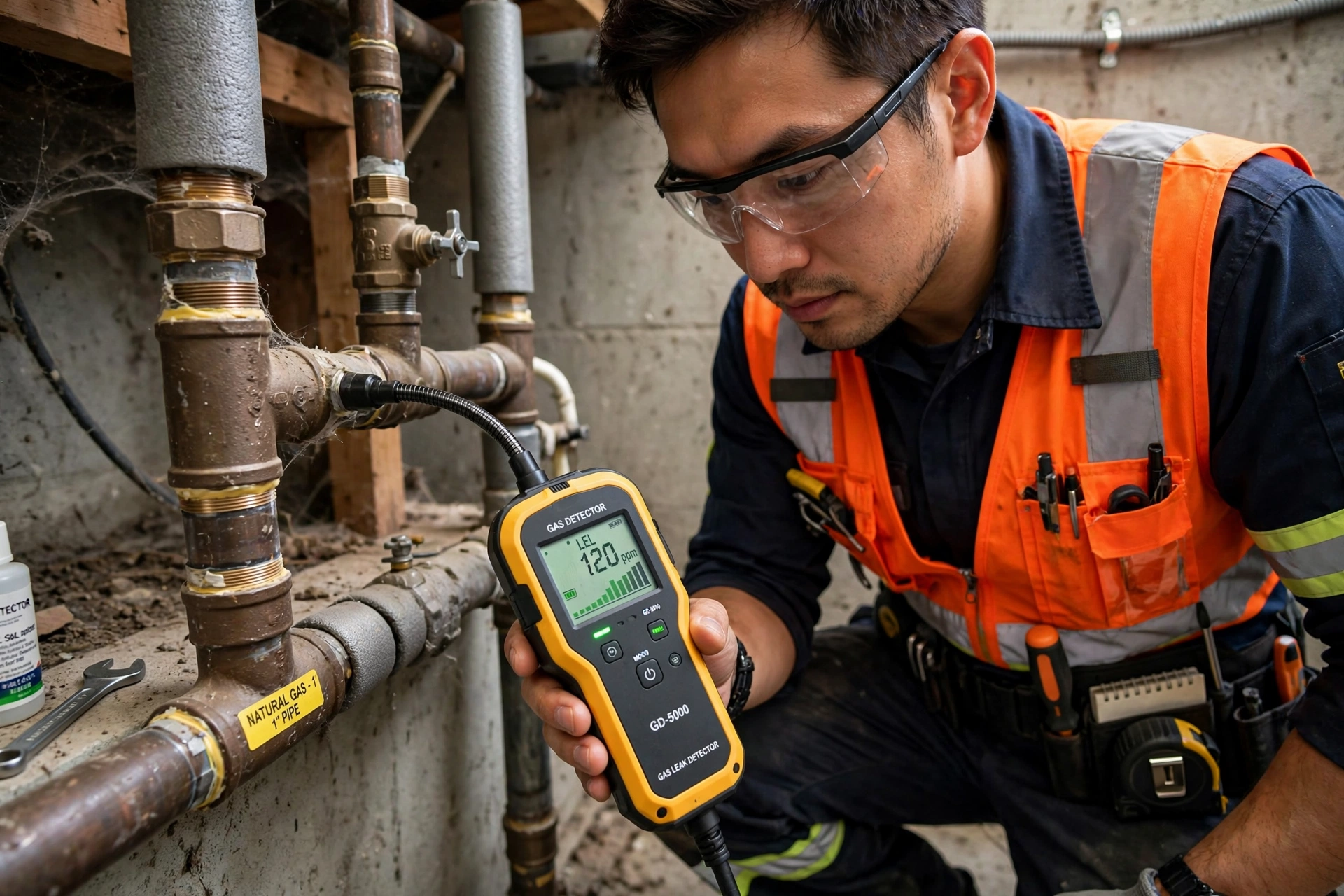
Gas Leak Detection in Cedar Park: gas technician slowly moving an electronic gas leak detector probe along a gas

Gas Leak Detection

Gas leaks rarely announce themselves with drama. More often it is a faint odor near the water heater, a patch of dead grass tracing the buried line across the yard, a gas bill that climbs without explanation, or a stove that suddenly burns lazy yellow flames. Our detection process combines electronic combustible-gas detectors that pinpoint leaks down to the fitting, pressure testing that reveals whether the system holds, and a methodical walk of every joint, valve, and appliance connection. In Cedar Park we trace buried runs with extra care, because rocky soil and clay pockets can let gas travel along the trench and surface well away from the actual break. Once we find the source, we show you exactly where it is, explain the repair options, and fix it — then pressure-test the whole system to confirm nothing else is leaking before we leave.

View Details
Gas Appliance Hookup in Cedar Park: gas technician connecting a new flexible stainless steel gas connector to the

Gas Appliance Hookup

Swapping an electric range for gas, adding a dryer in the laundry room, or connecting a new tankless water heater all come down to one thing: a safe, properly sized connection with a shutoff you can reach. We run new branch lines or extend existing ones to ranges, cooktops, dryers, water heaters, and outdoor grills, using flexible stainless connectors where appropriate and hard-piped runs where the layout calls for them. Every hookup gets its own accessible shutoff valve, a leak check at every joint, and a combustion check on the appliance itself — yellow, sooty flames on a new range usually mean the line or the appliance setup needs attention, not just the burner. For Cedar Park's outdoor living crowd, we also hook up built-in grills, side burners, and patio heaters, routing lines cleanly along the home's exterior and protecting them from weather, weed trimmers, and the rocky ground they cross.

View Details

Common Gas Line Repair Problems in Cedar Park

Cedar Park's combination of housing eras, limestone ground, and Central Texas weather creates a short list of repeat offenders. These are the problems we see week after week across Anderson Mill, Cypress Creek, Lakeline, Brushy Creek, and the rest of Williamson County — and knowing them helps you spot trouble early.

Aging black-iron pipe in 1980s–90s Anderson Mill and Cypress Creek homes

Thousands of Cedar Park homes built during the city's 1980s and 1990s growth spurt still run on their original black-iron gas piping. After three to four decades, threaded joints and drip legs corrode, pipe walls thin, and pinhole leaks develop — often in hot attics or inside walls where nobody looks. The first sign is usually a faint gas odor, a hissing sound near a joint, or a failed pressure test during a remodel. We replace failed sections with properly sized modern pipe, add accessible shutoffs where the original layout skipped them, and pressure-test the entire system so one repair does not turn into a series of callbacks.

Limestone bedrock complicating underground gas lines

Much of Cedar Park sits on hard limestone with only thin soil above it, which makes underground gas work a different job than in soft-soil suburbs. Trenching a new run means cutting through rock, and older buried steel lines often rest directly against stone that abrades their coating and invites corrosion where moisture collects. Shallow, rocky cover also leaves lines more exposed to damage from landscaping and fence-post digging. We plan every underground job in Cedar Park for rock: proper trench depth, coated or sleeved pipe, and clean bedding around the line so the limestone cannot grind against it over the years.

Foundation and soil movement from expansive clay pockets

While limestone dominates, several Cedar Park subdivisions sit on pockets of expansive clay that swell when the rains come and shrink through our long dry spells — and your foundation rides that cycle up and down. Gas lines do not flex with it. Buried runs and the risers where pipe enters the home take the stress at their joints, which is why leaks so often appear at the meter connection or where the line penetrates the foundation. We look for this pattern on every Cedar Park call: lines pulled taut, fittings under strain, and settlement around buried runs. Repairs here mean relieving the stress, not just patching the leak, or the same joint will fail again.

Undersized lines for outdoor kitchens, pool heaters, and fire pits

Cedar Park backyards are built for year-round living — outdoor kitchens, built-in grills, fire pits, and pool heaters are standard in subdivisions around Brushy Creek, Twin Creeks, and Buttercup Creek. The problem is that many homes' original gas lines were sized for a furnace, water heater, and range, not an additional several hundred thousand BTUs of backyard equipment. The symptom is unmistakable: the grill flames die when the pool heater kicks on, or the fire pit sputters on cool evenings. We fix it with proper load calculations, upsizing the run from the meter and adding dedicated branches so every appliance gets full pressure even at peak demand — no more choosing between the pool heater and dinner.

Signs You Need Gas Line Repair in Cedar Park

Gas problems rarely fix themselves, and early action is always cheaper and safer than waiting. If you notice any of the following at your Cedar Park home, treat it as a reason to call — we would rather pressure-test a healthy system than repair damage that could have been caught months earlier.

  • Smell of gas in your home

    Natural gas is odorized so leaks smell like rotten eggs. If the odor is strong or growing, leave the house immediately and call from outside — do not flip switches, use the garage door opener, or hunt for the source yourself. A faint, occasional whiff near an appliance still deserves a professional leak check; in Cedar Park's 1980s-era homes around Anderson Mill and Cypress Creek, it often traces to a corroded joint that will only get worse.

  • Hissing or whistling sounds

    A distinct hiss near a gas line, meter, or appliance connection means gas is escaping under pressure. Shut off the appliance if you can do so safely, leave the area, and call us. Do not try to tighten the fitting yourself — over-torquing a corroded joint in a 1980s black-iron system can turn a small leak into a broken pipe.

  • Dead or dying vegetation along the line's path

    A strip of dead grass or shrubs tracing a straight line across your yard is a classic sign of an underground leak — escaping gas displaces oxygen in the soil and kills roots. In Cedar Park's rocky ground, the gas can travel along the trench backfill and surface well away from the actual break, so we trace buried runs with detection equipment rather than digging at the dead patch.

  • Unexplained increase in your gas bill

    When your bill climbs but your usage has not — no new appliances, no change in habits — a leak is a prime suspect. Compare several months of statements and check whether the jump lines up with heating season or a new outdoor appliance. A pressure test will confirm whether the system holds; if it does not, electronic detection finds exactly where it is losing gas.

  • Yellow or lazy appliance flames

    Natural gas should burn with a crisp blue flame. Yellow, orange, or lazy flames signal incomplete combustion, which can mean low gas pressure from a restriction or leak upstream, a failing regulator, or an appliance issue. Do not ignore it — incomplete combustion produces carbon monoxide. We check the supply pressure at the appliance, trace the line back toward the meter, and fix whatever is starving the burner.

What Affects the Cost of Gas Line Repair in Cedar Park

Every gas line job in Cedar Park is priced on its own facts, because no two homes present the same combination of pipe age, ground conditions, and scope. A short, accessible repair on an exposed interior line is a fundamentally different job from cutting a new buried run through limestone to reach a detached outdoor kitchen. The cards below lay out the factors that move a project up or down: the size and complexity of the work, the materials and access involved, and the permits and testing that keep the job compliant. When we visit, we walk the full scope with you, explain each factor as it applies to your home, and give you a written estimate before any work begins — so the final number is never a surprise.

Job Scope

Scope & complexity varies per job

  • Short, accessible line repairs
  • Single fitting or valve replacement
  • One-appliance branch connections
  • Straightforward interior routing
Call to Discuss

Permits & Testing

Compliance & verification included every job

  • City of Cedar Park permits
  • Pressure test on completion
  • Inspection scheduling handled
  • Load sizing for new appliances
Call to Discuss
  • Type of repair needed — A single leaking fitting on an exposed line is the simplest scope we see; a full replacement of an Anderson Mill home's aging black-iron system, or a new buried run cut through limestone to an outdoor kitchen, involves far more labor, material, and planning. The more of the system we touch — and the more appliances it feeds — the more the scope drives the project.
  • Materials used — Black iron, coated steel, and CSST each carry different material and labor profiles, and the right choice depends on the run: exposed interior lines, hot attic spaces, or buried runs through rocky ground all point to different answers. We specify materials for longevity in Cedar Park's limestone and thin-soil conditions, not just for the day of the install.
  • Access and working conditions — An open attic or unfinished garage makes for fast work; a line buried under a slab, routed behind finished walls, or cut through limestone and established landscaping takes considerably more time and care. Rock excavation is the big variable on underground jobs — it is honest work, but it is slower than digging in soft soil, and your estimate will reflect it.

Landmarks and Points of Interest in Cedar Park

Cedar Park is easy to navigate once you know its anchors, and our technicians use them the same way locals do — as rally points for routing the day's calls across Williamson County. Two landmarks come up constantly when we are finding our way to a job.

H-E-B Center at Cedar Park

The H-E-B Center, the city's arena and events venue near the 1431 corridor, is our western reference point for jobs around Brushy Creek, Twin Creeks, and Buttercup Creek. Home of the Texas Stars, it draws crowds on event nights — which is exactly why we use it to plan around traffic as well as distance when scheduling the day's calls on this side of town.

Lakeline

The Lakeline area — the mall, the MetroRail station, and the 183/620 interchange — anchors our routing for the eastern half of Cedar Park, including Anderson Mill, Cypress Creek, and Rattan Creek. When a customer says they are near Lakeline, we know which neighborhoods, which era of housing, and which route gets us there fastest.

Coverage across Cedar Park & Williamson County

786137871778750786417863478628

Our Cedar Park coverage runs neighborhood by neighborhood: Anderson Mill and Cypress Creek near the city's older core, Lakeline and the 183/620 corridor, Brushy Creek, Twin Creeks, Buttercup Creek, and Rattan Creek to the west and north, the subdivisions along the 1431 corridor, and every street in between. Because we work Williamson County daily, Cedar Park calls fit naturally into our routing — and if you are just outside the city line in unincorporated Williamson County, call anyway. Chances are we are already working nearby.

How Seasons Affect Gas Line Repair in Cedar Park

Cedar Park's year runs on a Central Texas cycle — spring storms, summer drought, fall cold fronts, and the occasional hard freeze. Here is how each season shows up in the gas line work we do across Williamson County.

Spring

Spring brings storm season to the I-35 corridor: hail, high wind, and heavy downpours. Saturated ground swells the clay pockets and shifts soil around buried lines, stressing joints at the meter riser and where lines enter the home. Storms can also damage exposed exterior piping and knock debris into outdoor gas equipment. Spring is the season we find the leaks that winter's dry spell was hiding.

Tip: After a severe storm, walk your yard for new soft spots or settling along the gas line's path and call if anything looks off.

Summer

Summer brings extreme heat and long dry stretches, and the clay pockets shrink away from foundations — the reverse of spring's swell, but just as hard on rigid gas piping. This is also peak season for Cedar Park's outdoor gas loads: pool heaters running for evening swims, built-in grills and outdoor kitchens in near-daily use, and fire pits on summer nights. Undersized lines reveal themselves now, when every appliance calls for gas at once.

Tip: If grill flames drop when the pool heater fires up, your line is undersized for the load — a proper load calculation and upsized run fixes it.

Fall

Fall ushers in the first real cold fronts — and the most practical weather of the year for planned gas work. It is also when furnaces wake up after months idle — the first cold snap exposes leaks and pressure problems that sat unnoticed all summer. Temperature swings move the soil again after summer's shrinkage, so we see joint stress show up now too. We recommend a pre-heating-season inspection in fall: it is the calmest time to find issues, before holiday cooking and heating put the system under full load.

Tip: Schedule a system check before the first cold front — fall appointments are easier to book than mid-winter ones.

Winter

Cedar Park winters are mild, but the occasional hard freeze — Texans still remember February 2021 — can catch exposed exterior piping and older regulators off guard. Furnaces run steadily through cold snaps, and any marginal joint or corroded section feels the strain. Winter calls tend to be urgent: no heat, a sudden gas odor, or an appliance that quits on the coldest night of the year. Keep the area around your meter clear and know where your main shutoff is before you need it.

Tip: Locate your main gas shutoff valve now, while the weather is calm — every adult in the home should know where it is.

Nearby Cities We Serve

Cedar Park sits at the center of our Williamson County service area, and most days find our technicians routed through several of these neighboring cities between Cedar Park calls. If your city is listed here, you are inside our regular service map.

FAQs About Gas Line Repair in Cedar Park

Straight answers from our team to the questions Cedar Park homeowners ask most before a job starts.

What gas line services do you handle in Cedar Park?
We handle the full range of residential gas line work across Cedar Park and the surrounding Williamson County communities: leak repair, electronic leak detection, new gas line installation, full line replacement, safety inspections, pressure testing, and appliance hookups for ranges, dryers, water heaters, outdoor grills, and pool heaters. Cedar Park's housing stock runs from 1980s black-iron piping in the Anderson Mill and Cypress Creek areas to CSST in newer builds along the 1431 corridor and around Brushy Creek, so we size and route every job to the home in front of us. Thin soil over limestone bedrock, expansive clay pockets in some subdivisions, and the area's storm and drought cycles all shape how we diagnose problems — and every repair is pressure-tested before we consider the job done.
My lot sits on limestone — can you still run a new underground gas line?
Yes. Much of Cedar Park sits on hard limestone with only thin soil above it, so trenching a new underground gas run often means cutting through rock rather than digging dirt. We plan for that from the estimate: rock-capable trenching equipment, proper trench depth, and coated or sleeved pipe with clean bedding so the rock cannot damage the line over time. Because rock work takes longer than digging in soft soil, we spell it out in the written estimate before work starts — no surprises mid-job. If a section of rock makes trenching impractical, we will discuss rerouting options with you rather than forcing a bad path.
How does Cedar Park's soil affect buried gas lines?
Two ways. First, the limestone bedrock: thin, rocky soil leaves buried lines shallow and exposed to rock abrasion, and old uncoated steel can corrode where it sits against damp rock. Second, the expansive clay pockets found in some Cedar Park subdivisions: clay swells when it gets wet and shrinks through our long dry spells, and that movement shifts the ground around buried pipe — stressing joints, pulling at the meter riser, and flexing the connection where the line enters the home. We check for both patterns on every call: coating damage from rock contact and strain at joints from soil movement. Repairs here mean addressing the cause, not just the leak, or the same spot fails again.
Do I need a permit from the City of Cedar Park for gas line work?
For most gas line work beyond a simple appliance connector swap — new lines, replacements, reroutes, and anything involving trenching — the City of Cedar Park requires a permit and an inspection of the finished work. That is a good thing: the inspection confirms the installation meets code before the line goes live. We handle the permit application, schedule the inspection, and make sure the job is ready to pass the first time. The permit and inspection steps are itemized in your written estimate so you can see exactly what the process involves.
My home near Anderson Mill was built in the 1980s — should the original gas piping be replaced?
Not automatically, but it deserves a close look. The black-iron gas piping installed in Cedar Park's 1980s and 1990s homes — around Anderson Mill, Cypress Creek, and similar-era neighborhoods — is now 30 to 40 years old. In attics and other unconditioned spaces, threaded joints and drip legs corrode, and we regularly find pinhole leaks or thinning walls during inspections of homes this age. A pressure test and a visual walk of the exposed runs will tell us whether your system is sound, needs targeted repairs, or has enough widespread wear that a full replacement is the smarter long-term call. If you are buying one of these homes, get the gas lines inspected before closing — it is one of the cheapest ways to avoid an expensive surprise.
Do you offer emergency gas line repair in Cedar Park?
Yes. A suspected gas leak is always treated as urgent, and we prioritize emergency calls across Cedar Park — from Anderson Mill and Cypress Creek to Lakeline, Brushy Creek, and the 1431 corridor. If you smell gas, leave the house first and call from a safe distance — do not flip light switches, use garage door openers, or start vehicles near the house. Once you are safe, call your gas utility's emergency line, then call us at (512) 877-2533. We will walk you through immediate safety steps, locate the source of the leak with electronic detection equipment, and make the repair or replacement needed to get your home safe again.
What should I do if I smell gas in my Cedar Park home?
Treat it as serious until proven otherwise. Leave the home immediately, taking everyone and pets with you, and do not stop to open windows or investigate the source. Avoid anything that could create a spark: light switches, thermostats, phones used indoors, and garage door openers. Once you are a safe distance away, call your gas utility's emergency line and then call us at (512) 877-2533. Do not re-enter the home until the situation has been checked. After the immediate danger is resolved, we can inspect the full system, pressure-test the lines, and repair or replace whatever failed so the problem does not return.

Contact Us for Gas Line Repair in Cedar Park

Whether you smell gas near the meter, your pool heater is starving the grill for pressure, or you are planning an outdoor kitchen in a Brushy Creek-area subdivision, we are ready to help. Every job starts with a real diagnosis — electronic detection, pressure testing, and a written estimate — and ends with a system we have verified safe. Call (512) 877-2533 to talk through what is going on at your Cedar Park home, or send a message and we will get back to you promptly.

Schedule Service Send a Message

Get in Touch with Us

Tell us what is going on at your Cedar Park home — a suspected leak, a new appliance, an outdoor project, or just a system you want checked. Call (512) 877-2533 for the fastest response, or send the form and we will reply promptly.

Or call us right now at (512) 877-2533 — we answer.

Gas Line Repair Leander TX


  • Address

    1789 S Bagdad Rd, Leander, TX 78641, United States, Leander, Texas

  • Hours

    Mon–Fri: 7AM – 7PM
    Sat: 8AM – 4PM
    Sun: Emergency Only
    Emergency calls prioritized

Call (512) 877-2533 Get Quote
Call Quote