Frequently Asked Questions
How do I know if my gas line needs replacement instead of just a repair?
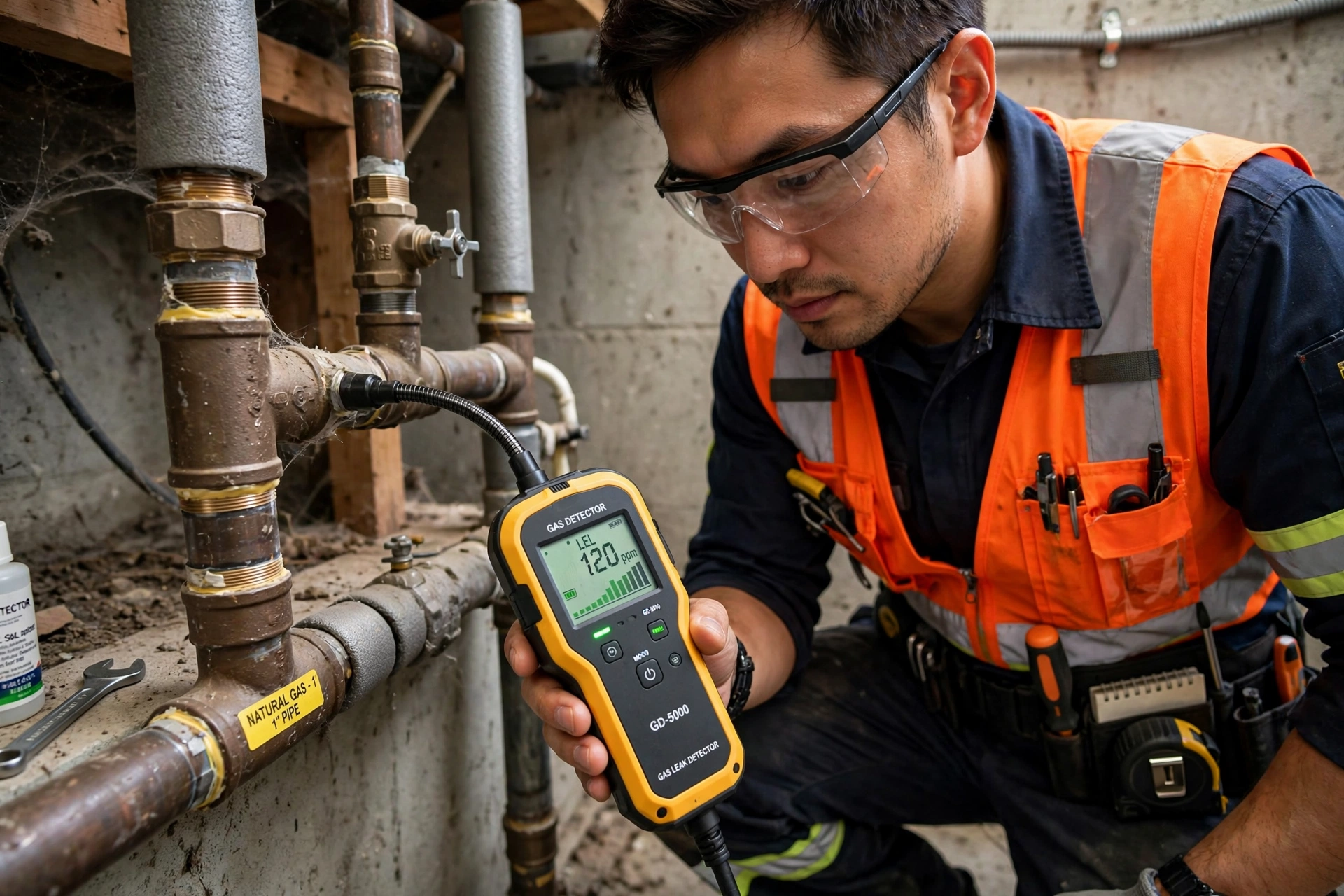
Replacement is usually the right call when leaks keep recurring in different spots, when corrosion or damage shows up in multiple areas, or when the piping is decades old and an inspection finds it deteriorating throughout. A single failed fitting on an otherwise sound system is a repair job. After a full assessment, we will show you exactly which sections are failing and give you a straight recommendation — repair or replace — with the reasoning behind it.
What pipe materials do you use for gas line replacement in Leander?
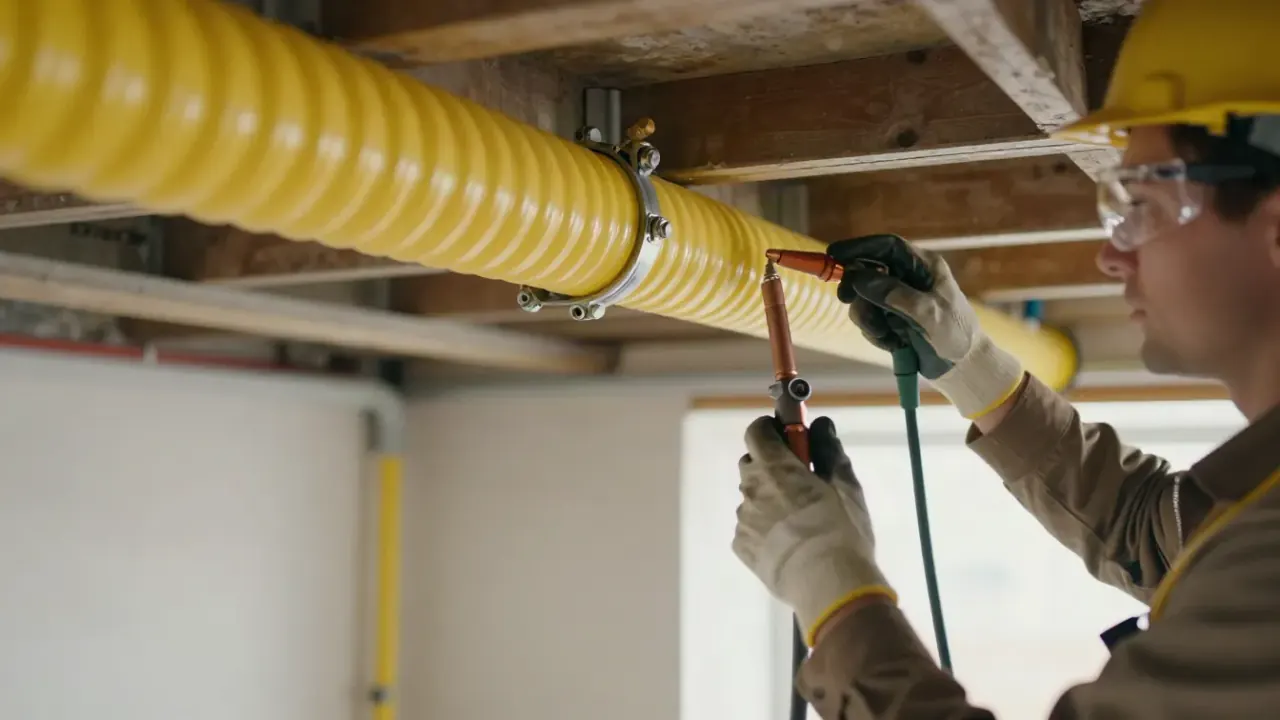
Indoors we use black iron for straight accessible runs and CSST — flexible stainless steel tubing — where routing through finished walls and attics needs to stay minimally invasive. Underground we use polyethylene pipe, which cannot corrode and flexes with Leander's expansive clay soil instead of cracking. Each material is used where it performs most reliably, and every installation is bonded, supported, and installed to current code.
Will I need a permit for gas line replacement in Leander?
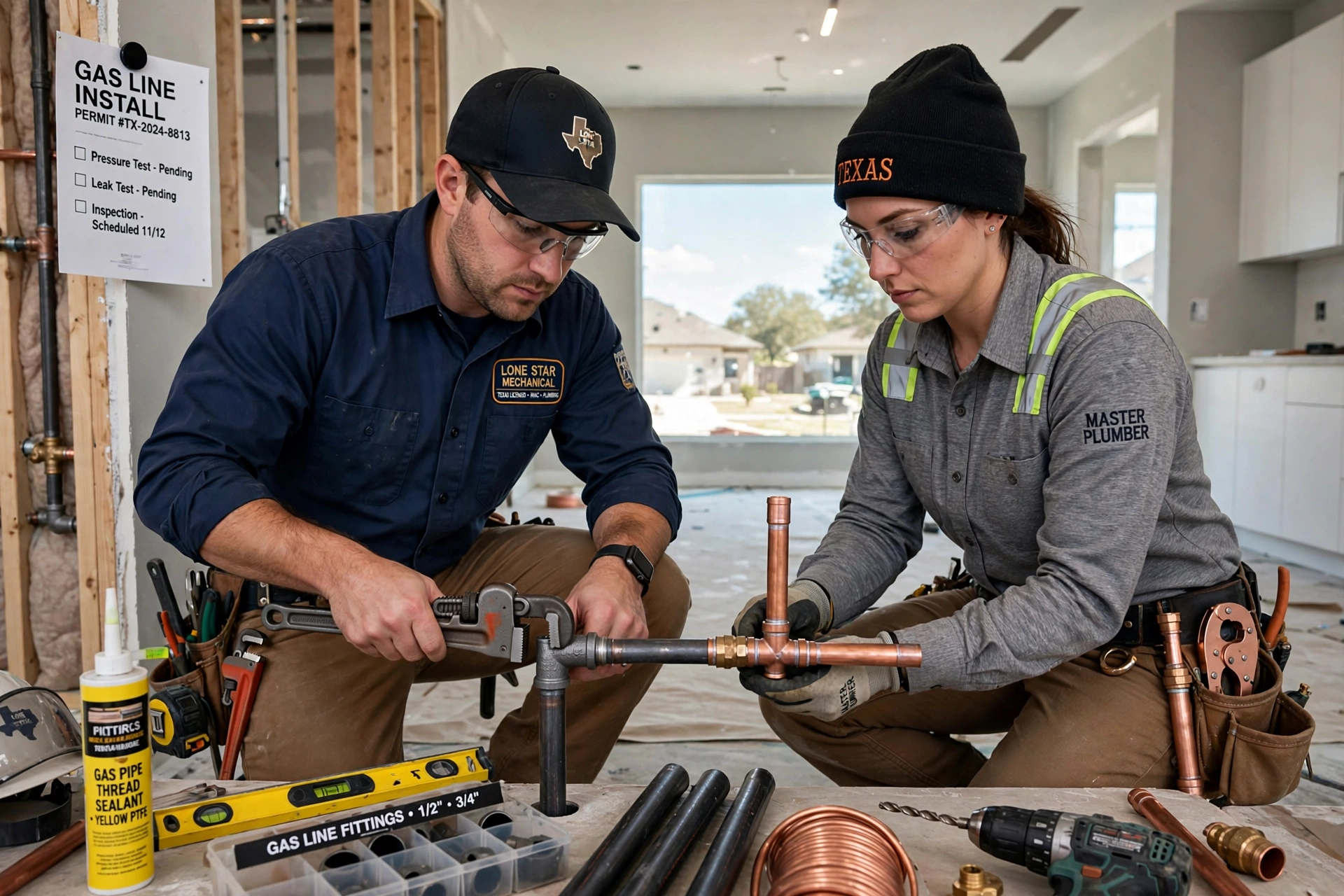
Yes — gas piping work in Leander requires a permit from the city's building inspections office, and the finished installation must pass inspection before Atmos Energy restores service. We handle the permit application as part of the project and coordinate the inspection when the work is complete, so you do not have to navigate the process yourself.
How long will my gas be shut off during a replacement?
The gas stays off for the installation and testing portion of the project, which for most homes is a matter of days. Your furnace, water heater, and gas stove will be out of service during that window. Before work begins, your technician will lay out a realistic day-by-day schedule so you can plan around it — many homeowners schedule replacements during mild spring or fall weather to minimize disruption.
Can you replace just part of my gas line, or does it have to be the whole system?
Partial replacement is absolutely an option when the assessment shows the rest of the system is sound. Common partial jobs in Leander include the underground run from the meter to the house, a corroded riser assembly, or one deteriorated interior branch. The remaining pipe is evaluated and pressure tested along with the new work — if the evaluation raises doubts about other sections, we will tell you plainly rather than leave questionable pipe in service.
Will replacement work damage my walls or yard?
Some disruption is unavoidable, but it is planned and minimized. Interior re-piping may require small openings in walls or ceilings to route pipe, and CSST's flexibility keeps that demolition to a minimum — the openings are patched as part of the job. Underground replacement involves trenching along the pipe route, and the trench is backfilled, graded, and cleaned up afterward. You will know the full plan before work starts.
What happens after the new gas line is installed?
The system is pressure tested with air to prove it is leak-free, then the city inspects the work. Once it passes, Atmos Energy restores service at the meter. Our technician then relights pilots, verifies each appliance operates correctly under load, and walks you through the new system — shutoff locations, what was replaced, and what to watch for. You receive documentation of the work, including the permit record and test results, for your home records.