Gas Line Repair Leander TX
Get Estimate

Gas Line Repair in Cedar Park, Texas

From the 1980s brick homes around Anderson Mill to the newer builds near Lakeline, Cedar Park’s gas systems span four decades of construction — and each decade has its own needs. We service them all: the aging black-iron in the 80s neighborhoods, the 90s CSST systems hitting mid-life, and the new installations in the growth corridors.

Get a Free Estimate Call Us Now
Cedar Park & Williamson County Fast Emergency Response Local Gas Line Specialists
Safety First Gas safety is our focus
Fully Insured Insured & Bonded
Emergency Response prompt scheduling
Warranty Backed Meticulous work in Cedar Park
Gas line repair in Cedar Park

Gas Line Repair You Can Trust in Cedar Park


Cedar Park grew from a railroad settlement into one of Williamson County’s largest suburbs — and its gas infrastructure grew in layers. We work across all of them, with diagnostics that read the era before recommending anything:

  • Daily service across Anderson Mill, Cypress Creek, Lakeline, and the surrounding neighborhoods.
  • Rock-capable methods for limestone lots — underground work planned for the ground, not against it.
  • Upfront written estimates after on-site diagnosis — clear scope before any work begins.
  • Technicians who know Cedar Park’s housing eras, limestone geology, and clay pockets — local knowledge that speeds diagnosis.

Cedar Park’s Common Gas Problems

Cedar Park’s combination of housing eras, limestone ground, and clay pockets creates a distinctive problem set:

Aging black-iron in 1980s–90s neighborhoods

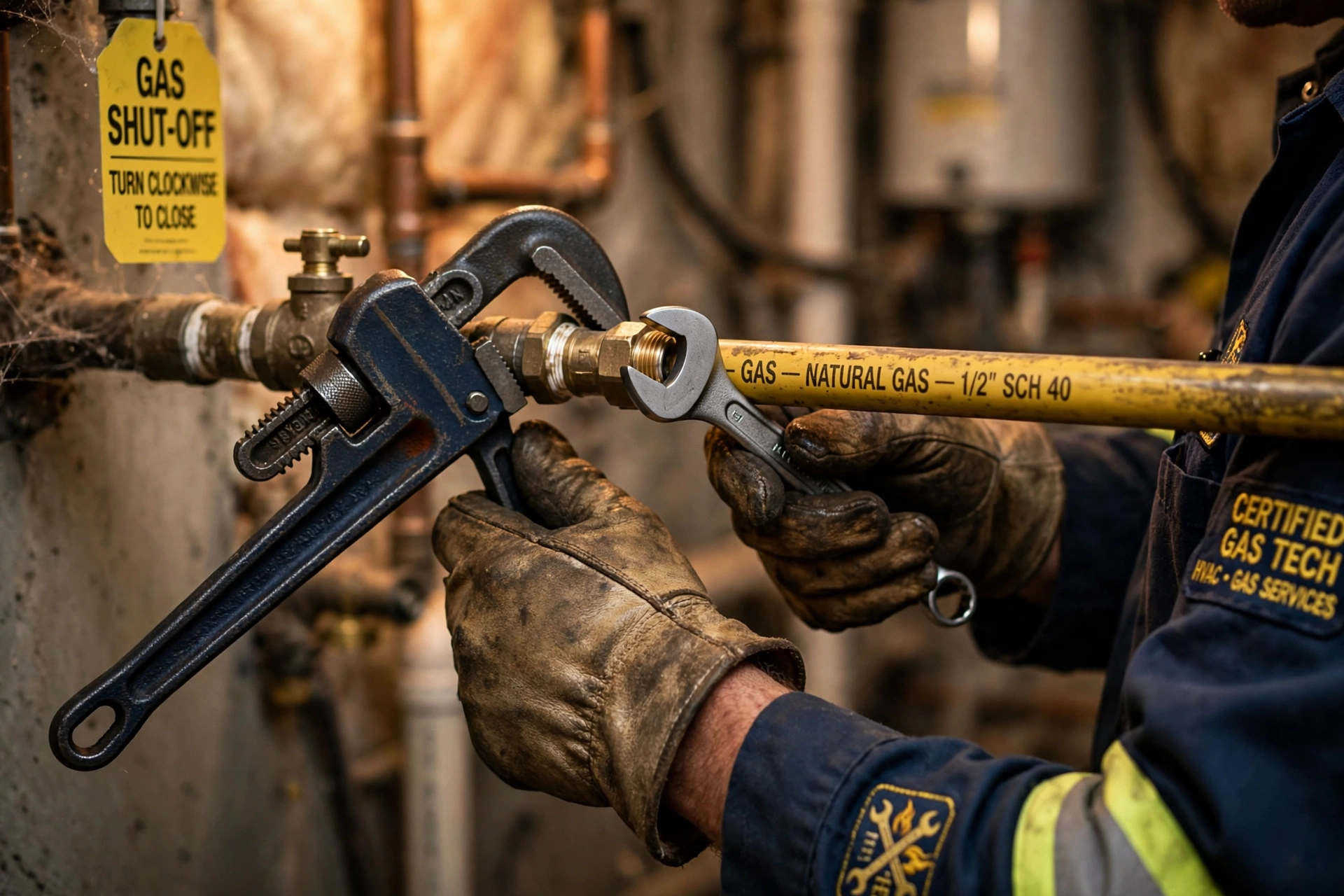
Thousands of Cedar Park homes built during the city’s 80s and 90s growth still run original black-iron gas piping — now 30–40 years old, corroding at threads and risers. This is our most common renewal territory in the city.

Limestone bedrock under thin soil

Much of Cedar Park sits on hard limestone with only thin soil cover — shallow buried lines, difficult trenching, and rock-shifted joints. Underground work here is a deliberate craft, planned into every estimate.

Clay pockets and soil movement

While limestone dominates, several Cedar Park subdivisions sit on expansive clay pockets that swell and shrink seasonally — working buried joints and stressing risers. The ground moves; the gas work has to tolerate it.

Undersized lines for outdoor living

Cedar Park backyards are built for year-round living — outdoor kitchens, pool heaters, fire features — but the original gas branches weren’t sized for them. We upsize to match the lifestyle the home actually lives.

Signs Your Cedar Park Home Needs Gas Attention

Gas problems rarely fix themselves, and early action is always the smaller job. Watch for:

  • Smell of gas in your home

    Natural gas is odorized to smell like rotten eggs. If that smell appears — strong or faint, constant or intermittent — treat it seriously: leave, call 911 or the utility from safety, then call us.

  • Hissing or whistling sounds

    A distinct hiss near a gas line, meter, or appliance connection means gas escaping under pressure. New, continuous, and located where gas runs — that combination always earns a professional visit.

  • Dead vegetation along the line’s path

    A strip of dead grass or shrubs tracing a line across the yard — especially one that ignores watering — can mark an underground leak displacing soil oxygen. The pattern is the clue.

  • Unexplained gas bill increases

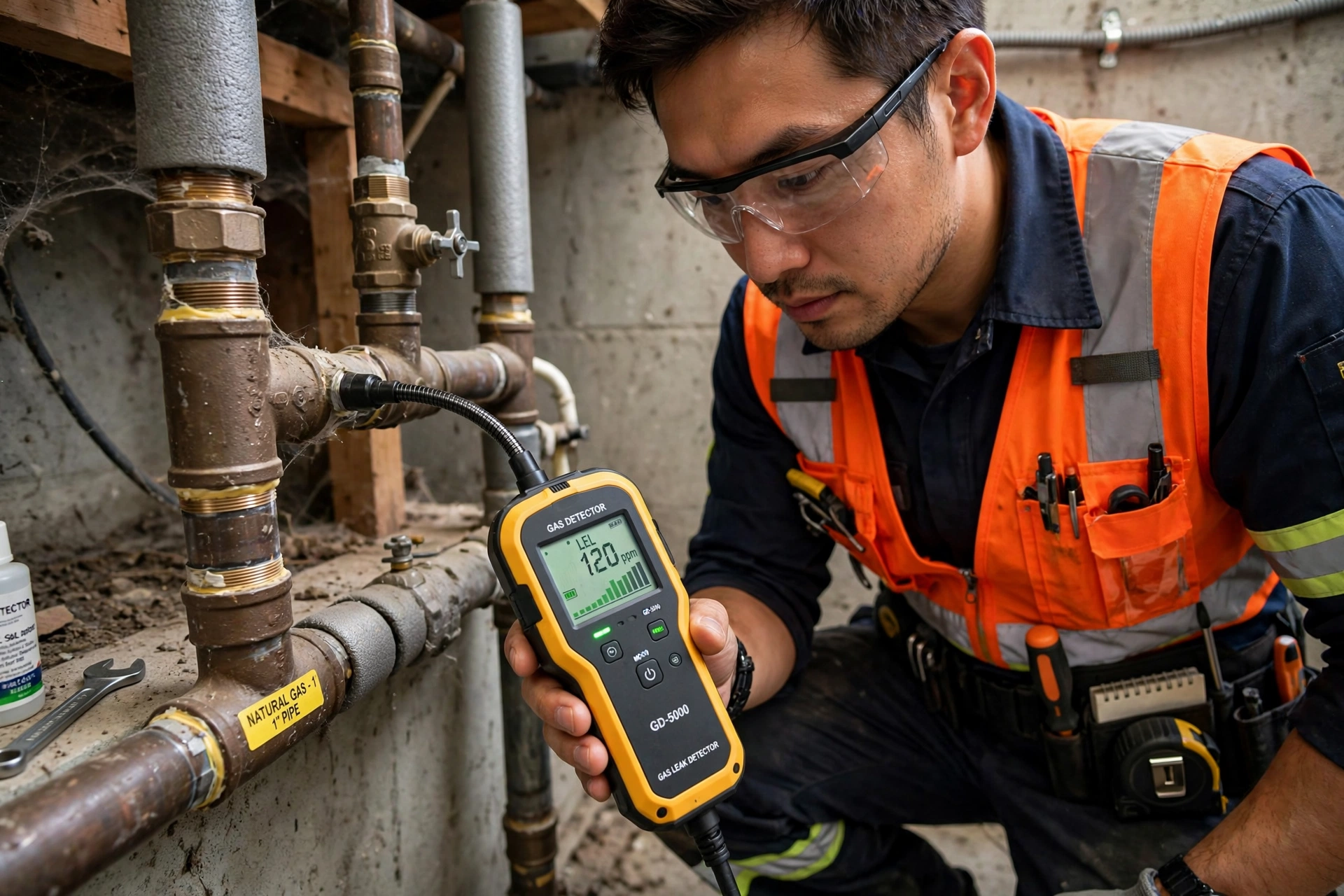
    When the bill climbs but usage hasn’t — no new appliances, no colder winter — a slow leak may be bleeding gas around the clock. Pressure testing finds what the bill suggests.

  • Yellow or lazy appliance flames

    Natural gas should burn crisp blue. Yellow, orange, or lazy flames — or pilots that won’t stay lit — signal combustion or supply problems worth professional diagnosis.

What Shapes Gas Line Costs in Cedar Park

Every gas line job in Cedar Park is priced on its own facts — the failure, the material, the ground, the access. These are the factors your estimate reflects:

Job Scope

Scope & complexity varies per job

  • Repairs sized to the actual failure — diagnosed first, quoted in writing.
  • Single fitting, valve, or connector renewals — the targeted fixes.
  • One-appliance branch work — new connections, properly sized.
  • Straightforward interior routing — accessible runs, efficient work.
Call to Discuss

Permits & Testing

Compliance & verification included every job

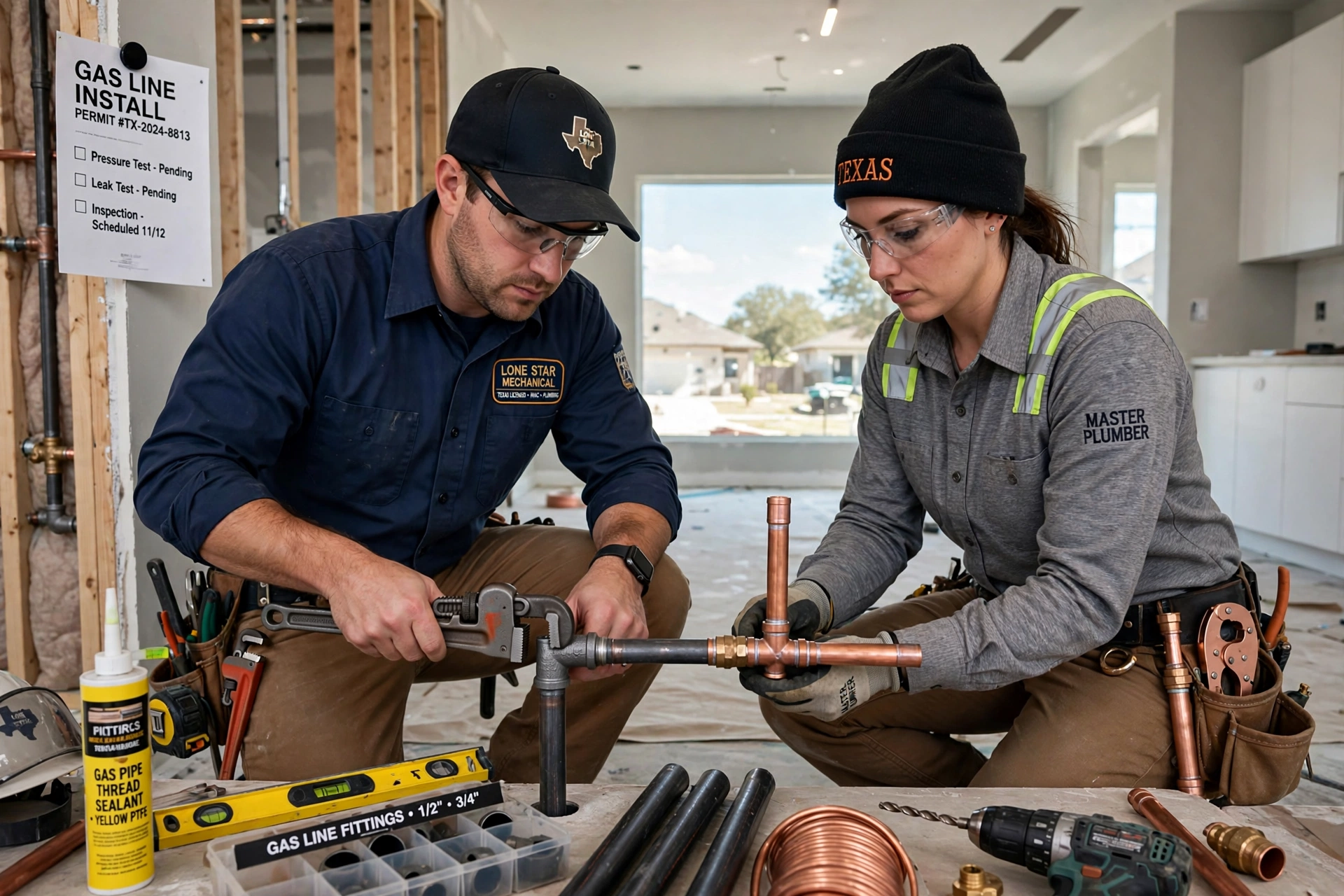
  • City of Cedar Park permits — handled as part of the project.
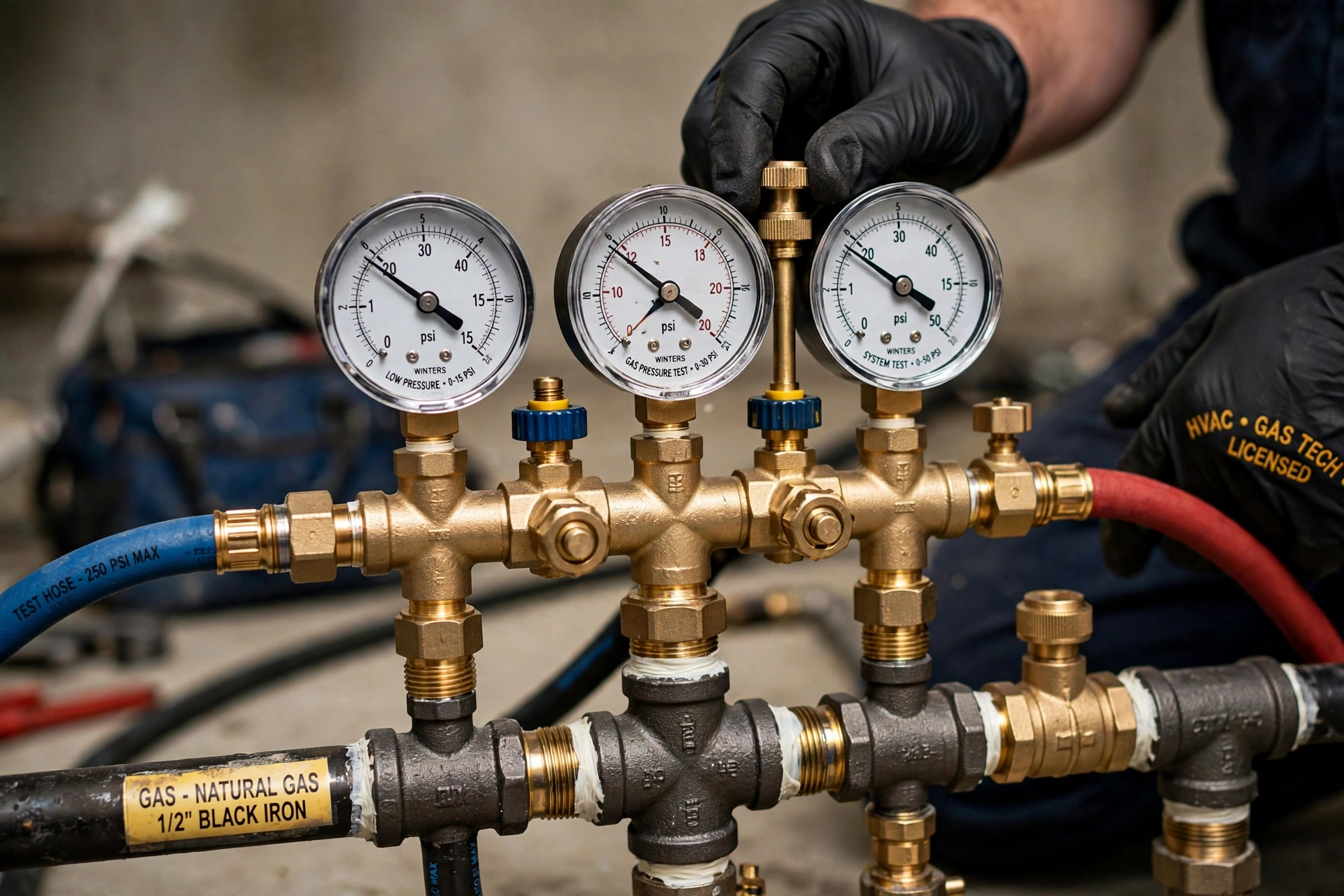
  • Pressure testing on completion — the verification, every time.
  • Inspection scheduling handled — coordinated, not left to you.
  • Load sizing for new appliances — the math that prevents starvation.
Call to Discuss
  • Type of repair needed — a single leaking fitting on an exposed run and a buried line renewal are different projects, diagnosed and priced as such.
  • Materials used — black iron, coated steel, and CSST each carry their own material and labor profiles, specified for the job.
  • Access and working conditions — an open attic and a line under a slab are different working environments, reflected honestly in the estimate.

Cedar Park Landmarks and Service Areas

Cedar Park is easy to navigate once you know its anchors — and we know them all, because we work across the whole city:

H-E-B Center at Cedar Park

The city’s arena and events venue near the 183A corridor — the landmark half our customers use for directions, and the center of the commercial growth we service.

Lakeline

The Lakeline area — the mall, the MetroRail station, and the 183A interchange — anchors the city’s eastern growth, where newer gas systems serve the expanding neighborhoods.

Coverage Across Cedar Park & Williamson County

786137871778750786417863478628

Our Cedar Park coverage runs neighborhood by neighborhood: Anderson Mill’s 80s brick, Cypress Creek’s established streets, the Lakeline growth corridor, and the limestone-lot subdivisions west — each with its era-specific gas needs, each served with the same verified standard.

How Seasons Affect Cedar Park Gas Systems

Cedar Park’s year runs on a Central Texas cycle — and each season writes its signature on gas piping:

Spring

Spring brings storm season to the I-35 corridor: hail, high winds, and lightning. CSST bonding gets its annual test from the sky — and physical storm damage can stress exposed gas components.

Tip: after a severe storm, walk your yard for new soft spots or exposed piping — and consider a bonding check if lightning was close.

Summer

Summer brings extreme heat and long dry stretches, and the clay pockets shrink — pulling away from buried pipe and stressing joints. Outdoor gas features work their hardest in the heat.

Tip: if grill flames drop when the pool heater fires up, your outdoor branch may be undersized — the summer load reveals the sizing truth.

Fall

Fall ushers in the first real cold fronts — and the most practical inspection window of the year. Heating systems wake up, and the issues they developed over summer surface.

Tip: schedule a system check before the first cold front — fall inspections catch the problems winter would turn into emergencies.

Winter

Cedar Park winters are mild, but the occasional hard freeze — and the memory of 2021 — reminds everyone that regulators, seals, and exposed components need freeze resilience.

Tip: locate your main gas shutoff valve now, while the weather is calm — and make sure every adult in the house knows where it is.

Nearby Cities We Serve

Cedar Park sits at the center of our Williamson County service area — Leander, Georgetown, Round Rock, and the surrounding communities, all within our regular routes.

Cedar Park Gas Line FAQs

Straight answers from our team to the questions Cedar Park homeowners ask most:

What gas line services do you handle in Cedar Park?
The full residential range: leak detection and repair, new installations, inspections, appliance hookups, pressure testing, and system renewals — across all of Cedar Park’s housing eras, from 80s black-iron to new construction.
My lot sits on limestone — can you still run underground gas?
Yes. Much of Cedar Park sits on hard limestone with thin soil, and we plan for it: rock-capable trenching, proper bedding that protects pipe from abrasive ground, and realistic scheduling. Limestone is a known condition here, not an obstacle — just a line item estimated honestly.
How does Cedar Park’s soil affect buried gas lines?
Two ways. First, the limestone bedrock: thin rocky soil leaves buried lines shallow and complicates trenching. Second, the clay pockets: expansive soil that swells and shrinks, working joints seasonally. Buried gas work here accounts for both — proper depth, bedding, and flexible PE where it counts.
Do I need a permit for gas line work?
For most gas line work beyond a simple appliance connector swap, yes — the City of Cedar Park requires permits and inspections, and we handle the entire process. The inspection is your independent verification, and the documentation protects your resale.
My Anderson Mill home was built in the 1980s — should the gas lines be replaced?
Not automatically, but they deserve a close look. The black-iron piping in 80s homes is now 35–40 years old — an inspection with pressure testing tells you whether it’s sound, aging gracefully, or due for renewal. The assessment gives you the honest answer; age alone doesn’t decide it.
Do you offer emergency gas line repair?
Yes. A suspected gas leak is always treated as urgent — leave the area, call 911 or the utility from safety, then call us at (512) 877-2533. We prioritize suspected leaks around the clock.
What should I do if I smell gas?
Treat it as serious until proven otherwise. Leave the home immediately — don’t touch switches, don’t use phones inside, don’t investigate. Call 911 or the gas utility from a safe distance. Once the scene is secure, call us for the professional locate-and-repair.

Contact Us for Gas Line Repair in Cedar Park

Whether you smell gas near the meter, your pool heater is starving, or your 80s system needs its assessment — call (512) 877-2533. We’ll diagnose with instruments, quote in writing, and repair to code.

Schedule Service Send a Message

Get in Touch with Us

Tell us what’s going on at your Cedar Park home — a suspected leak, an aging system, or a project you’re planning. We’ll respond with straight answers.

Or call us right now at (512) 877-2533 — we answer.

Gas Line Repair Leander TX


  • Address

    1789 S Bagdad Rd, Leander, TX 78641, United States, Leander, Texas

  • Hours

    Mon–Fri: 7AM – 7PM
    Sat: 8AM – 4PM
    Sun: Emergency Only
    Emergency calls prioritized

Call (512) 877-2533 Get Quote
Call Quote