Gas Line Repair Leander TX
Get Estimate

Gas Line Installation in Leander, TX

New gas capacity for Leander's established homes — sized right, installed to code.


Leander's 90s and 2000s homes were plumbed for the appliances of their era. Since then, families added tankless water heaters, standby generators, outdoor kitchens — loads the original piping never anticipated. Running a new gas line here is about matching the home you have now, not the one the builder delivered: proper BTU math, the right materials for Hill Country ground, permits pulled, and testing that proves it.

Gas line installation in Leander, TX: technician routing a new run of yellow flexible gas piping
Trained Team Installation specialists
Fully Insured Insured & Bonded
Emergency Help Call to plan your project
Careful Workmanship Sized for your appliances

What Every Installation Includes

From the first walkthrough to the final pressure test, every installation follows the same complete sequence — no skipped steps, no “we'll come back for that.”

Planning & Sizing

We map the actual route — not the straight-line fantasy — and add up the BTU demand of every appliance the line will serve, present and planned. The sizing math follows National Fuel Gas Code tables, with headroom for the appliance you'll add in three years.

Material Selection

Buried yard runs get polyethylene; interior branches get steel or properly bonded CSST; transitions get the right fittings for each material. The choice follows the location and the load — never just what's on the truck.

Installation Work

Our technicians run the line, set accessible shutoff valves and sediment traps where code requires them, and keep the work area — and your landscaping — as intact as the job allows.

Testing & Verification

The finished line is pressure-tested and every joint is swept with a calibrated detector. Gas doesn't flow until the numbers say the system is sound — and you get the documentation to prove it.

What Installation Means for a Leander Home


A gas line installation runs new piping from your meter — or from an existing branch with capacity to spare — to wherever gas needs to go: a new appliance location, an outdoor living space, a workshop, a generator pad. In Leander's established neighborhoods, the work usually threads through finished homes and mature yards, which is why route planning matters as much as pipefitting.

Most of our installation calls fall into three buckets: families upgrading appliances beyond what the original piping can carry, outdoor living projects that need gas where no gas has ever been, and remodels that moved the appliances to new locations. Each gets engineered, not improvised.
How Our Installation Process Works

Here is the sequence from first call to first use — you approve every step before we take it.

01

Schedule

Call (512) 877-2533 or send a message. We'll set a site visit at your convenience and tell you what to have ready — usually just access to the meter, the attic or crawlspace, and the project area.

02

Plan

Our technician walks the route, calculates the real BTU load, identifies the material and method for each section, and explains the plan — including permits and the inspection step — before you commit to anything.

03

Install

We run the line to code: proper depth and bedding underground, protection plates where piping passes through framing, shutoffs and sediment traps where required. The work is neat, permitted, and inspectable.

04

Test & Review

The new line is pressure-tested, every joint is leak-checked with instruments, and we walk you through the finished system — where the shutoffs are, what was done, and what the paperwork says.

Tools and Methods We Use

Tools & Equipment

Pipe Wrenches

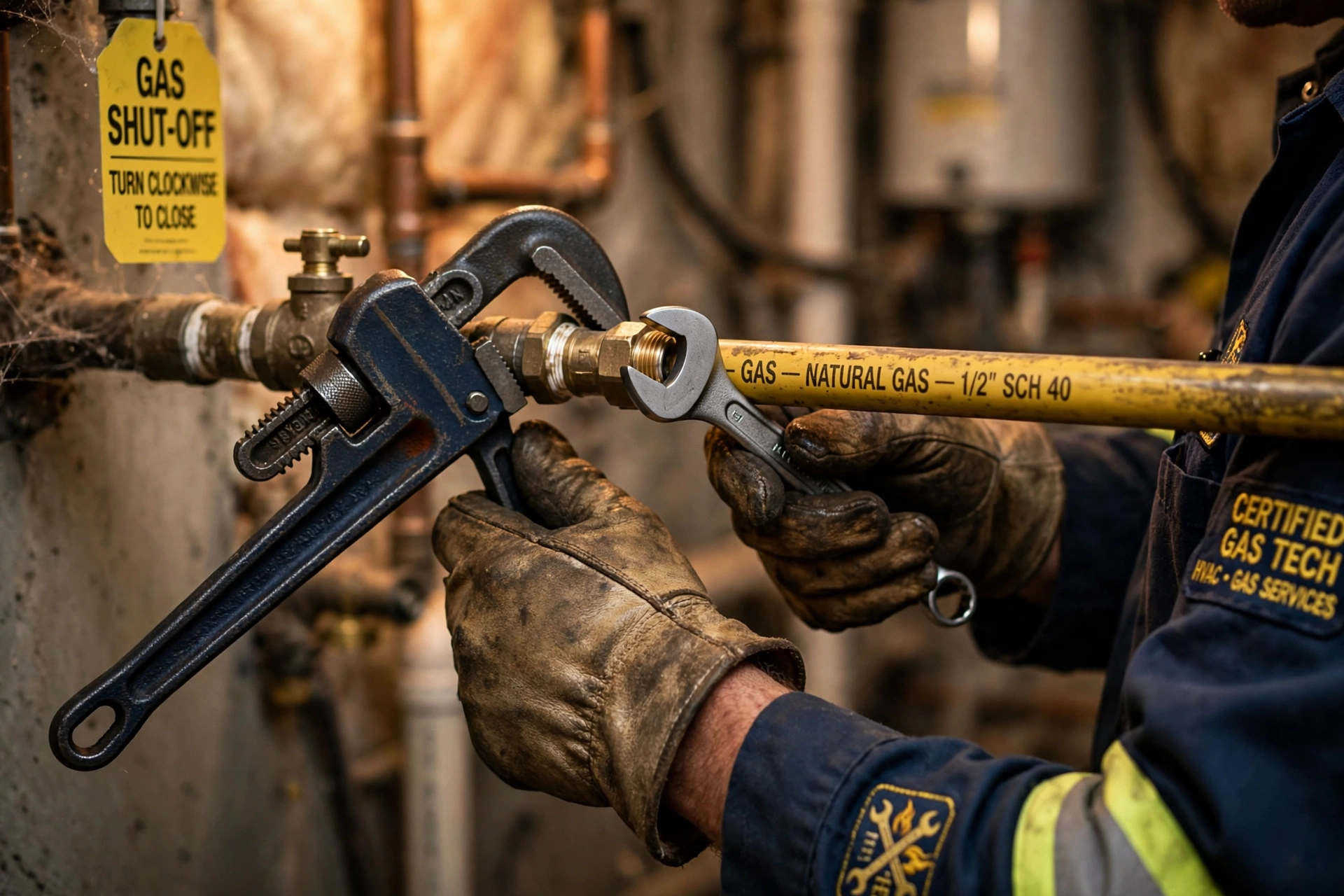
Sized to grip without crushing — used to tighten every fitting to its proper torque, because a joint's decades-long seal starts with correct assembly.

Gas Leak Detectors

After the line is in, we sweep every joint with a calibrated detector. Human noses are good; instruments are better — and they find the weeps that noses miss.

Pressure Gauges

The new run is pressurized and watched over time. A steady gauge reading is the objective proof that the system holds — no interpretation required.

Pipe Cutters & Threaders

Clean, square cuts and proper threads are what make new joints seal for decades. The tooling matters because the joint's whole life is decided at assembly.

Methods & Standards

Load Calculations

We size pipe using National Fuel Gas Code tables so the line delivers full pressure with every appliance running — the math that prevents the “everything works until the furnace kicks on” problem.

Local Code Compliance

Leander and Williamson County have specific requirements for permits, materials, and inspections. We build to them as a matter of course — the inspection passes because the work was right, not because we got lucky.

Pressure Testing

Every new installation is pressure-tested and monitored before it goes live. Testing isn't a formality; it's the moment the installation proves itself.

When a New Gas Line Makes Sense

01

Your 90s or 2000s home outgrew its original piping.

What we do: The builder sized for the builder's appliances. We calculate your actual current and planned load — tankless, generator, outdoor kitchen — and run new capacity where the old system falls short.

→ Every appliance gets the steady supply it was designed for, at full pressure, even with everything running.

02

You are switching an appliance to gas.

What we do: Moving to a gas range, a tankless water heater, or a gas dryer means a new branch from the system — sized for the appliance, routed cleanly, with its own shutoff.

→ You get the performance of gas without overloading the existing piping or starving the other appliances.

03

You are remodeling and the layout changed.

What we do: Kitchen and laundry remodels move appliances — and gas lines have to follow. We reroute while walls are open, replace any questionable old sections we expose, and leave the new work permitted and documented.

→ Your renovated space gets a clean, compliant gas system behind the new finishes — not a patchwork of old and new.

Installation, Engineered for Leander Ground

Installing gas lines at the Hill Country's edge means dealing with what's underground: thin soil over limestone, oak roots with decades of growth, clay that moves with the seasons. We plan every route for the ground it actually crosses.

Neighborhoods We Serve

  • Crystal Falls

    Leander's largest master-planned community, where growing families add outdoor kitchens, pool heaters, and generators to 2000s-era homes — new gas capacity for homes that outgrew the original plan.

  • Travisso

    Travisso's hillside lots and rocky terrain make trenching a craft: careful routing around rock shelves, proper bedding, and lines that respect the Hill Country landscape.

  • Benbrook Ranch

    Early-2000s homes hitting the remodel wave: kitchen renovations, appliance upgrades, and additions that need gas in new places — reroutes and new branches in finished homes.

Local Conditions We Plan For

  • Shallow limestone and rocky soil

    Much of Leander sits on thin soil over limestone, which makes trenching slower and demands rock-capable methods — planned into the estimate, never a surprise.

  • Texas 811 and safe digging

    Any underground work starts with Texas 811 locates so existing utilities get marked before we break ground — the law, and the only sane way to dig.

Before: The System That Can't Keep Up

Before

A familiar story: a homeowner installs a high-BTU gas range, and suddenly the water heater struggles whenever the oven's on. The 1990s branch line was never sized for both — the appliances are fighting over pressure.

After

Our approach: calculate the real combined BTU load, run a properly sized new line or dedicated branch, and verify full pressure with everything running. The range roars and the water heater recovers — simultaneously.

Maintenance: have the load rechecked if you add another gas appliance — capacity planning is ongoing, not one-time.

Before

Another common one: a new outdoor kitchen with a grill, side burner, and fire pit — three gas loads where the yard previously had none, across a lot with limestone two feet down.

After

Our approach: trench a new buried polyethylene run from the meter across the lot, sized for all three loads plus headroom, with a shutoff at the patio. Rock-aware routing, proper depth and bedding, full restoration.

Maintenance: exercise the patio shutoff each spring before grilling season, and keep the locate marks' route in mind for future planting.

Before

And for remodels: a kitchen renovation moves the range to the island — but the old gas stub is in the wall where the range used to be, and it's 1990s steel of unknown condition.

After

Our approach: reroute the branch to the island while walls are open, replace the questionable old sections we expose, and document the new work with permits and inspection records for the homeowner's file.

Maintenance: keep the permit and inspection records with your remodel paperwork — future buyers' inspectors will ask.

Problems a New Gas Line Solves

Sometimes the right fix isn't repairing the old line — it's installing the capacity the home actually needs now.

Problem

Original lines that can't carry modern loads

Decades-old steel branches in 90s subdivisions were sized for 90s appliances. Add a tankless water heater or a standby generator and the math breaks — pressure drops, appliances underperform.

Our Fix

We install a new, properly sized run — or a dedicated branch — so every appliance gets full pressure. Sized from real BTU totals, not rules of thumb.

Problem

Gas needed where none exists

Outdoor kitchens, pool heaters, fire pits, workshops, and generators need gas in places the builder never ran it — across yards, around pools, to the back fence.

Our Fix

We run new lines from the meter or an existing branch with spare capacity — buried polyethylene outside, proper shutoffs at each endpoint, all of it permitted and tested.

Problem

Remodels that moved the appliances

When walls move, gas lines have to move too — and old routing rarely matches new floor plans. The “just extend it” approach creates a patchwork.

Our Fix

We reroute cleanly during the remodel — while walls are open, when it's cheapest — and bring every touched section up to current code.

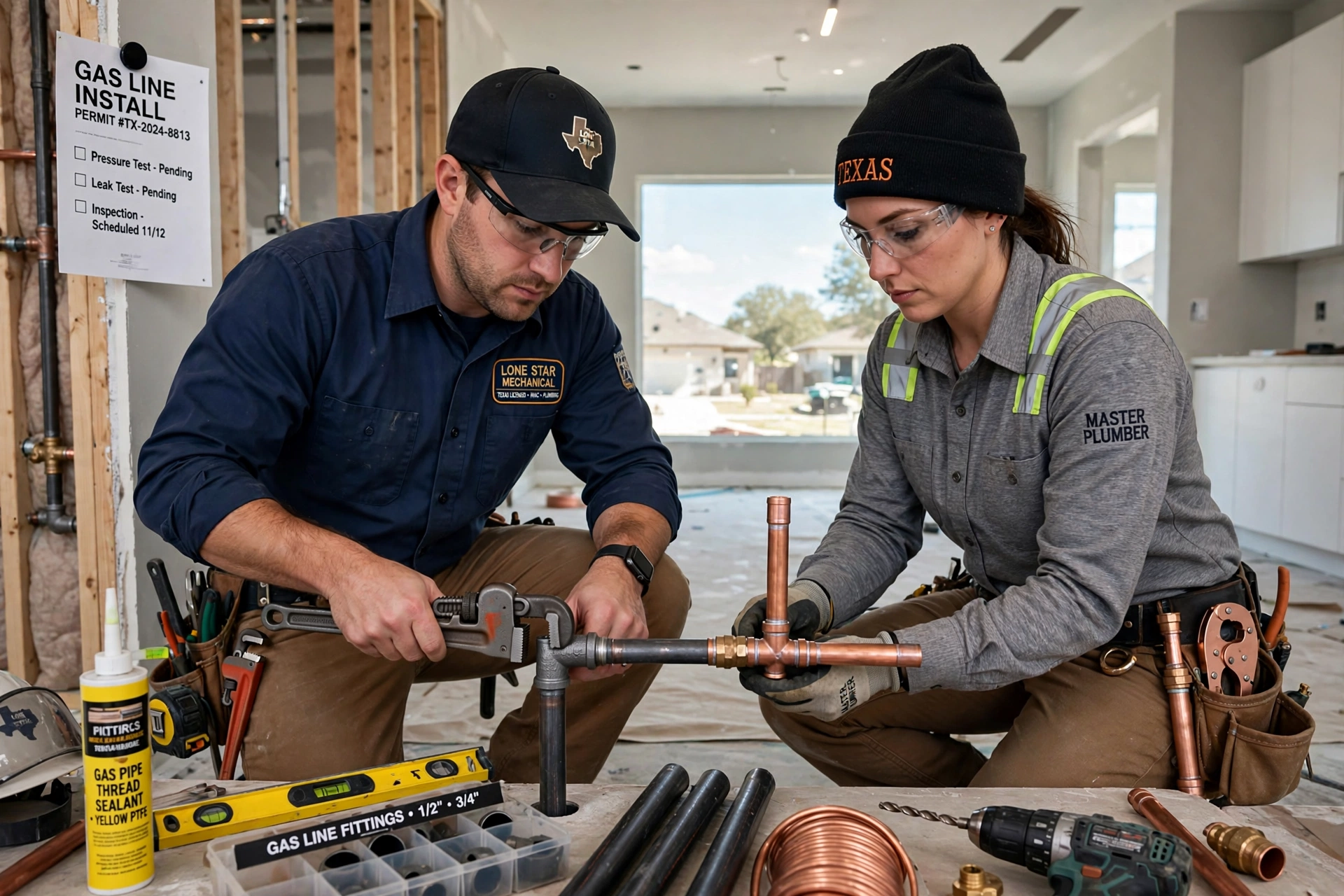
Leander, TX gas line installation: close-up of hands applying pipe joint compound to a new fitting

Why Professional Installation Matters

A gas line is not a DIY project and not a handyman special. Here's what professional installation actually buys:

  • Safety from day one

    Correct sizing, proper materials for each location, and tested joints mean the line is safe before gas ever flows — not “probably fine.”

  • Code compliance

    Permitted, inspected, and built to the National Fuel Gas Code plus local amendments. The paperwork exists, the inspector signed off, and the next buyer's inspector will find it all in order.

  • Full appliance performance

    A line sized for the actual BTU load delivers steady pressure with everything running — the range, the tankless, and the fire pit can all go at once.

  • Built for this ground

    Proper depth and bedding in shifting clay, corrosion-resistant materials for buried runs, root-aware routing near mature oaks — installed for Leander's realities, not a textbook's.

Gas Line Installation Cost Factors in Leander

No two installations cost the same, because no two runs are the same length, cross the same ground, or serve the same loads. What we can tell you is exactly what shapes your number — and we'll put your specific number in writing after the site visit.

What Goes Into Your Estimate

A detailed written estimate after our site visit — materials, labor, permits, and testing, itemized so you can see what each part costs and compare it against anyone.

Professional installation is an investment in a system that will serve for decades — sized right, documented, and safe from the first day.

What changes the price

01

Length of the run

A short branch to a dryer and a hundred-foot buried run to a pool heater are different projects — length drives material, labor, and excavation alike.

02

Materials

Steel, CSST, and polyethylene suit different situations — buried, exposed, interior — and each carries its honest material and labor profile.

03

Labor and access

Trenching through limestone, boring under a driveway, or fishing pipe through finished walls takes more time than an open run — priced as what it is.

04

Permits and inspections

Where Leander or Williamson County requires permits and inspections, we handle them — the fees and the scheduling are part of the project, not extras.

What You Can Count On

Our Qualifications

  • Trained gas line technicians — our team installs gas piping daily, not occasionally. Repetition is what makes the work consistently right.
  • National Fuel Gas Code knowledge — we size and install to NFGC tables and local amendments, the standards your inspector checks.
  • Texas 811 aware — underground work never starts until existing utilities are located and marked. Every time, no exceptions.

How We Work

Clear communication — you approve the plan before we start.

You will see the proposed route, the specified materials, and the itemized estimate before any work begins — no surprises mid-project.

Careful workmanship — we respect your property.

We protect landscaping along trench routes, keep the work area tidy, and restore surfaces properly — your yard should look like we were careful, because we were.

Thorough safety testing — every line gets verified.

New installations are pressure-tested and leak-checked before gas ever flows. The system proves itself before you depend on it.

Experience With Leander Installations

We install gas lines across Williamson County every week — new construction tie-ins, remodel reroutes, outdoor living projects, and capacity upgrades for homes that outgrew their original piping.

  • Technicians trained in gas line installation, BTU load sizing, and safety procedures — the full discipline, practiced daily.
  • Hands-on experience with steel, CSST, and polyethylene — each material in its proper application, installed to its proper standard.
  • Familiar with Leander and Williamson County permit and inspection requirements — the paperwork handled as part of the job.
  • Equipped with threading tools, trenching gear, pressure gauges, and detection instruments — the right tools for every phase.
Get Started Today
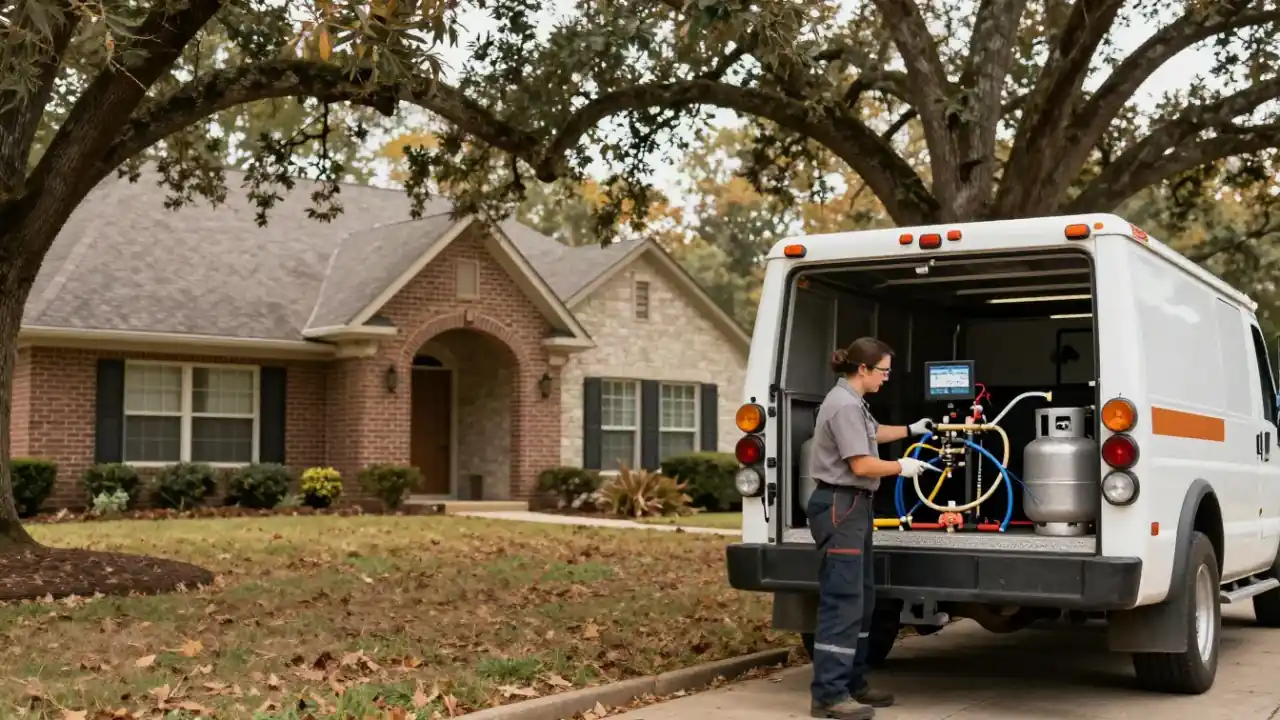
Leander gas installation service vehicle parked at a brick home before a new gas line install

What to Expect From Our Service

Here is how we treat every installation visit — no surprises, just straight work.

“We show you the full plan — route, materials, and itemized cost — and do not start until you approve it.”

C

Clear Communication

On every visit

“We give you an itemized estimate before we start, and we explain any change before it happens — no surprise line items.”

H

Honest Estimates

On every job

“We pressure-test every new line and check each joint before gas flows — verified safe, not assumed safe.”

T

Thorough Testing

Before we leave

Frequently Asked Questions

Straight answers about gas line installation in Leander — the process, the permits, and the practical questions.

How do you size a new gas line?
We add up the BTU rating of every appliance the line will serve — existing and planned — then apply National Fuel Gas Code sizing tables for the run's length and configuration. The result is a pipe diameter that delivers full pressure with everything running, plus headroom for future additions. It's math, not guessing.
Do I need a permit in Leander?
In most cases, yes — Leander and Williamson County require permits and inspections for new gas line installations, and we handle the entire process: application, scheduling, and the inspection itself. The sign-off documentation is yours to keep, and it's valuable at resale.
Can you work with Leander's rocky soil?
Yes — shallow limestone is normal here, and we plan for it from the estimate stage. We use rock-capable trenching methods, proper bedding that protects the pipe from abrasive ground, and boring where trenching would destroy something worth keeping. Rocky soil is a known condition, not an excuse.
How long does installation take?
A straightforward appliance branch can be completed in a day; longer buried runs and complex remodel reroutes are scheduled as defined projects with timelines you approve upfront. You'll know the schedule — including any gas-off windows — before work begins.

Start Your Gas Line Installation in Leander Today

Planning a build, a remodel, or a new gas appliance? Call (512) 877-2533 — we'll walk the route, do the BTU math, and give you a written plan.

Call Now Request a Quote

Get in Touch with Us

Tell us about your project — new construction, remodel, or appliance upgrade. We'll respond with next steps, not a sales pitch.

Or call us right now at (512) 877-2533 — we answer.

Gas Line Repair Leander TX


  • Address

    1789 S Bagdad Rd, Leander, TX 78641, United States

  • Hours

    Mon–Fri: 7AM – 7PM
    Sat: 8AM – 4PM
    Sun: Emergency Only
    Call for urgent service needs

Call (512) 877-2533 Get Quote
Call Quote