Gas Line Repair Leander TX
Get Estimate

Gas Appliance Hookup Leander TX

New appliance, new gas line run, or new location — connected right, tested twice, and explained clearly


From gas ranges and water heaters to dryers, fireplaces, outdoor kitchens, and standby generators, most Leander homes depend on several gas appliances every single day. A proper hookup means the right connector, the right line size, an accessible shutoff valve, and code-compliant clearances — then a leak test of every joint before the appliance ever fires up. That is what we do on every visit, whether it is a single range in an established neighborhood or a whole-home generator in a new master-planned community.

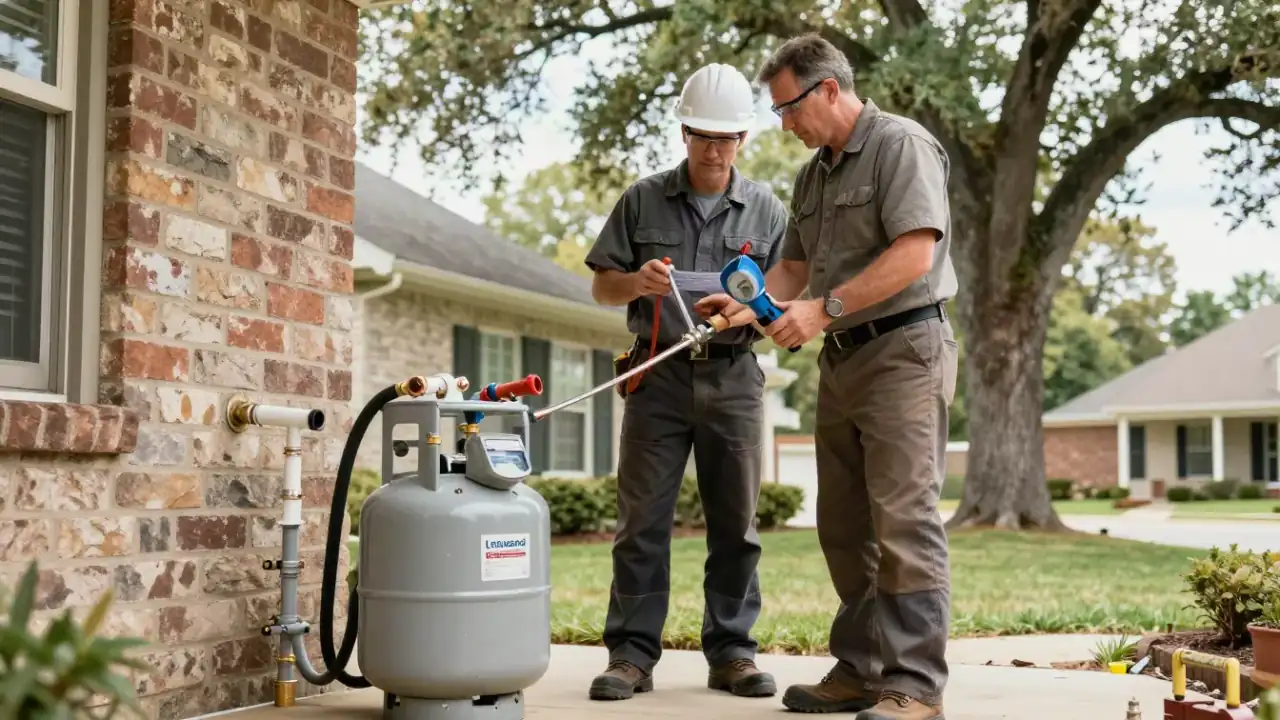
Gas technician in Leander, TX connecting a stainless steel flexible gas connector to a home appliance
Trained Technicians Gas Line Specialists
Service Area Leander & Williamson County
Fast Scheduling Book a time that works
Careful Workmanship Tested Before We Leave

What Our Gas Appliance Hookup Service Covers

Every hookup follows the same careful sequence, whether we are connecting a single range or roughing in gas for an outdoor kitchen. Here is what the visit includes.

On-Site Assessment

We start by looking at the appliance, its location, and the existing gas stub-out or supply line. We check the appliance's gas requirements against the supply line's capacity, confirm clearances and ventilation, and plan the connector routing — so there are no surprises once work begins.

Secure, Code-Compliant Connections

We connect the appliance with a new flexible gas connector rated for the appliance type, fresh sealant on threaded joints, a properly placed shutoff valve, and a sediment trap where code requires one. Every connection is tightened to the correct torque and routed so the connector is never kinked, stretched, or pinched.

Leak and Pressure Testing

Once everything is connected, we pressurize the line and test every joint with professional leak-detection solution and an electronic detector. Gas pressure is verified against the appliance manufacturer's specification before the unit is fired up for the first time.

Walkthrough and User Instructions

Before we go, we show you where the shutoff valve is and how to turn the gas off in an emergency, review the appliance's basic gas safety points, and answer your questions. You will know exactly what was done and what to watch for.

Understanding Gas Appliance Hookup in Leander, TX


A gas appliance hookup is the complete process of connecting a gas-burning appliance — a range, cooktop, dryer, water heater, fireplace, grill, or generator — to your home's gas supply. It sounds simple, but the details matter: the connector must be rated for the appliance, the supply line must carry enough gas for the appliance's BTU demand, the shutoff valve must be accessible, and the installation must meet the National Fuel Gas Code. A shortcut on any of these creates a safety risk or an appliance that never performs the way it should.

Leander adds its own wrinkles. The Central Texas humidity that hangs over Williamson County most of the year accelerates corrosion on connectors and valve bodies. Expansive clay soil shifts buried lines and the risers that feed outdoor kitchens and pool heaters. And in fast-growing communities, we often find new appliances connected to stub-outs that were roughed in years before the appliance was chosen — which means verifying line size and pressure before a single connection is made.

What to Expect During Your Gas Appliance Hookup

No surprises, no jargon. Here is how a typical hookup visit unfolds from booking to final walkthrough.

01

Schedule Your Visit

Call (512) 877-2533 or send a request online. We will find a time that works for you and confirm what we need: the appliance type and model if you have it, where it is going, and whether there is an existing gas stub-out nearby.

02

On-Site Assessment

Our technician looks over the appliance location, the existing gas line, and the shutoff valve, then confirms the plan with you — connector type, valve placement, and any code items that need attention — before any work starts.

03

Installation

We make the connections to current code, using new connectors and sealants, positioning the shutoff within reach, and adding a sediment trap where required. If the supply line needs extending or upsizing for the appliance's demand, we handle that too.

04

Final Testing and Walkthrough

Every joint gets leak-tested, gas pressure is verified, and the appliance is fired up and checked — burners lit, flame quality confirmed. Then we walk you through the shutoff location and basic safety, and answer any questions.

Tools and Methods We Rely On

Hand Tools & Test Equipment

Pipe Wrenches

Sized for gas fittings and used to tighten connections to the correct torque — snug enough to seal, without damaging threads or cracking fittings.

Gas Leak Detectors

Electronic sensors plus professional-grade leak-detection solution, used together so no seep — however small — goes unnoticed at any joint.

Pressure Gauges

Used to confirm the gas pressure at the appliance matches the manufacturer's specification before the unit is lit for the first time.

Work Methods & Safety Standards

National Fuel Gas Code (NFGC)

We follow the NFGC for appliance connections, clearances, ventilation, and shutoff valve placement on every installation — the standard that local code is built on.

ANSI Standards

We use connectors and components built to recognized ANSI standards for gas appliance installations — rated, listed parts, never improvised fittings.

When to Call for Gas Appliance Hookup

01

Connecting a new gas range or cooktop in your Leander kitchen.

What we do: We connect your new range to the existing gas stub-out with a new flexible connector, install or verify the shutoff valve, add a sediment trap, and confirm the supply line can carry the range's BTU load. Burners are lit and flame quality is checked before we leave.

→ You get to cook on your new range the same day, knowing every connection was tested and the gas pressure is exactly right.

02

Replacing an aging gas water heater.

What we do: We disconnect the old unit, set the new heater in place, reconnect the gas line with fresh fittings, verify venting and combustion air, and confirm gas pressure matches the unit's rating. In Leander's hard-water areas, we also check that the installation allows for the maintenance tank heaters need here.

→ Your household is back to reliable hot water quickly, with gas connections that meet current standards.

03

Adding a gas dryer, fireplace, or standby generator.

What we do: From laundry rooms to patio fire features and whole-home generators, we run the connection from your existing system — extending or upsizing the line when the appliance's demand requires it — and install an accessible shutoff at each appliance.

→ The new appliance runs at full efficiency from day one, with a shutoff you can reach and connections built for Central Texas conditions.

Gas Appliance Hookup in Leander

Leander's neighborhoods span decades of construction, and the hookup challenges differ by era. Here is what we see across the area.

Neighborhoods We Serve

  • Crystal Falls

    Many homes here date to the 90s and 2000s, and appliance replacements are common — ranges, water heaters, and dryers reaching the end of their service life. We see a lot of original connectors that have aged out and need replacing along with the appliance.

  • Santa Rita Ranch

    A fast-growing master-planned community where hookups often involve new construction: outdoor kitchens, fire pits, pool heaters, and standby generators. We verify roughed-in stub-outs against the actual appliance specs before connecting.

  • Deerbrooke

    An established Leander neighborhood with older homes where gas lines and connectors have seen decades of service. Hookups here often include bringing shutoff placement and sediment traps up to current code.

Local Conditions We Plan For

  • High humidity and Central Texas air

    Moisture accelerates corrosion on exposed steel pipe, brass connectors, and valve bodies. We inspect every reused component and replace anything that shows pitting or green corrosion — a connector that looks fine can fail a year later.

  • Expansive clay soil

    Wet-dry cycles make Williamson County's clay swell and shrink, stressing risers and the joints where buried lines enter the home. Outdoor appliance connections get extra attention, since that movement concentrates at the riser.

Before and After: Typical Appliance Hookups

Before

The old range was connected with a stiff, aging connector and a shutoff valve tucked behind the unit where no one could reach it.

After

The new range sits on a fresh flexible connector with an accessible shutoff valve, every joint leak-tested, and gas pressure confirmed. The sediment trap is in place and the connector has proper slack — no kinks, no strain.

Maintenance: Once a year, look at the connector for kinks, corrosion, or cracking, and make sure the shutoff valve turns freely.

Before

The old water heater's gas connection showed green corrosion on the brass fitting, and the unit was slow to recover.

After

The new heater is connected with fresh fittings, proper venting, and verified gas pressure. Recovery time is back to normal, and the shutoff is accessible without moving the unit.

Maintenance: Keep the area around the heater clear, and have the gas connections and venting checked during your annual maintenance.

Before

The dryer was connected with an over-long connector coiled behind the unit, and drying times had crept up.

After

The dryer now has a correctly sized, properly routed connector with full gas flow. Clothes dry in a normal cycle again, and the shutoff sits within easy reach.

Maintenance: Clean the lint filter after every load, and check behind the dryer yearly to make sure the connector has not kinked or shifted.

Problems We Solve With Proper Hookup

Most gas appliance trouble we see in Leander traces back to the connection itself — not the appliance. Here is what proper hookup work solves.

The Problem

Worn or leaking connectors

Flexible connectors age: the coating cracks, brass fittings corrode in humid air, and do-it-yourself installations often reuse a connector that should have been retired with the old appliance.

How We Fix It

We install a new connector rated for the appliance on every hookup — never reusing the old one — and we leak-test every joint before the appliance is lit.

The Problem

Undersized lines starving the appliance

When a high-BTU appliance — a big range, a tankless water heater, a standby generator — is connected to a line sized for something smaller, it starves: weak flames, slow recovery, error codes, and soot.

How We Fix It

We check the appliance's BTU rating against the supply line's capacity before connecting. If the line is undersized, we extend or upsize it so the appliance gets the gas it was designed for.

The Problem

Hookups that do not meet current code

Missing shutoff valves, connectors run through walls or floors, improper sealants, and blocked ventilation — we find these regularly in older Leander homes and well-meaning DIY jobs.

How We Fix It

We bring the connection up to current National Fuel Gas Code requirements: accessible shutoff, correct connector routing, proper sealants, and a sediment trap where required.

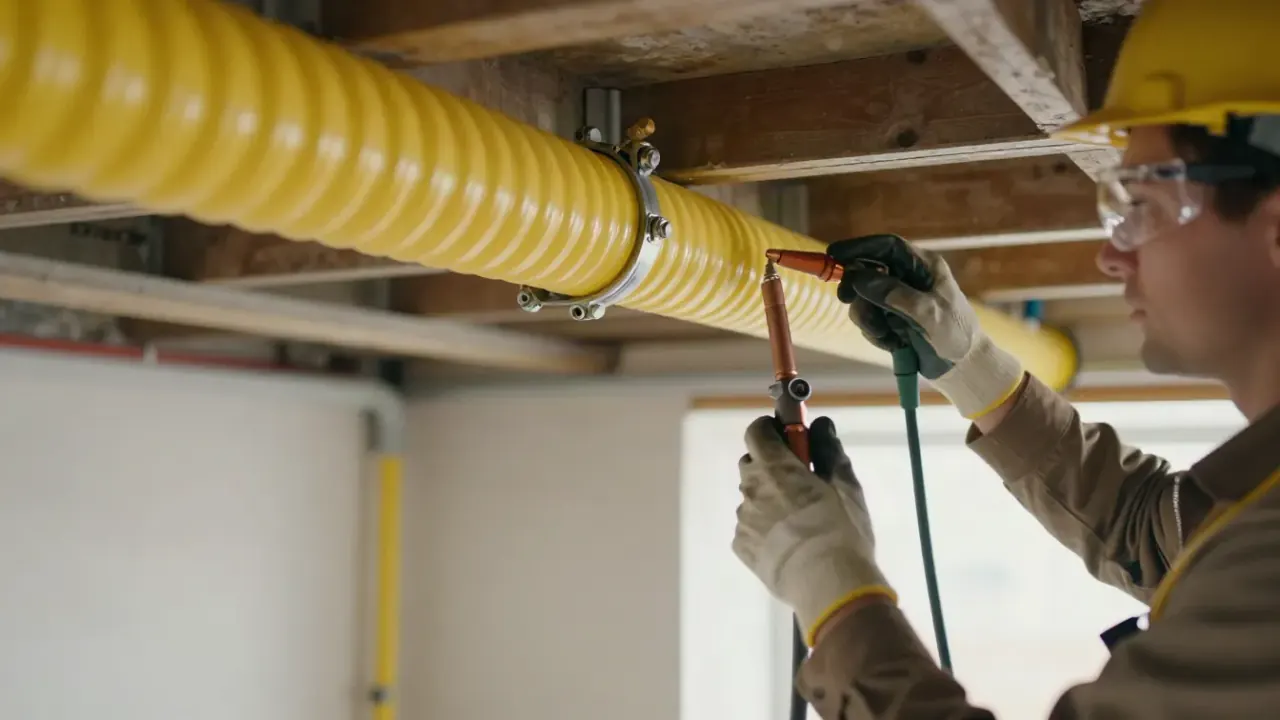
Neatly installed yellow CSST gas line run inside a Leander, Texas home

Benefits of Professional Gas Appliance Hookup

A careful, code-compliant hookup pays off every time you turn on the appliance. Here is what professional installation gets you.

  • Verified Safety

    Every joint is leak-tested and every valve location confirmed before we leave, so the people in your home are protected from day one.

  • Correct Sizing and Pressure

    The connector, line size, and gas pressure are matched to the appliance's requirements — no starved burners, no soot, no wasted gas.

  • Code Compliance

    The installation follows the National Fuel Gas Code and local requirements, which matters for your family's safety and for any future home sale or insurance question.

  • Long-Term Reliability

    Quality connectors, correct torque, and corrosion-aware material choices mean the hookup holds up through humid summers, storm seasons, and the occasional hard freeze.

What Affects the Cost of Gas Appliance Hookup

There is no single price for a gas appliance hookup in Leander, because no two hookups are exactly alike. After hearing about your appliance and setup, we quote a flat, upfront price before any work begins.

What a straightforward hookup usually includes

Most single-appliance hookups are completed in one visit: assessment, a new connector and fittings, shutoff valve work, leak testing, and a walkthrough. You will know the full price before we start.

Professional installation protects both your household and your investment in the appliance — a correct hookup is what lets a good appliance perform the way it was designed to.

What changes the cost

01

Type of Appliance

A standard range is simpler to connect than a tankless water heater or standby generator, which may need a larger supply line, dedicated venting review, or an extended gas run.

02

Existing Gas Line Condition

If the stub-out, shutoff valve, or nearby piping is corroded or undersized — common in older Leander homes — bringing it up to standard adds work, and we will show you exactly why.

03

Code and Access Requirements

Bringing an older installation up to current code, or working in a tight space like a cramped laundry closet, takes more time — and we quote it upfront so there are no surprises.

Our Approach to Safe Installations

How We Work

  • Leak-test every connection — every joint is checked with detection solution and an electronic detector before the appliance is lit.
  • Follow the National Fuel Gas Code — shutoff placement, clearances, ventilation, and connector routing done to current code.
  • Verify pressure and flame — gas pressure matched to the appliance spec, with a steady blue flame confirmed on every burner.

Before We Leave

Every connection leak-checked

Both a professional detection solution and an electronic sensor confirm zero leaks at every joint.

Every valve reachable

The shutoff sits within reach of the appliance, and we show you exactly how to turn it off.

Every visit walked through

You get a plain-language explanation of what was done and what to watch for going forward.

Our Experience With Gas Appliances in Leander

We connect gas appliances across Leander and the surrounding Williamson County communities every week — ranges and dryers in established neighborhoods, outdoor kitchens and generators in the new master-planned communities. That mix keeps us sharp on both the aging-connector problems of older homes and the high-demand appliance setups going into new builds.

  • Technicians trained specifically in gas appliance hookup and leak testing.
  • Hands-on experience with ranges, cooktops, dryers, water heaters, fireplaces, and standby generators.
  • Familiar with Leander and Williamson County code requirements for gas work.
  • Up to date on connector types, CSST bonding requirements, and current installation practices.
  • Equipped with professional-grade detection and pressure-testing instruments.
Get Started Today
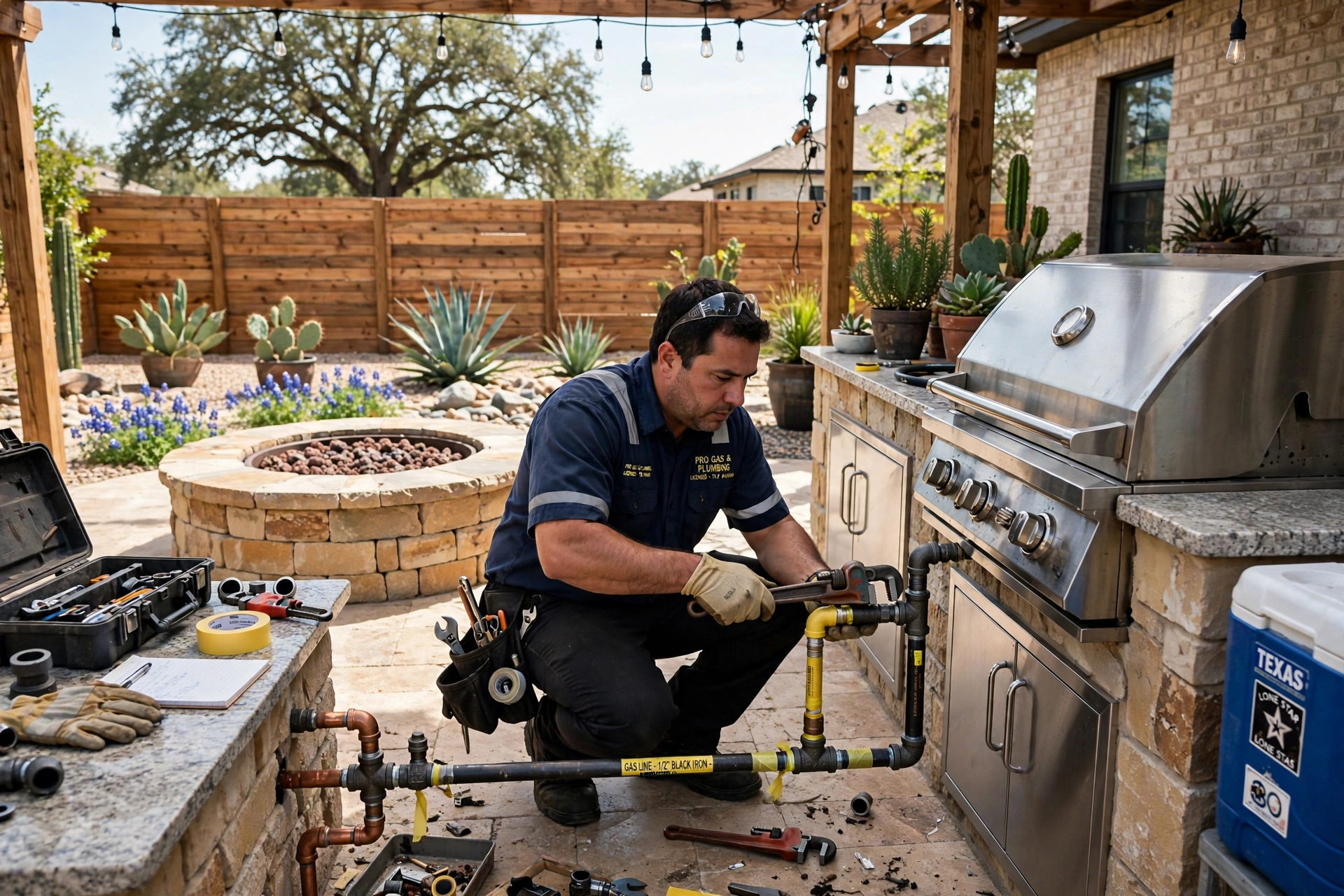
Gas technician discussing hookup work with a homeowner on a front porch in Leander, TX

What to Expect From Our Service

We believe in earning trust through the work itself. Here are the commitments we bring to every gas appliance hookup.

“We explain the work in plain language before we start, show you the shutoff valve and how to use it, and make sure you are comfortable before we leave.”

C

Clear Communication

On every visit

“We treat your home like our own: floor protection where we work, careful handling around your new appliance, and a clean workspace when we are done.”

R

Respect for Your Home

On every visit

“Every joint is leak-tested, gas pressure is verified against the appliance's specification, and burners are lit and checked — on every single job.”

T

Tested Before We Leave

On every visit

Frequently Asked Questions

Straightforward answers to the questions Leander homeowners ask us most about gas appliance hookups.

What is involved in a gas appliance hookup in Leander?
We assess your existing gas line and shutoff, verify the line can supply the appliance's gas demand, connect the appliance with a new rated flexible connector, install an accessible shutoff valve and sediment trap where required, then leak-test every joint and verify gas pressure before lighting the appliance.
Can you hook up an appliance I bought myself?
Yes — whether it came from a big-box store, an appliance dealer, or a contractor's remodel, we handle the gas connection. Just have the model information handy when you call so we can confirm the gas requirements and the right connector before the visit.
How long does a gas appliance hookup take?
Most single-appliance hookups are finished in one visit, typically an hour or two. Jobs that need a new or upsized gas run — common for standby generators, tankless water heaters, and outdoor kitchens — take longer, and we will give you a realistic timeframe with your quote.
Do I need a new gas line for a standby generator or pool heater?
Often, yes — or at least an upsized one. Generators and pool heaters are high-demand appliances, and the existing line may not carry enough gas. We calculate the total load against your system's capacity and run or upsize the line so the appliance gets the fuel it needs.
What is a sediment trap, and does my appliance need one?
A sediment trap is a short section of pipe installed before the appliance that catches debris and moisture before they reach the burner or valve. Code requires them on most gas appliances, and we install or verify one on every hookup.
Can my old flexible connector be reused with a new appliance?
No — we always install a new connector. Flexible connectors wear from the inside out: heat cycles, movement, and corrosion weaken them over time, and manufacturers rate them for a single installation. A new appliance deserves a new connector.
Will you show me how to shut off the gas to the appliance?
Absolutely — it is part of every hookup. We show you the shutoff valve location, demonstrate how to turn it off, and make sure you are comfortable doing it before we leave.
Schedule Your Gas Appliance Hookup in Leander, TX

Ready for a safe, code-compliant hookup? Call (512) 877-2533 or send a request online, and we will get your appliance connected and tested.

Call Us Today Get Started Now

Get in Touch with Us

Tell us about your appliance and your current gas setup using the form below, or call (512) 877-2533 — we will take it from there.

Or call us right now at (512) 877-2533 — we answer.

Gas Line Repair Leander TX


  • Address

    1789 S Bagdad Rd, Leander, TX 78641, United States, Leander, Texas

  • Hours

    Mon–Fri: 7AM – 7PM
    Sat: 8AM – 4PM
    Sun: Emergency Only
    Emergency help available

Call (512) 877-2533 Get Quote
Call Quote