Gas Line Repair Leander TX
Get Estimate

Gas Line Repair in Leander, TX

Leaking or damaged gas line? We fix it safely, and to code.


When an existing gas line in your Leander home starts leaking, corroding, or losing pressure, guesswork is not an option. We repair damaged gas lines across Williamson County — from the Atmos Energy meter to every appliance — replacing failed sections, resealing joints, and pressure-testing every fix against the National Fuel Gas Code before gas flows again.

Leander, TX gas line repair: technician applying thread sealant to a replacement steel elbow fitting
Trained Team Leak and repair specialists
Fully Insured Insured & Bonded
Emergency Help Call to book your visit
Careful Workmanship Every joint tested

What Our Gas Line Repair Covers

Every repair visit follows the same careful routine: we find the problem, explain it in plain language, fix only what needs fixing, and prove the line is sealed before we leave.

Careful Inspections

We start by tracing the line and checking every accessible joint, valve, and connection. In Leander’s mix of older steel systems and newer CSST runs, we know the usual failure points: threaded joints loosened by shifting expansive clay, risers thinned by Central Texas humidity, and connectors worn from years of appliance vibration.

Leak Repairs

When we find a leak, we isolate that section, cut out the damaged pipe, and install new pipe and fittings rated for the location — buried, exposed, or indoors. We never seal a repair behind a wall or underground without testing it first.

Code Compliance Review

Gas work in Leander has to meet the National Fuel Gas Code along with Williamson County requirements — proper materials, accessible shutoffs, correct support spacing. We check the repaired section against both, so the work stands up if your home is ever sold, remodeled, or inspected.

Final Safety Testing

Before we call the job done, we pressure-test the repaired section and check every joint with a calibrated detector. You see the steady gauge and the clean detector reading yourself — the repair is verified, not assumed.

What Gas Line Repair Means for Leander Homes


Gas line repair means finding and fixing whatever keeps natural gas from traveling safely from your meter to your appliances: a leaking threaded joint, a corroded section of steel pipe, a failing regulator, or a damaged flexible connector behind the range. In Leander, most of these failures trace back to two local forces — expansive clay soil that shifts buried lines as it swells and shrinks with the seasons, and year-round Central Texas humidity that rusts exposed steel at meters, risers, and exterior runs.

Add in the occasional hard freeze — February 2021 burst pipes across Central Texas and reminded everyone that cold snaps punish exposed lines and fittings — plus the simple wear that comes with age in older neighborhoods, and even a well-installed line eventually needs attention. Repair is about catching that wear early: a straightforward joint fix today beats an emergency leak call later.

How Our Gas Line Repair Works

You will always know what happens next. Our visits follow four straightforward steps, and we explain each one before we start.

01

Schedule

Call (512) 877-2533 or send a message through our contact form. We will confirm a visit window that works for you and ask what you are noticing — a smell, hissing, weak appliance flames — so the technician arrives prepared.

02

Diagnose

Our technician inspects the line on site, pinpoints the problem, and walks you through the cause and the fix options in plain language. You approve the plan and the written estimate before any work begins.

03

Repair

We complete the repair to code — no shortcuts, no surprises. If anything unexpected comes up mid-job, like hidden corrosion beyond the first bad section, we explain it and get your okay before continuing.

04

Test & Review

We pressure-test the repaired section, check every joint for leaks, and review what was done with you before we leave — including where the shutoffs are and what to watch for going forward.

The Gear and Practices Behind Our Repairs

Tools & Equipment

Gas Leak Detectors

Instruments that sniff out even faint leaks at joints and fittings — far more trustworthy than a nose alone, and the reason we can certify a repair truly sealed.

Pipe Wrenches

Wrenches sized to grip without crushing, for breaking loose corroded old fittings and seating new connections at proper torque.

Pressure Gauges

Instruments that prove the line holds pressure after a repair. A falling needle means there’s still a leak somewhere — and we don’t stop until it sits rock steady.

Pipe Cutters

Tools that cut pipe clean and square, so replacement sections seat fully into fittings with no gaps or weak spots.

Methods & Standards

Electronic Leak Detection

We sweep every reachable joint and connection electronically first, pinpointing trouble before anything gets opened — so cuts happen only where the problem lives.

Pressure Testing

Once repaired, the line gets pressurized and watched. A flat reading means sealed; any fall means we keep hunting. The gauge has the final word, not our eyes.

Code Compliance Review

Each repair is measured against the National Fuel Gas Code (NFGC) and Williamson County’s local rules — shutoff access, correct materials for the location, all of it.

When to Call for Gas Line Repair

01

You notice a sulfur or rotten-egg smell.

What we do: If you smell gas, leave the area and call 911 or Atmos Energy from a safe location first. Once the immediate danger is cleared and you get the all-clear, call us — we will locate the leak, replace the damaged section, and pressure-test the repair before restoring service.

→ Acting fast keeps a small leak from becoming a dangerous one — and gets your home back to safe, normal use.

02

Your gas appliances are not working right.

What we do: When a range, water heater, dryer, or fireplace underperforms, the culprit is often a loose fitting, a partially blocked line, or low pressure at that branch. We trace the issue to its source instead of replacing parts hopefully.

→ You get appliances that run the way they should, without wasted gas or uneven heat.

03

You are adding or replacing a gas appliance.

What we do: New ranges, tankless water heaters, standby generators, and outdoor kitchens often need a line extended or upsized. We run the new piping to code and tie it into your existing system safely, with proper shutoffs at the appliance.

→ Your new appliance gets the steady gas supply it was designed for, from the first day you use it.
Gas Line Repair, Planned for Leander Conditions

Leander sits at the edge of the Hill Country, where thin topsoil over limestone meets pockets of expansive clay that never sit still — swelling after Central Texas downpours and shrinking in the dry summer heat. That movement shifts buried gas lines and stresses every threaded joint, while damp soil speeds corrosion on buried steel. We plan every repair around these realities: proper bedding for buried pipe, corrosion-resistant materials where soil stays damp, and secure hangers on exposed runs. And before any digging, we make sure underground utilities are marked through Texas 811.

Neighborhoods We Serve

  • Crystal Falls

    Crystal Falls is Leander’s largest master-planned community, and its homes span enough build years that we see the full range — original steel lines with corroded risers in the older sections, and newer CSST runs in the later phases. Repairs here are usually targeted: a leaking joint here, a tired connector there.

  • Travisso

    Out in Travisso’s Hill Country terrain, gas lines run to outdoor kitchens, fire pits, and pool heaters across rocky, sloped lots. We repair weather-exposed exterior runs and the buried lines feeding backyard appliances, where shifting limestone and thin soil make proper bedding critical.

  • Benbrook Ranch

    Benbrook Ranch’s early-2000s homes are reaching the age where original steel gas lines start showing wear — fittings loosened by years of clay movement and risers rusted by humidity. We handle section replacements and joint repairs that extend the system’s life without a full re-pipe.

Local Conditions We Plan For

  • Expansive clay soil

    Williamson County’s clay swells and shrinks with moisture, shifting buried gas lines and cracking threaded joints. We use proper bedding and code-approved flexible connections where soil movement is a factor, so the repair survives the next wet-dry cycle.

  • Central Texas humidity and corrosion

    Year-round humidity accelerates rust on exposed steel pipe, especially at meters, risers, and exterior runs. We cut out corroded sections rather than patching over them, and choose materials rated for damp air wherever exposure is unavoidable.

Before: Gas Leak Detection

Before

A situation we see often: a homeowner in Crystal Falls notices a sulfur smell near the water heater and is not sure whether it is the appliance or the line.

After

Our approach: sweep the area with an electronic detector, find the leaking joint at the water heater’s shutoff, replace that section of pipe, and pressure-test the line before restoring service.

Maintenance: We recommend a yearly look at appliance connections and exposed risers to catch the next weak spot early.

Before

Another common call: a gas range in Benbrook Ranch that used to heat evenly now has weak, uneven flames while the water heater works fine.

After

Our approach: trace that branch line, find the loose or partially blocked fitting starving the range, repair it, and verify steady pressure at every burner.

Maintenance: A quick annual check of appliance connectors heads off most of these slow-developing problems.

Before

And a familiar one after a hard freeze: a homeowner worries that a February-style cold snap may have stressed an exposed gas line or its fittings.

After

Our approach: inspect the exposed portions for freeze-related stress, test line pressure, and check for leaks at the meter and riser — then explain exactly what we found, good or bad.

Maintenance: After any freeze, a pressure check is inexpensive insurance that the system came through intact.

Gas Line Trouble We See Around Leander

Leander’s gas problems cluster into a few familiar patterns. Here’s what walks through our door and what we do about each.

Problem

Eaten-up steel and weeping joints

Years of humidity plus restless clay do the damage: pipe walls thin, threads loosen, tiny leaks start at joints — worst on the older steel still serving parts of Crystal Falls and Benbrook Ranch.

Our Fix

We remove the failed stretch and fit new pipe and connections, then prove it with a pressure test. Where ground stays damp, we pick materials built for those conditions so the repair outlasts the original.

Problem

Appliances running hungry

A loose connector, a branch run too small, or debris lodged in the line can leave a range, dryer, or fireplace underfueled — lazy flames, sluggish heating, random shutdowns.

Our Fix

We follow the branch to the fault, repair or swap the bad connection, and check pressure right at the appliance until it burns the way it was built to.

Problem

Whole-system pressure sag

When every appliance underperforms together, suspect the main run: a restriction, a tired regulator, or a leak bleeding pressure away.

Our Fix

We take pressure readings at several points to corner the cause, fix the restriction or leak, and confirm the full system holds firm.

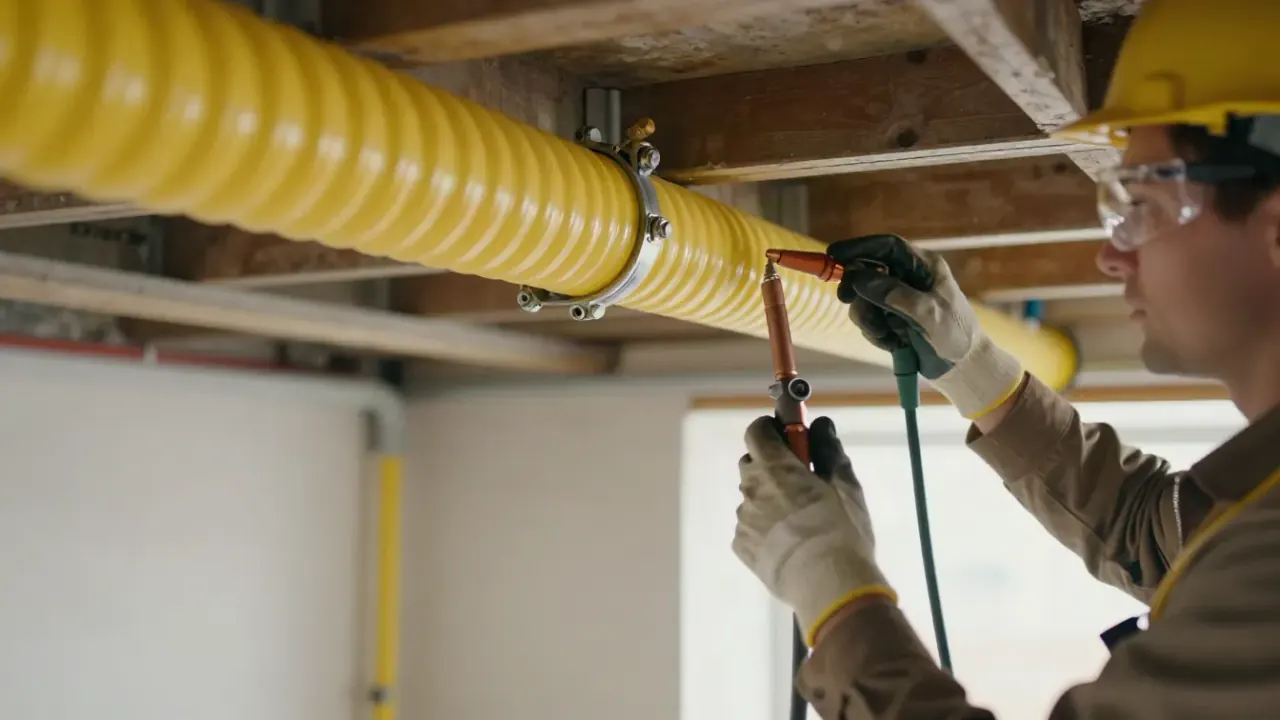
Gas line repair in Leander, TX: newly repaired section of yellow corrugated stainless steel tubing (CSST) gas line

What Prompt Repair Buys You

A healthy gas line is invisible — you only notice it when it isn’t. Here’s what acting early gets you.

  • A home without the worry

    Sealing leaks and shoring up weak joints takes gas buildup off the table. We test after every repair, so you know it’s sealed — not just hope.

  • Appliances at full strength

    Stable pressure means the range heats evenly, the water heater bounces back faster, the dryer actually finishes the job. No more working around a starved burner.

  • Emergencies that never happen

    Finding a corroded stretch or a loosening fitting now costs a fraction — in dollars and disruption — of a middle-of-the-night leak call later.

  • A system that passes scrutiny

    Work done to the NFGC and local code keeps your home ready for inspections, appraisals, and buyers’ questions when you sell or remodel.

How Gas Line Repair Is Priced in Leander

No two gas repairs are alike, so we price each job on its own facts — never from a flat menu. When you call, we’ll walk through what drives the cost in your case and hand you a written estimate before anything starts. No padding, no ambushes.

Inside your estimate

A written, itemized estimate up front — every line visible, so you see precisely what you’re paying for.

The numbers reflect your repair’s actual materials and labor — nothing inflated, nothing hand-wavy.

What moves the number

01

How much pipe is involved

One weeping joint is a morning’s work; a long stretch of corroded run is a different project entirely. Pipe footage and fitting count drive the labor.

02

Which materials the job needs

Steel, CSST, and polyethylene price differently, and the right pick depends on buried vs. exposed vs. indoor — we spec for the location, not the markup.

03

How hard it is to reach

A line beneath a slab or inside finished walls takes far longer than an exposed attic run. Access is where labor hours hide.

Why Homeowners Count on Us

How we’re qualified

  • Techs who do gas lines all day, every day — trained in repair craft, leak diagnostics, and current safety practice.
  • Code fluency, not just familiarity — NFGC plus Leander and Williamson County specifics, applied on every job.
  • Dig-safe discipline — underground utilities get located and marked through Texas 811 before we break ground.

How we treat you and your home

Straight talk before wrenches turn.

You’ll know what we found, what it means, and where you stand — in plain words, before anything begins.

Care with your property.

Drop cloths on floors, protection on walls, and a full cleanup when we leave. Your home should look untouched.

Proof at the end, not promises.

Pressure test plus detector sweep on every repair before we sign off. If it won’t hold, we don’t leave.

Leander Gas Lines Are Our Daily Work

Week in, week out, we’re on gas lines across Williamson County — aging steel, new CSST, buried yard runs, appliance hookups. That repetition builds local instincts: how the clay travels, where humidity eats fastest, what the inspectors flag.

  • Crews trained specifically in gas repair, leak detection, and safety procedure — not generalists learning on your dime.
  • Real hours on steel, CSST, and polyethylene in homes and light commercial buildings around the county.
  • Working knowledge of the NFGC and Williamson County amendments — the rules your job actually gets judged by.
  • Calibrated detectors, accurate gauges, and the right cutting and threading tools on every truck.
Get Started Today
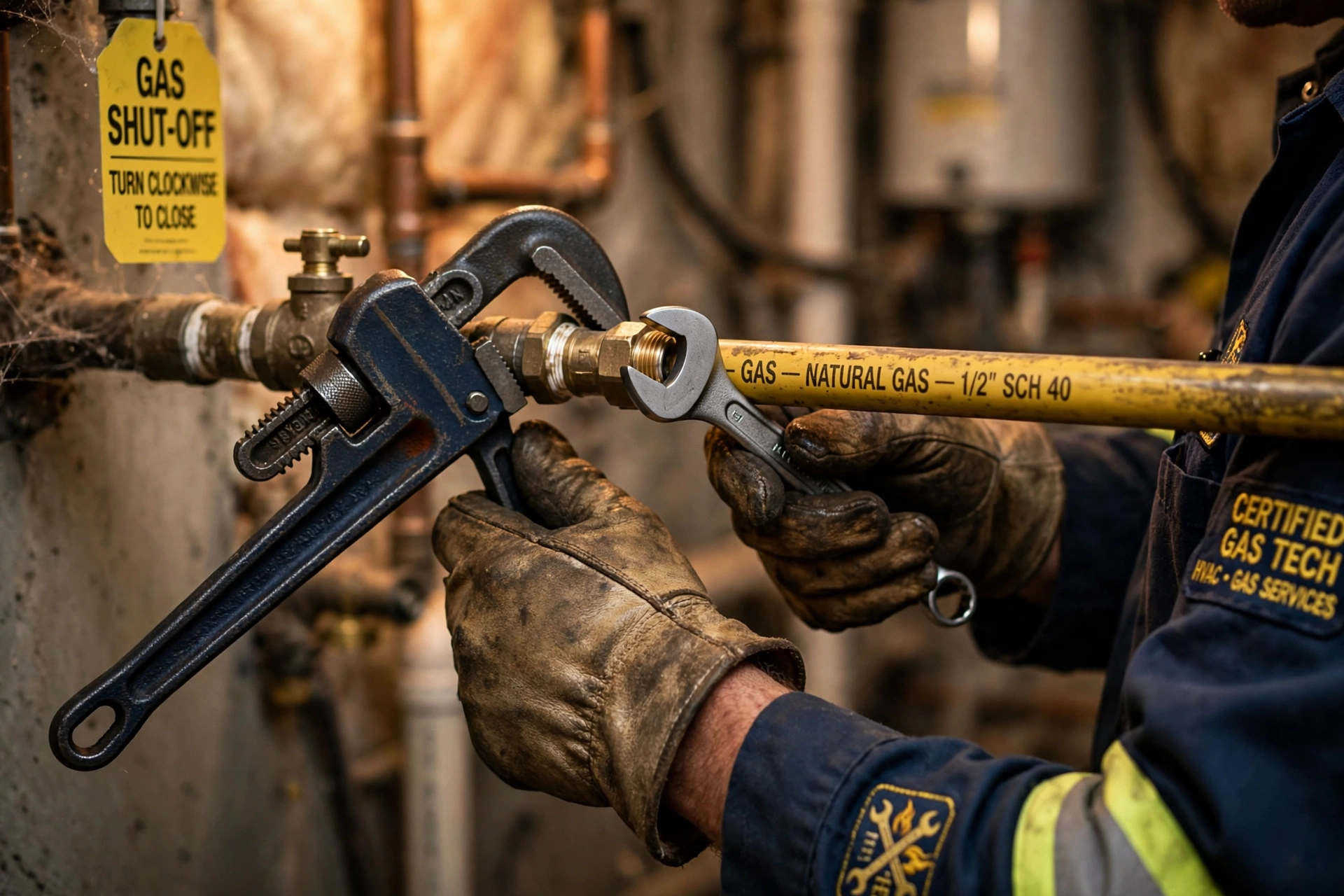
Leander gas line technician tightening a repaired gas fitting with a pipe wrench

What to Expect From Our Service

We do not ask you to take our word for it — here is exactly how we treat every repair visit, so you know what to expect when you call.

“We show you the failed section and explain the fix in plain language — you approve the plan before we touch a wrench.”

C

Clear Communication

On every visit

“We treat your home with care: drop cloths under the work area, tidy pipe runs, and a clean space when we leave.”

H

Honest Assessments

On every job

“We pressure-test every repair and check each joint with a detector before we leave — the line has to prove it is sealed.”

T

Thorough Testing

Before we leave

Frequently Asked Questions

Straight answers about gas line repair in Leander — what it involves, what affects the cost, and what to do if you suspect a leak.

How do I know my gas line needs repair instead of replacement?
Most problems are localized — a leaking joint, a corroded section, a failing connector — and a targeted repair is the right fix. Replacement only makes sense when the line has widespread corrosion or repeated failures across multiple sections. After our inspection, we explain both options honestly and let you decide.
How long does a typical gas line repair take in Leander?
Most repairs take two to four hours from diagnosis to final pressure test. Jobs with difficult access — lines behind finished walls or under slabs — can take longer, and we tell you that upfront in the written estimate so there are no surprises.
Will my gas be shut off during the repair?
Yes, briefly. We shut off gas at the meter while the damaged section is replaced, then pressure-test the repair and restore service on the same visit. Where the meter itself is involved, we follow the utility’s lockout procedures.
What should I do if I smell gas before you arrive?
Leave the area immediately and call 911 or Atmos Energy from a safe location — do not use phones, light switches, or appliances near the smell. Once the utility or fire department clears the scene, call us at (512) 877-2533 and we will repair the damaged section.

Schedule Gas Line Repair in Leander Today

Do not wait on a gas problem. Call (512) 877-2533 or send us a message — we will take a look, explain what is going on, and give you a clear estimate before any work starts.

Call Now Request Service

Get in Touch with Us

Questions about a gas line at your home or business? Reach out during business hours — a real person will respond and help you schedule a visit.

Or call us right now at (512) 877-2533 — we answer.

Gas Line Repair Leander TX


  • Address

    1789 S Bagdad Rd, Leander, TX 78641, United States

  • Hours

    Mon–Fri: 7AM – 7PM
    Sat: 8AM – 4PM
    Sun: Emergency Only
    Call for urgent service needs

Call (512) 877-2533 Get Quote
Call Quote