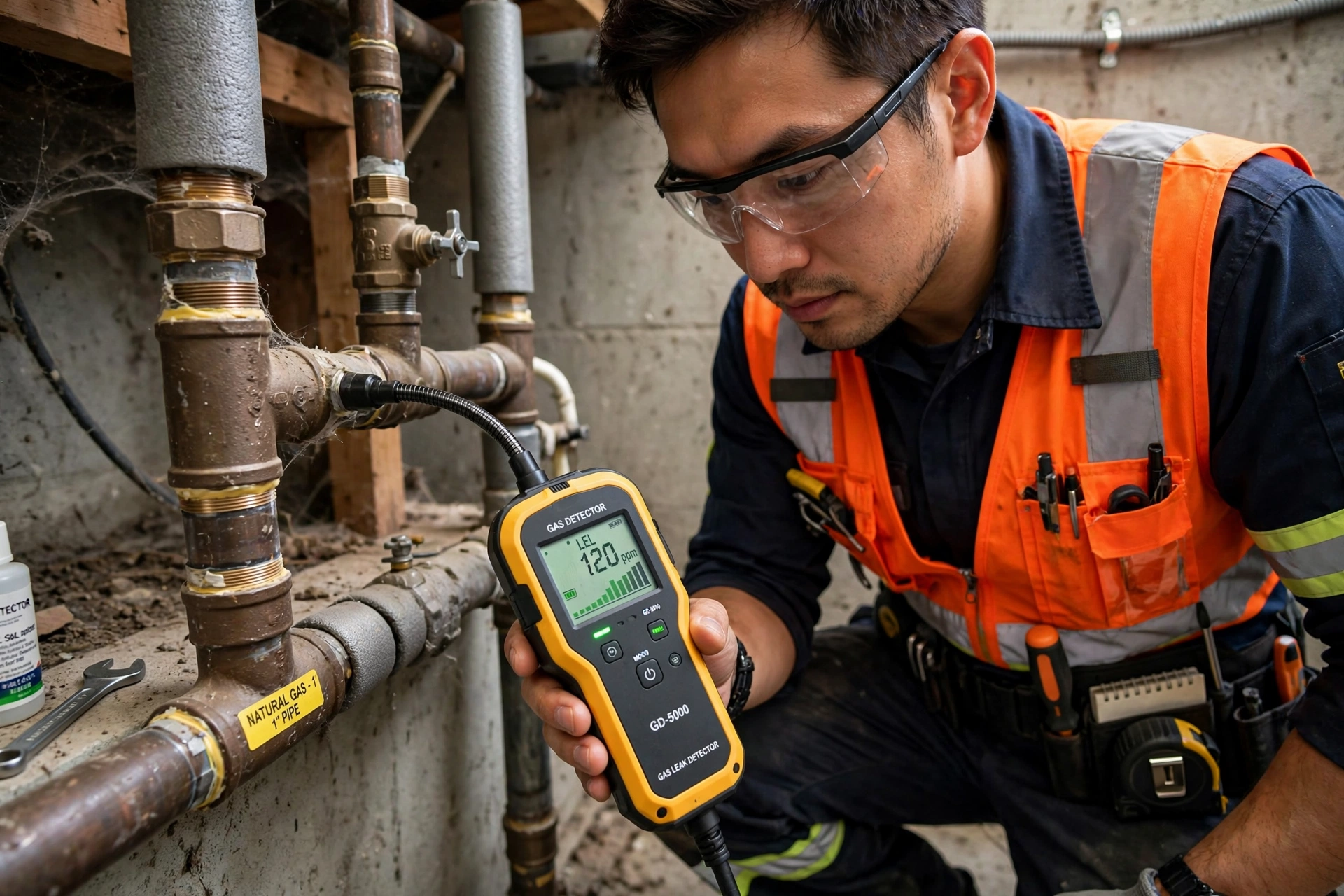
Route Planning
We walk the yard with you and map the route from the meter to the appliance — avoiding trees, driveways, patios, and existing utilities. The shortest path is rarely the best one; the best route protects the pipe and your landscaping.
A clean underground installation is mostly planning. Here is what goes into yours before any digging starts.
We walk the yard with you and map the route from the meter to the appliance — avoiding trees, driveways, patios, and existing utilities. The shortest path is rarely the best one; the best route protects the pipe and your landscaping.
Before we dig, Texas 811 marks all public underground utilities for free. We also account for your private lines — sprinkler systems, landscape lighting, invisible fence — from what you tell us and what we can see.
Buried gas work in Leander is permitted and inspected like any gas piping. We handle the permit application and schedule the inspection, and the installation follows the depth, material, and testing requirements the inspector will check.
The buried line is pressure tested before backfill, then tested again as a complete system. We bury tracer wire alongside the pipe and record the route, so the line can be located years from now.
The rule of thumb is simple: if the gas appliance stands away from the house, the line goes underground. Running pipe above ground across a yard is not just unsightly — exposed piping is vulnerable to damage, weather, and code problems. A buried line is protected, out of sight, and out of mind, which is exactly what you want from infrastructure.
Around Leander, the projects we see most often are backyard living upgrades: pool and spa heaters, outdoor kitchens with built-in grills and side burners, fire pits and fireplaces, and gas stub-outs for future features. Detached garages and workshops are another common one — a heater or a gas-powered setup in a building the original house line never reached. Each of these starts at the meter and ends at the appliance, with the entire middle section underground.
Pool heaters are the heavyweights of residential gas demand. Warming thousands of gallons of water takes serious BTUs, which means the buried line serving a pool heater is often the largest residential gas run on the property. Sizing it correctly matters more here than anywhere else — an undersized line to a pool heater means slow heating and an appliance that never reaches its rated efficiency. We size from the heater's actual nameplate rating and the total distance from the meter.
Outdoor kitchens are layout puzzles as much as plumbing projects. The line has to reach the grill island — sometimes a side burner or a pizza oven too — while dodging the patio slab, irrigation lines, and that oak tree nobody wants to disturb. This is where route planning earns its keep: a thoughtful path, possibly installed by directional boring under the patio, delivers gas exactly where the outdoor kitchen needs it without tearing up the yard you are trying to enjoy.
Most of a clean installation happens before any digging. We start with a site visit: walking the route, noting the meter location, measuring distances, identifying obstacles, and talking through where you want the line to end. From that visit comes the plan — the route, the method, the pipe size, and the permit application. You approve the plan before anything is scheduled.
Then the sequence runs: Texas 811 locates go in, permits are pulled, and the installation is scheduled. On installation day the crew marks the route, protects the surrounding landscaping along the work path, and opens the trench or sets up the boring equipment. The pipe goes in with tracer wire, risers are built at each end with corrosion-protected fittings, and the line is pressure tested before a single shovelful of backfill goes back in.
Open trenching is the workhorse method: a narrow trench follows the route, the pipe is bedded in clean fill, and the trench is backfilled and graded. It is straightforward, inspectable, and cost-effective wherever the route crosses open ground. We keep the trench only as wide as it needs to be, separate the topsoil so it goes back on top, and restore the grade when we are done.
Directional boring earns its place wherever the route crosses something worth preserving — a driveway, a patio slab, mature tree roots, or an existing sidewalk. The boring equipment drives a path underground from one small pit to another, and the pipe is pulled through without opening the surface above. It costs more than trenching, but when the alternative is demolishing and replacing a concrete driveway, the math is easy.
Leander sits on the same expansive clay that underlies much of the Austin metro, with limestone shelves and rocky patches as you move west toward the Hill Country. That clay is the defining challenge for buried pipe: it swells when wet and shrinks when dry, shifting several inches between seasons. Rigid materials fight that movement and lose. Flexible polyethylene pipe moves with the soil instead — which is why it has become the standard for buried residential gas lines here.
Then comes the weather on top of the soil. Summer heat bakes the ground hard, sudden Central Texas downpours saturate it, and every few years a hard freeze like February 2021 reminds everyone that it never freezes here is a myth. Freeze-thaw cycles shift soil, and saturated ground followed by drought creates the maximum swell-shrink swing. A buried gas line in Leander has to tolerate all of it, year after year.
That is why the details matter more underground than anywhere else. Proper burial depth keeps the line below the zone of maximum soil movement and safely clear of casual digging. Clean bedding material around the pipe prevents rocks from pressing into it as the soil shifts. And the risers — where the pipe transitions from underground to above ground at the meter and at the appliance — get corrosion-protected fittings and protective sleeves, because that transition zone is where buried lines have historically failed first.
We also think about what grows above the line. Large trees with aggressive root systems can disturb buried pipe over the years, and future landscaping projects can put a shovel where the line runs. Part of our planning is talking through what is planted now and what you might plant later, so the route avoids tomorrow's problems as well as today's.
01
What we do: We prepare the permit application for the City of Leander, install to the depth and material standards the code requires, and schedule the inspection.
→ Your buried line is legal, documented, and verified by the city inspector.
02
What we do: The line is pressure tested with air before backfill and tested again as part of the complete system — two separate proofs that every joint is sound.
→ You get test documentation showing the buried portion is leak-free before it disappears underground.
03
What we do: Tracer wire goes in alongside every buried run, warning tape above it, and we record the route on your project paperwork.
→ Years from now, any locating service — or your next contractor — can find the line before digging.
A buried gas line is the hardest pipe to upsize later — it is underground. That makes getting the size right the first time more important here than anywhere else in your gas system. We calculate from the appliance's BTU rating and the distance from the meter, then talk about what might come next: the fire pit you are considering, the second grill, the pool heater upgrade. Installing a slightly larger line now, or a capped stub-out along the route, is inexpensive insurance against digging the yard up twice.
Bridlewood
Established neighborhoods where buried lines often run to detached workshops and backyard projects added long after the house was built.
Crystal Falls
Newer homes where outdoor kitchens, pool heaters, and fire features are planned from the start — and the buried infrastructure goes in with them.
Travisso
Hill Country-edge lots with limestone and slopes, where routing a buried line takes real planning and often directional boring.
Expansive clay soil
Leander's clay swells and shrinks dramatically with moisture changes. We use flexible polyethylene pipe that moves with the soil, bedded properly and buried at code depth.
Rock and limestone
West toward the Hill Country, limestone shelves and rocky ground complicate trenching. We plan routes around the worst of it and use boring where trenching is not practical.
Call Gas Line Repair Leander TX at (512) 877-2533 to discuss your underground gas line project — or send the details through the contact form below. We will walk the route with you, explain trenching versus boring for your yard, and give you a written quote before anything is scheduled.
Sometimes the problem is not a broken pipe — it is gas that cannot reach where you need it. A buried line solves that.
Problem
Pool heaters, outdoor kitchens, and detached buildings sit far from the house — and from the meter. Above-ground pipe run across a yard is unsafe, unsightly, and against code.
Our Fix
We design a buried run from the meter directly to the appliance: protected, out of sight, and built to code.
Problem
Outdoor appliances running on propane mean tank swaps, delivery scheduling, and fuel costs that add up — especially for heavy users like pool heaters.
Our Fix
A buried natural gas line connects the appliance to your utility service permanently. No tanks, no refills, no running out mid-cookout.
Problem
The shortest route to the appliance often crosses concrete you do not want demolished — a driveway, a patio slab, or an existing walkway.
Our Fix
Directional boring carries the line underneath without disturbing the surface. The concrete stays, the pipe goes through.
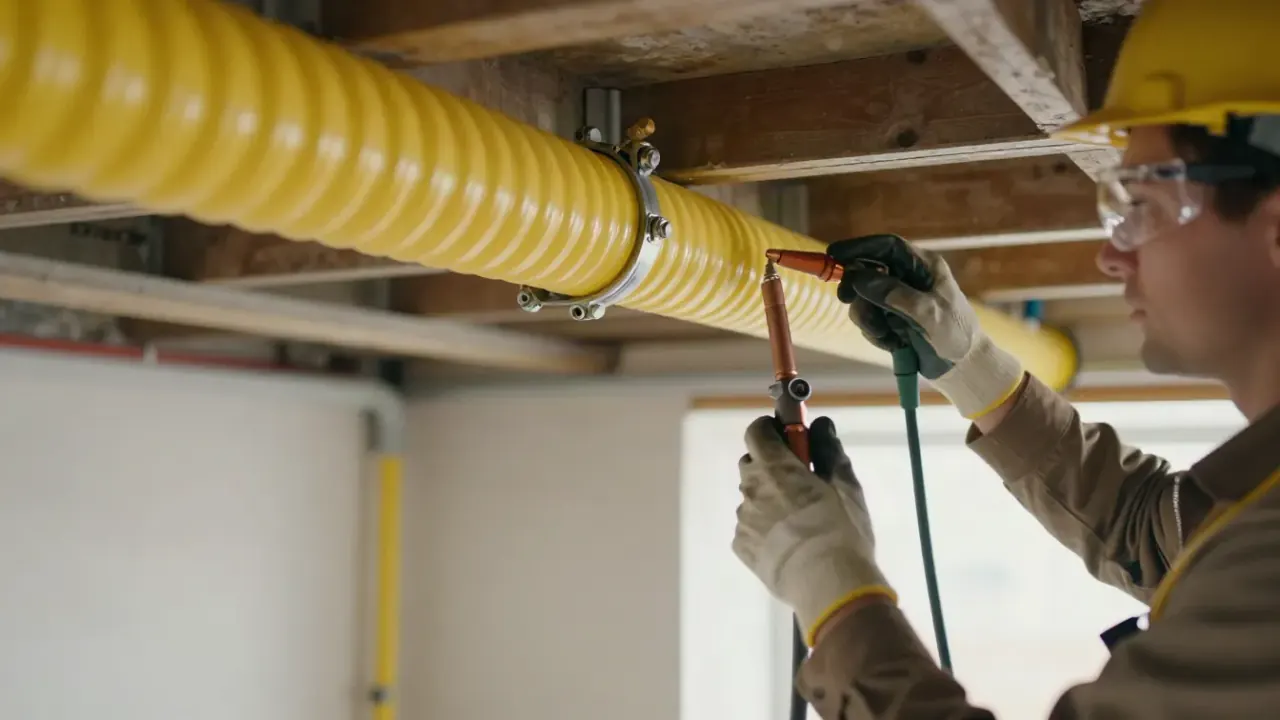
A buried gas line is infrastructure you should never have to think about again.
Out of Sight, Out of Mind
No exposed pipe running across the yard, no trip hazards, nothing to weather or weed-whack around. The line is protected underground and the yard looks untouched.
Sized for the Appliance
Pool heaters and outdoor kitchens are heavy gas users. We size the buried run from actual BTU ratings and distance, so the appliance performs the way the manufacturer intended.
Built for Leander Soil
Flexible polyethylene, proper bedding, code depth, and protected risers — specified for expansive clay, limestone, and the full Central Texas weather swing.
Located and Documented
Tracer wire, warning tape, and a recorded route mean the line can be found any time in the future — by us, by you, or by the next contractor who digs in the yard.
Buried gas lines are quoted per project, because the route is everything. A straight 30-foot run across open lawn and a 150-foot run boring under a driveway and around mature oaks are different jobs that happen to share a name. Here is what shapes the quote you receive.
Typical Investment Range
Every project priced in writing
You receive an itemized written quote — route, method, materials, and restoration — before any digging begins.
What changes the price
Distance and Route
Longer runs mean more pipe, more trenching, and more labor. Every obstacle the route must avoid — trees, slabs, existing utilities — adds planning and work.
Trenching vs. Boring
Open trenching is the economical choice across open ground; directional boring costs more but preserves driveways, patios, and mature landscaping.
Appliance Demand
High-BTU appliances like pool heaters need larger-diameter pipe and sometimes regulator adjustments, which affects material and labor.
Narrow, careful trenches
Trenches are kept only as wide as necessary, topsoil is separated and replaced on top, and the grade is restored when we finish.
Boring where it counts
Driveways, patios, and mature trees are bored under, not demolished — your hardscape survives the project intact.
Full cleanup
Backfilled, graded, and cleaned up. The goal is a yard that looks like we were never there — except for the gas where you wanted it.
Buried gas work is a planning trade: the digging is the easy part. Our experience is in the decisions that come first — the route, the method, the sizing, and the soil-specific details that determine whether a buried line lasts decades or fails early.
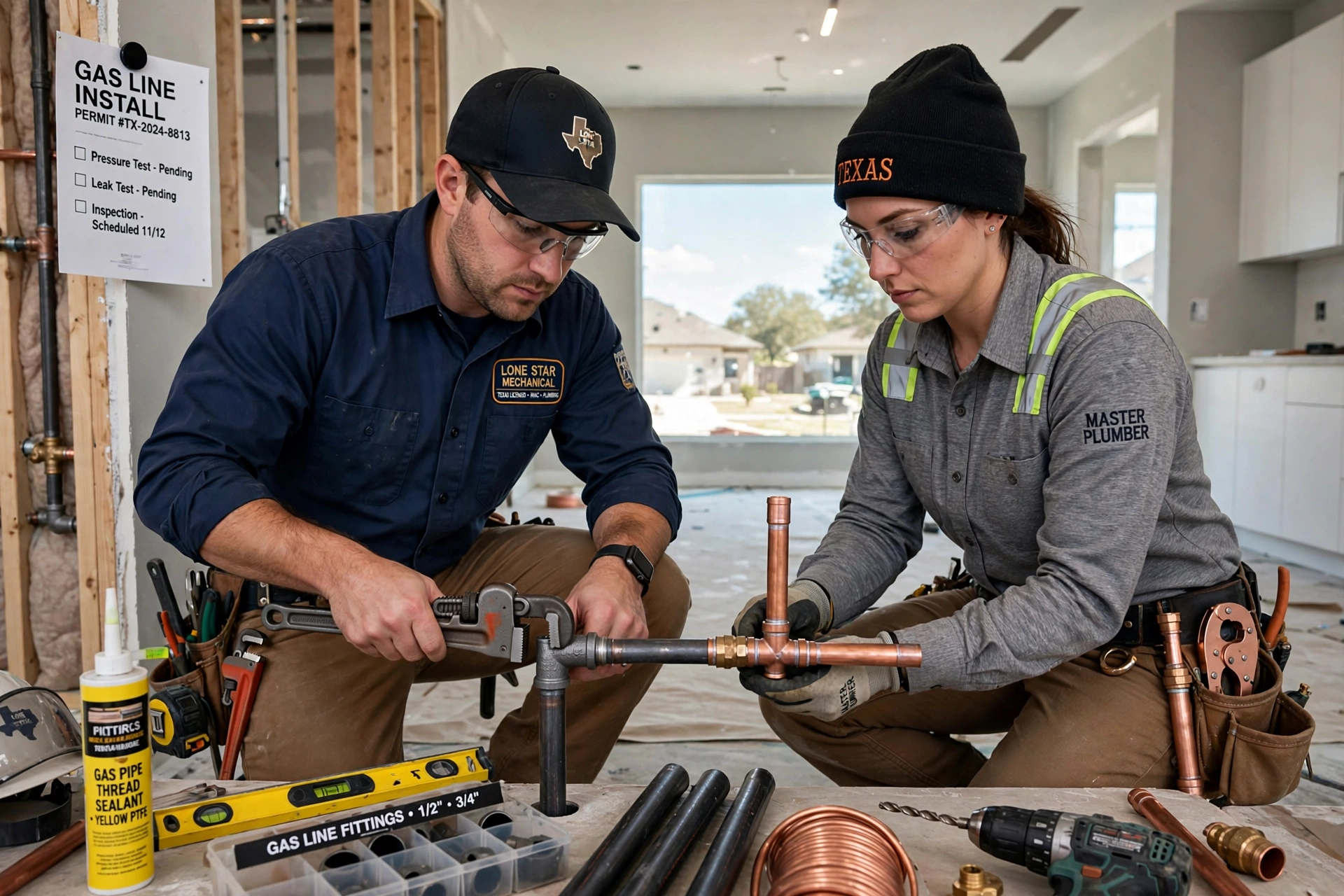
Three standards guide our buried gas line work in Leander.
The route is planned before the digging starts. We walk the yard with you, mark utilities, and choose trenching or boring for each section — then stick to the plan.
Planned Routes
No surprises underground
Your yard comes back. Narrow trenches, separated topsoil, restored grade, and boring under anything worth preserving — the cleanup is part of the job, not an afterthought.
Yard Restored
Like we were never there
The buried line is proven before it disappears. Pressure tested before backfill, tested again as a system, with tracer wire and a recorded route for the future.
Verified Before Burial
Tested twice, documented
Most residential buried runs take one to three days of field work, depending on the distance, the method, and the soil. A straightforward trenched run across open lawn can often be completed in a single day; longer runs, directional boring under driveways, or rocky Hill Country ground add time. The planning, permits, and utility locates happen before installation day, so the field work itself moves quickly. Your technician will give you a realistic schedule after the site visit.
A trench opens the ground along its route, but we keep it only as wide as necessary and separate the topsoil so it goes back on top where it belongs. After the pipe is in and tested, the trench is backfilled, compacted, and graded to restore the original contour. Where the route would cross a driveway, patio, or mature landscaping, we use directional boring instead — the surface above stays completely intact.
Buried residential gas lines go in at the depth local code requires — commonly around 12 to 18 inches of cover for yard lines in our area, deeper where the line crosses under driveways or other load-bearing surfaces. Depth matters for two reasons: protection from casual digging and staying below the zone of maximum soil movement. The inspector verifies depth before the trench is backfilled.
Yes — directional boring is made for exactly this. We dig a small entry pit on one side and an exit pit on the other, then steer a bore path underneath the concrete and pull the pipe through. Your driveway or patio slab is never cut or demolished. Boring costs more than open trenching, but it is almost always cheaper than demolishing and replacing concrete.
In most cases, yes — buried gas work in this area is permitted and inspected like any other gas piping. The permit covers the material, depth, routing, and pressure testing, and the inspector typically wants to see the open trench before backfill. We handle the permit application and coordinate the inspection timing so the project does not stall waiting on approvals.
We use polyethylene (PE) pipe for buried residential gas lines — a flexible plastic pipe that cannot corrode in soil and moves with Leander's expansive clay instead of cracking. Sections are joined by heat fusion, which creates a continuous run with no buried mechanical joints to fail. At each end, the pipe transitions above ground through a riser assembly built with corrosion-protected fittings.
Three ways. First, tracer wire is buried directly alongside the pipe, so any locating service can trace the line electronically. Second, warning tape goes into the trench above the pipe as a visual alert for anyone digging. Third, we record the route on your project paperwork — an as-built sketch showing the line's path from the meter to the appliance. Between the three, the line is findable any time in the future.
It can be done safely with planning. Keep large trees with aggressive root systems well away from the route, since roots can disturb the pipe over many years. Irrigation lines can cross over a buried gas line as long as the separation and depth are maintained — just call 811 before any digging project, and keep the as-built route sketch so future landscapers know where the line runs.
New gas piping for homes and additions — designed around your appliances, permitted, and installed to code.
View Gas Line InstallationSystematic inspections that catch corrosion, failing joints, and undersized runs before they become emergencies.
View Gas Line InspectionElectronic leak detection that pinpoints hidden problems fast, so repairs target the actual source.
View Gas Leak DetectionSafe, code-compliant connections for ranges, dryers, water heaters, grills, and outdoor gas appliances.
View Gas Appliance HookupWe're here to help you with your gas line needs. Reach out during business hours for quick responses and assistance.
Phone
(512) 877-2533Address
1789 S Bagdad Rd, Leander, TX 78641, USA, Leander, Texas
Hours
Mon–Fri: 7AM – 7PM
Sat: 8AM – 4PM
Sun: Emergency Only
24/7 Emergency Available