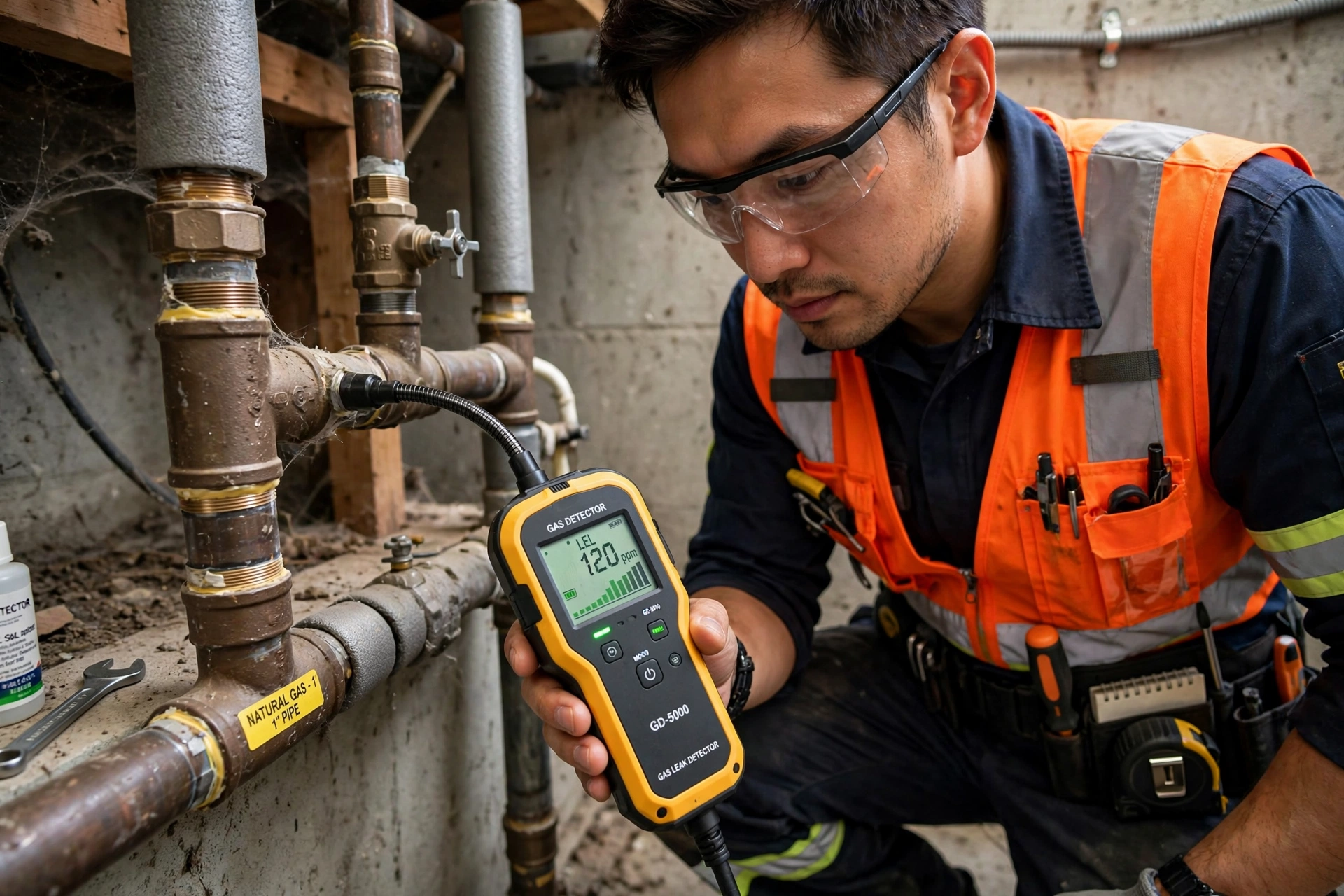
Thorough Inspections
We inspect Taylor’s older steel gas systems end to end — meter risers, threaded joints, shutoff valves — and evaluate new-construction systems for builder-phase defects, so nothing is left to guesswork.
Our Taylor gas line service covers the full range: inspections and repairs for the town’s aging in-town steel systems, plus code-compliant installations for new construction and outdoor projects on the growing outskirts.
We inspect Taylor’s older steel gas systems end to end — meter risers, threaded joints, shutoff valves — and evaluate new-construction systems for builder-phase defects, so nothing is left to guesswork.
From corroded in-town service lines to nicked lines in new subdivisions, our team repairs leaks with high-quality materials built to last in Central Texas clay.
We verify every repair against the National Fuel Gas Code and City of Taylor requirements, including permits and inspections where the project calls for them.
After every repair we pressure-test the full system — not just the repaired section — and confirm all appliances are running safely before we leave.
Taylor's growth keeps the gas infrastructure itself in motion. With the Samsung semiconductor fab pulling development to the outskirts, utility crews are extending mains into new phases, meters are being set in new subdivisions, and the map of underground utilities is a moving target — which is why calling 811 before any digging project in Taylor is not a formality but a necessity. In active development zones, the ground you are about to dig may have changed since the last locate ticket was drawn.
Inside the new homes, builders leave rough-ins and stubs for the standard appliance package — range, dryer, water heater — and that is where many homeowners' projects begin. Upgrading to a professional-style range, adding a gas dryer where the laundry was electric, or converting a water heater all start from those stubs, and each change needs proper sizing, correct fittings, and testing before the appliance is connected.
Then there is outdoor living, which Taylor's new subdivisions embrace fully. Outdoor kitchens, fire pits, fireplaces, and pool equipment are going in across the communities rising near Samsung, and nearly all of them run on gas. Newer neighborhoods often have design guidelines for exterior equipment, so we build any approval steps into the project timeline rather than letting them become a surprise.
We design these outdoor gas projects as complete systems, not add-ons. A master load calculation covers every feature — kitchen, fire features, pool heater — with the underground distribution sized for the total. Lines go in by boring or careful trenching to protect new landscaping and hardscaping, with tracer wire and proper depth throughout, and every branch is pressure-tested. Done once and done right, the underground infrastructure supports whatever the backyard becomes.
Whole-house standby generators are becoming common in Taylor's new subdivisions — families moving in near Samsung expect their homes to keep functioning through any outage — and the generator is only as reliable as its fuel supply. On the in-town side, older homes adding generators face a different question: whether a decades-old gas system can carry the extra load.
A standby generator in the typical residential size draws a large, continuous gas load while running — and it runs alongside everything else the home needs during an outage: heating or cooling, water heating, refrigeration. The combined concurrent demand is the number the fuel system must be designed around, and it is almost always larger than homeowners expect.
In many Taylor homes the existing meter cannot carry the generator plus the house at full load, which means coordinating a meter upgrade with the gas utility — a standard process, but one that belongs in the project timeline from the start. The supply line from the meter to the generator has to be sized for the full load with minimal pressure drop over the actual run length, which is why placement matters: every extra foot of pipe between the meter and the generator is capacity you have to build back with larger pipe.
In Taylor's historic in-town homes, we also evaluate the condition of the existing steel piping before tying in a generator — adding a major new load to corroded lines is the wrong sequence. We handle the complete gas side of generator projects: system evaluation, load analysis, line sizing, meter coordination, piping, connection, and testing under load.
Gas leak detection in Taylor has to account for both eras of the town's housing. In the in-town historic district, we are working with pre-1960 threaded steel where corroded risers and loosened joints are the usual suspects. In the new subdivisions near Samsung, we are working with young systems where the likely culprits are builder-phase installation issues, settlement-stressed connections, or damage from the construction activity that surrounds new neighborhoods.
That construction activity is a real factor. In active development zones, underground utilities get nicked and lines get disturbed as grading, trenching, and heavy equipment move through. It is also why 811 locating is critical in Taylor: before any digging project on your property, call 811 and get the lines marked. Utility records in a fast-changing development zone can lag behind what is actually in the ground.
Our diagnostic process is systematic. Pressure testing confirms whether a leak exists and how significant it is. Then we isolate — indoor versus outdoor, branch by branch — to narrow the problem to one part of the system. In homes with outdoor gas features, each branch gets tested on its own: the house system, the pool heater line, the outdoor kitchen run, the generator feed. Pinpointing uses electronic detection for accessible joints and specialized equipment for underground runs.
Once the leak is found, we repair it properly and re-test the entire system — not just the repaired section. You get a clear explanation of what failed, why it failed, and what the rest of your system looks like, because in Taylor, the rest of the system may belong to a different era than the part that just failed.
01
What we do: Contact us for gas line repair in Taylor. Our technicians isolate the leak, make a safe repair, and test the system before restoring service — whether it’s a historic downtown home or a new build near Samsung.
→ This ensures your home is safe and eliminates the risk of gas exposure.
02
What we do: Our team inspects the gas lines and connections, checking sizing, pressure, and joint condition — in older Taylor homes this often traces back to aging steel or an obsolete valve.
→ You'll enjoy improved efficiency and reliability from your gas appliances.
03
What we do: We provide gas line servicing in Taylor for new appliance hookups — ranges, dryers, water heaters, and outdoor equipment — sized and tested to code.
→ This guarantees that your new appliances operate safely and effectively.
Gas line work in Taylor means working across Williamson County codes and two very different housing eras. The in-town pre-1960 housing stock brings original threaded steel gas lines, corroded risers, and obsolete valves that need careful repair or replacement. The fast-growing outskirts near the Samsung fab bring new subdivisions where the work is proper rough-ins, CSST bonding verification, and outdoor living gas systems. East of town, clay soils move with the seasons and stress buried lines. We plan every job around the era of home we’re standing in.
Downtown Historic District
Taylor’s railroad-era blocks still run on some of the oldest steel gas lines in town — corroded risers and aging threaded joints are our most common finds here.
Murphy Park Area
Established homes around Murphy Park mix mid-century originals with renovations, where we handle appliance hookups, system updates, and leak repairs.
New Subdivisions Near Samsung
The communities growing around the Samsung fab need code-compliant new installations, outdoor gas rough-ins, and thorough new-construction inspections.
Expansive clay soils east of town
Seasonal soil movement puts stress on buried gas lines and threaded joints, which is why regular inspections and pressure testing matter in Taylor.
Aging pre-1960 steel gas lines
Original threaded steel, corroded risers, and obsolete valves are the norm in Taylor’s in-town housing stock — repair or replacement plans start with a full system evaluation.
Our Taylor gas line repair services address the issues this town’s two eras of housing create — from aging steel to new-construction defects.
Problem
Pre-1960 threaded steel, corroded risers, and obsolete valves in Taylor’s in-town housing stock create real leak risks.
Our Fix
We repair or replace failing steel sections with code-compliant materials and pressure-test the full system.
Problem
Builder-phase installation issues and settlement-stressed connections can show up within the first years of a new home.
Our Fix
We diagnose installation defects, correct sizing and bonding issues, and verify the system passes inspection standards.
Problem
Undersized or deteriorated piping starves appliances — weak flames, poor heating, and appliances that won’t run together.
Our Fix
We measure actual demand against pipe capacity and upsize or re-route runs so every appliance gets full pressure.
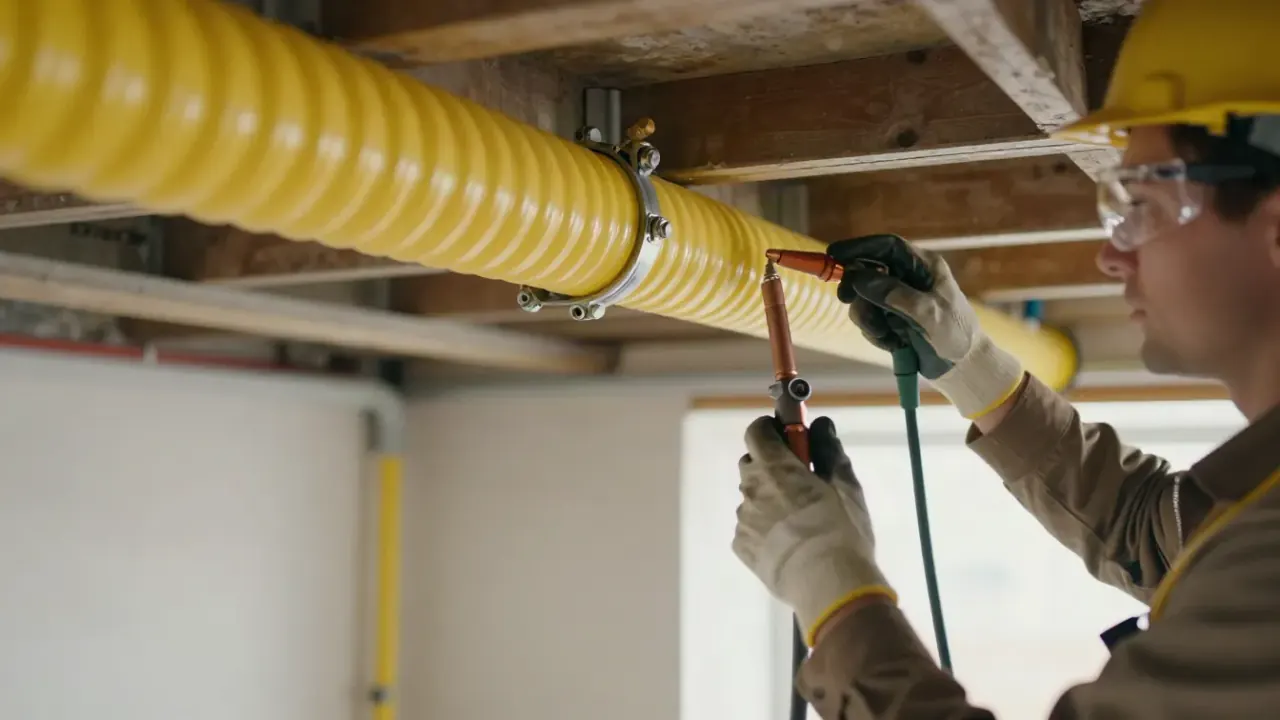
Investing in gas line repair in Taylor pays off in safety, efficiency, and code compliance — whether the home is 70 years old or brand new.
Enhanced Safety
Repairing corroded joints and aging steel in Taylor’s older homes — and catching defects in new ones — keeps gas where it belongs and families safe.
Increased Efficiency
Correctly sized and leak-free lines help appliances run at full strength, which matters during Central Texas cold snaps when heating demand peaks.
Longer Lifespan
Timely gas line servicing in Taylor protects both original systems and new installations, extending the life of every connected appliance.
Compliance with Codes
Our repairs meet the National Fuel Gas Code and City of Taylor requirements, so permitted work passes inspection the first time.
Gas line repair costs in Taylor depend on the home’s era as much as the repair itself: a straightforward appliance hookup in a new subdivision is a small job, while repiping corroded steel in a historic downtown home is a bigger project. Factors such as the extent of damage, materials used, and labor involved shape the final price. We assess every project in person and provide a clear written estimate before any work begins.
Typical Investment Range
$180 - $450 depending on scope
Every estimate is itemized, so you can see exactly what the scope covers before we start.
What changes the price
Extent of Damage
A corroded in-town service line or a full repipe needs more materials and labor than a single joint repair.
Materials Used
The pipe material and routing matter — replacing old steel with polyethylene or running CSST through a finished historic home each carry different labor and material profiles.
Labor Intensity
Retrofit work in finished historic homes takes more time and care than open new-construction work.
Google ★★★★★4.9
Quick response and professional service! They fixed my gas leak within hours. Highly recommend!
Yelp ★★★★★4.8
Excellent service! The team was knowledgeable and friendly. They explained everything clearly.
BBB ★★★★★4.7
Very satisfied with the gas line repair. They were prompt and thorough in their work.
Our team works across Taylor’s two housing eras — from careful repair of pre-1960 steel systems downtown to code-compliant installations in the new subdivisions — with the training and tools for both.
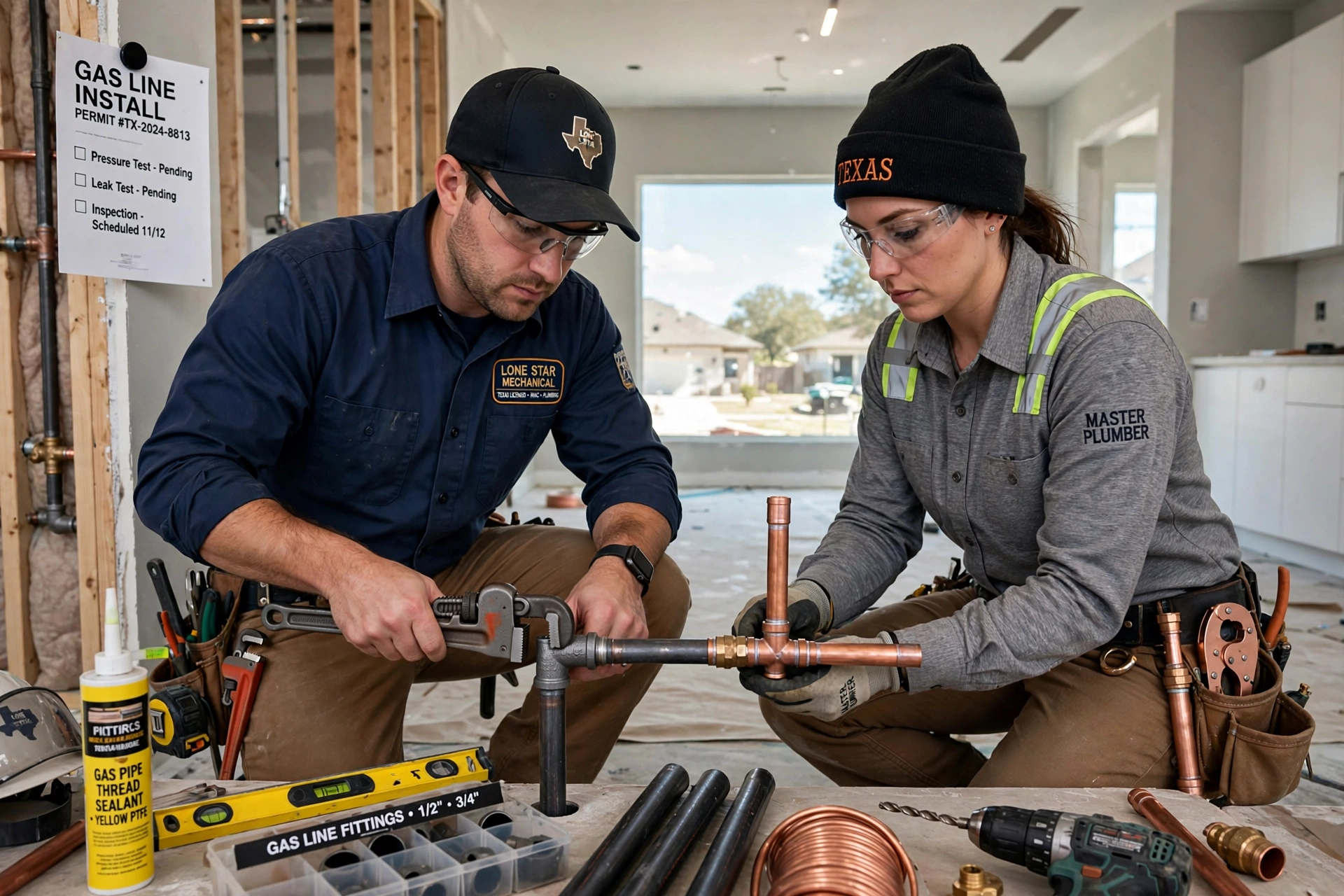
Real experiences from customers who chose our Gas Line Repair services.
“I had a gas leak in my home, and the team responded quickly. They were professional and resolved the issue within hours. Highly recommend!”
Sarah T.
Homeowner, Taylor
“Their gas line repair service was excellent. They explained everything and worked efficiently. I felt safe knowing my gas lines were in good hands.”
Mark L.
Business Owner, Taylor
“I appreciated their 24/7 emergency service. When I had a problem late at night, they were there within an hour. Great service!”
Emily R.
Resident, Taylor
Much of in-town Taylor’s housing stock predates 1960, and the gas systems in those homes are often original: threaded steel pipe, aging joints, corroded meter risers, and shutoff valves that no longer meet modern standards. Whether it’s still safe depends on its condition, which is why we start with a full evaluation — visual inspection of accessible piping, a pressure test of the entire system, and a review of capacity against your current appliances. Some systems are sound with targeted repairs; others have reached the point where replacement is the safer investment. We give you an honest written assessment either way.
Costs follow scope more than anything else. A single appliance hookup is a small, contained job; a whole-house repipe of aging steel, a new outdoor living gas system, or a generator installation is a major project with design, trenching, and testing phases. Material and method matter too — replacing an underground steel service line with polyethylene, running CSST through an existing home, or boring under finished landscaping each carry different labor profiles. New construction near Samsung is generally more straightforward than retrofit work in the historic district, where finished walls and older infrastructure slow things down. We assess every project in person and provide a detailed written estimate before any work begins.
New doesn’t mean flawless. In Taylor’s fast-growing subdivisions, we check CSST bonding and grounding — one of the most valuable inspections for homes built in the CSST era — verify proper appliance sizing and pressure at every outlet, and confirm the meter and main line have capacity for your planned appliances plus future additions like an outdoor kitchen or generator. A new-construction gas inspection catches builder-phase defects while they’re still easy to correct, and it establishes a baseline for the home’s system going forward.
The standard indicators apply everywhere: a rotten-egg gas odor near appliances or outdoors, hissing at joints or the meter, dead vegetation in a strip along the underground line route, and gas bills that rise without increased usage. In Taylor, add local notes: on in-town historic homes, watch corroded meter risers and the service line route for odor or corrosion; east of town, where clay soils move seasonally, pay attention to any new odors after wet or dry spells. Any of these signs warrants a professional inspection.
The City of Taylor generally requires permits and inspections for new gas line installations and significant repairs or replacements, and properties in unincorporated Williamson County have their own requirements. The exact rules depend on the project’s scope and location. Homes in the downtown historic district may also face additional review for exterior work. We advise on what your specific project requires and make sure the work is installed to code and ready to pass inspection.
Yes — outdoor living gas lines are a growing part of our Taylor work, especially in the new subdivisions. Outdoor kitchens, fire pits, patio heaters, and pool equipment all need properly sized supplies designed as one system: we calculate the total outdoor load, verify your meter and main line capacity, route underground lines to protect landscaping, and pressure-test everything. In newer communities with design guidelines, we work any approval steps into the project plan.
New gas line installation for Taylor homes — from appliance hookups in historic homes to full rough-ins in new subdivisions — sized, tested, and code-compliant.
View Gas Line InstallationComplete gas system inspections for Taylor’s older steel lines and new-construction systems, catching corrosion, defects, and sizing issues early.
View Gas Line InspectionPinpoint gas leak detection across Taylor, from corroded in-town service lines to settlement-stressed connections in new subdivisions.
View Gas Leak DetectionSafe gas hookups for ranges, dryers, water heaters, and outdoor equipment in Taylor homes of every era.
View Gas Appliance HookupWe're here to help Taylor homeowners and businesses with gas line needs — from historic in-town repairs to new-construction installs. Reach out during business hours for quick responses.
Phone
(512) 877-2533Address
1789 S Bagdad Rd, Leander, TX 78641, USA, Leander, Texas
Hours
Mon–Fri: 7AM – 7PM
Sat: 8AM – 4PM
Sun: Emergency Only
24/7 Emergency Available