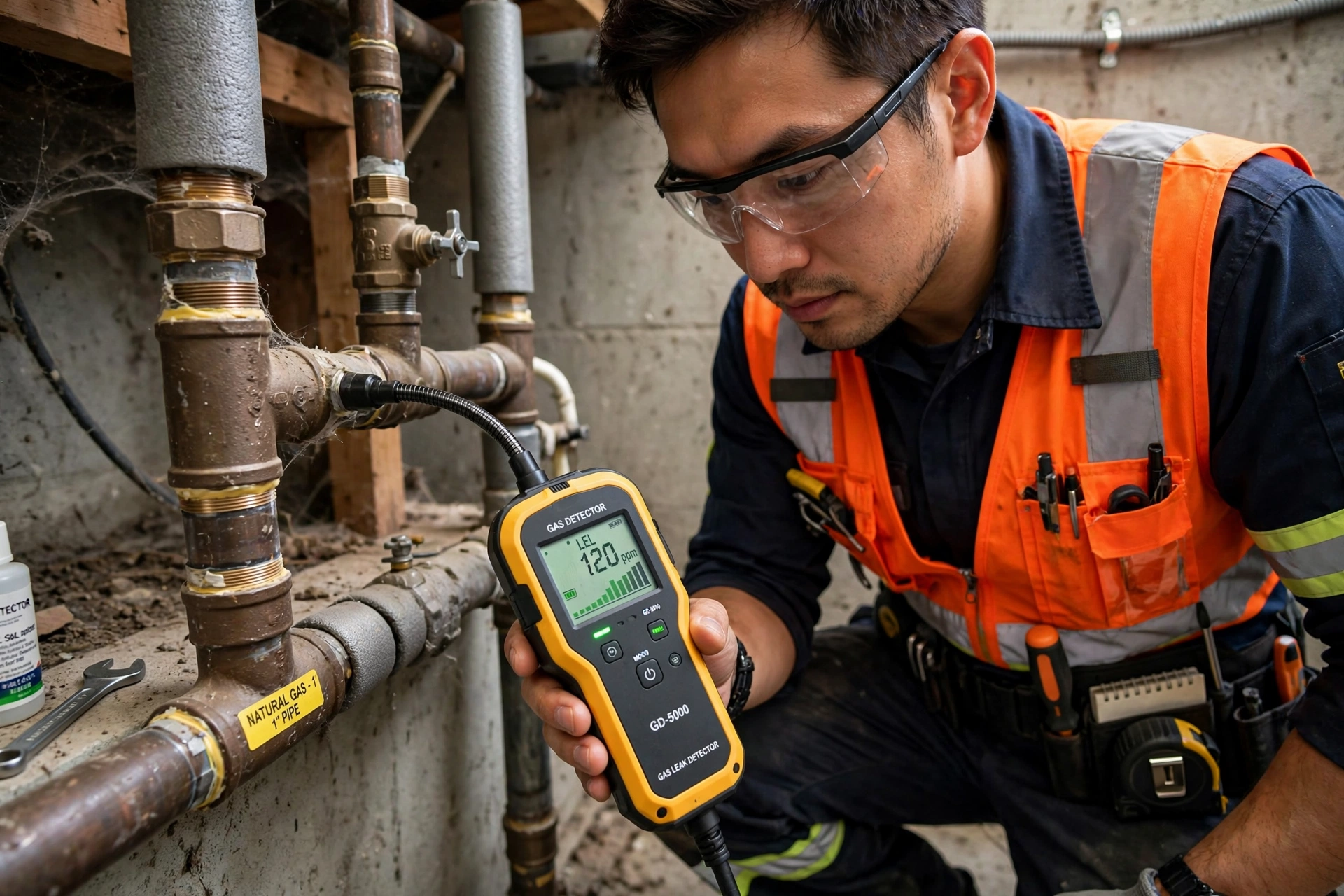
Thorough Inspections
We conduct detailed inspections to identify any issues with your gas lines, ensuring that all potential problems are addressed.
Our gas line repair service includes comprehensive inspections, repairs, and necessary replacements to ensure your gas lines are safe and functional.
We conduct detailed inspections to identify any issues with your gas lines, ensuring that all potential problems are addressed.
Our team specializes in repairing leaks, using high-quality materials to ensure a long-lasting solution.
We ensure all repairs comply with local codes and safety regulations, providing peace of mind for homeowners.
After repairs, we perform safety tests to ensure your gas lines are leak-free and functioning correctly.
The gas line problems we see in Round Rock trace back to three forces: distance, age, and ground. Which one is working on your property determines both the symptoms you notice and the fix that actually lasts.
Distance is the large-lot factor. A yard line running a hundred and fifty feet from meter to house passes through changing soil, crosses root zones, and expands and contracts with temperature across its whole length. The stress concentrates where the pipe cannot move: at the riser where it comes out of the ground at the meter, at the wall penetration where it enters the house, and at every rigid joint in between. When a Round Rock homeowner reports a problem, those transition points are the first places we check.
Age is the farmhouse factor. Buried bare steel from the seventies and eighties is now well into the corrosion window, and indoor black iron of the same vintage develops leaks at threaded joints as old pipe dope dries and houses settle. If your home is more than thirty years old and no one has ever evaluated the gas piping, an inspection is simply prudent — it costs far less than the emergency call that finds you otherwise.
Ground is the factor no one escapes. Round Rock sits on expansive clay that swells in the spring rains and shrinks in the summer heat, working every buried joint year after year. In low spots the water table runs high, keeping steel pipe wet for months at a time and accelerating corrosion from the outside in. Clay plus water plus time is the formula behind most underground failures we repair in this area.
New gas line work in Round Rock generally falls into four buckets: adding an appliance inside the home, building out outdoor living, serving an outbuilding or workshop, and piping new construction. The planning differs for each, but one question comes up in nearly every Round Rock job: natural gas or propane?
In the newer subdivisions, the answer is usually natural gas — mains were extended with the development, and connecting is a matter of a service line, a meter set, and proper sizing. On outlying acreage beyond the mains, propane is the practical fuel: a tank set on the property feeds the house and outbuildings through its own regulator and yard lines. We install and extend piping for both, and we size regulators, pipe diameter, and meter or tank capacity around the total load so the system performs at full demand rather than just on installation day.
Sizing is where amateur work fails and careful work earns its keep. Every appliance has a BTU rating, and the piping has to carry the combined load of everything running at once — furnace, water heaters, range, dryer, fireplace, plus whatever is new. Undersize the pipe and the farthest appliance starves when everything fires together: burners that will not stay lit, tankless heaters that cut out mid-shower, a generator that stumbles under load. We calculate the full connected load first, then size the pipe.
For new construction and major additions, we install the complete distribution system from the meter or tank regulator to every appliance stub, coordinated with the builder's schedule so rough-in lands at the right phase. Everything is pressure-tested before walls close, and the system is documented — including tracer wire on every buried run — so the next person who digs on that lot knows exactly where the gas is.
A suspected gas leak is the one call that should never wait. Natural gas itself is odorless; the rotten-egg smell is mercaptan, added so leaks announce themselves. If you smell gas inside your home, get everyone out, do not flip switches or use phones or garage door openers inside, and call for help from a safe distance away. If the odor is outdoors — near the meter or along the yard line route — keep people and ignition sources clear of the area and call us.
For the less urgent mysteries — a faint odor that comes and goes, a gas bill climbing without explanation, a strip of struggling grass along the pipe route — professional detection finds the answer without tearing up the property. We pressure-test the system to confirm a leak exists and gauge its size, then isolate sections to learn which part of the system is losing pressure. On a Round Rock acreage, that isolation step is what keeps a repair surgical: knowing the leak is in the seventy-foot stretch past the oak tree rather than somewhere in two hundred feet of trench.
Underground, we trace the line route with locating equipment and use electronic detection to pinpoint the fault, then excavate only at that spot. The leaking section is repaired or replaced, the trench is backfilled and compacted properly, and the full system is pressure-tested again to confirm it holds before gas is restored.
Smell is the primary warning. A sulfur or rotten-egg odor near an appliance, in a utility room, or outdoors along the gas line route means gas is escaping somewhere, and it deserves immediate attention even if it seems faint. Mercaptan exists for exactly this purpose — trust it.
01
What we do: Contact us immediately for gas line repair in Round Rock. Our technicians will locate and fix the leak quickly.
→ This ensures your home is safe and eliminates the risk of gas exposure.
02
What we do: Our team will inspect the gas lines and connections to identify any issues affecting performance.
→ You'll enjoy improved efficiency and reliability from your gas appliances.
03
What we do: We provide gas line servicing in Round Rock to ensure safe and efficient installations.
→ This guarantees that your new appliances operate safely and effectively.
Gas line repair in Round Rock requires knowing which generation of piping a house has and which ground it sits on. In the 1970s–80s neighborhoods near Old Settlers Blvd and Gattis School Rd, buried bare steel is deep into its corrosion window and indoor black iron leaks at threaded joints as old pipe dope dries. In 2000s+ subdivisions like Teravista and Sendero Springs, CSST runs through hot attics and needs proper lightning bonding. And across the city's eastern half, Blackland clay's seasonal swelling and shrinking works every buried joint year after year. Our team sizes each job to the house and the ground — no one-size-fits-all fixes.
Cat Hollow
A long-established Round Rock neighborhood where original steel yard lines and 1980s indoor piping are now prime candidates for inspection and replacement.
Teravista
A 2000s-era master-planned community where CSST gas systems are standard — we verify bonding and inspect attic terminations for lightning protection.
Forest Creek
Mid-90s to 2000s builds near Old Settlers Park where mixed piping ages show up as slow appliance performance and pressure drops.
Blackland clay movement in the east
Eastern Round Rock sits on expansive Blackland clay that swells in spring rains and shrinks in summer heat — flexing foundations and stressing every buried gas joint year after year.
Aging steel lines near Old Settlers Blvd and Gattis School Rd
Buried steel installed in the 1970s–80s is deep into its corrosion window here, and indoor black iron of the same vintage leaks at threaded joints as old pipe dope dries.
Our gas line repair services address common issues that can pose risks to your home and family.
Problem
Ignoring gas leaks can lead to dangerous situations, including explosions or health hazards from inhalation.
Our Fix
Our team quickly identifies and repairs leaks, ensuring your gas lines are safe and compliant with local regulations.
Problem
Faulty connections can lead to inefficient appliance operation and increased energy costs.
Our Fix
We repair and replace faulty connections, improving appliance efficiency and reducing energy bills.
Problem
Pressure drops can affect appliance performance, leading to inadequate heating or cooking.
Our Fix
We diagnose and fix pressure issues, ensuring your gas appliances operate at optimal levels.
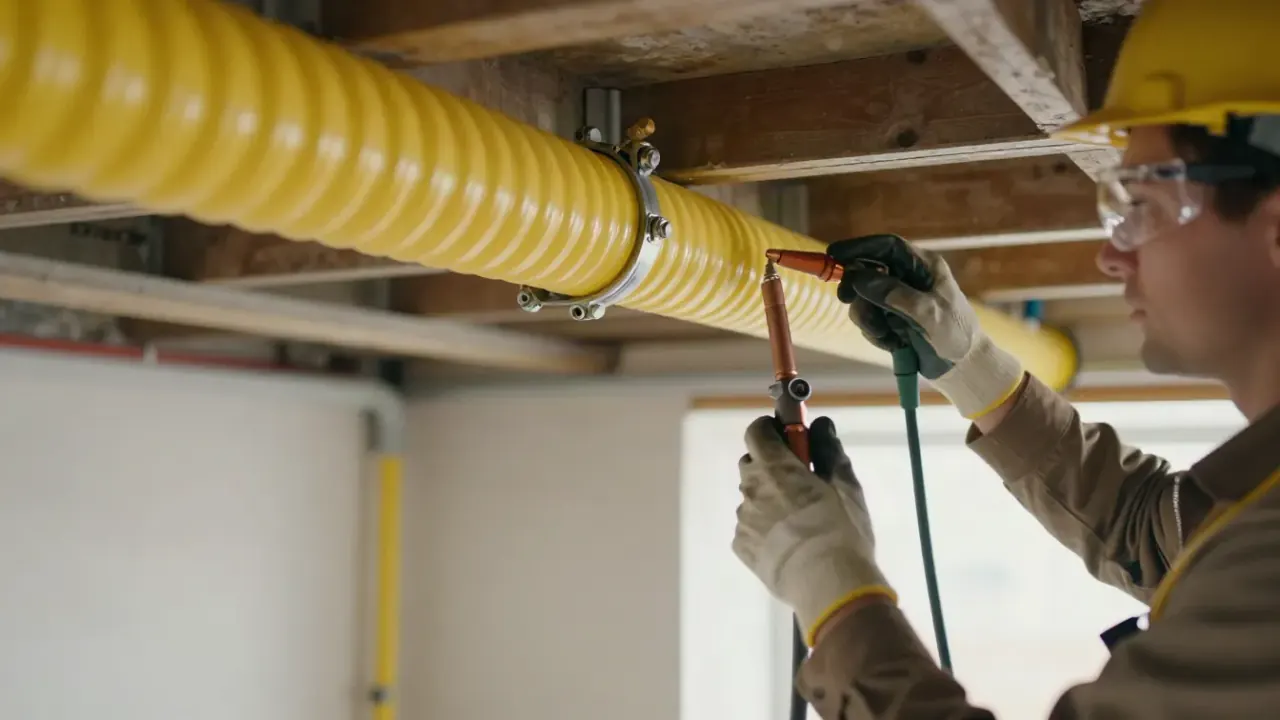
Investing in gas line repair offers numerous advantages that enhance safety and efficiency.
Enhanced Safety
Regular gas line repair significantly reduces the risk of dangerous gas leaks. By addressing potential issues early, homeowners can prevent hazardous situations and ensure their family's safety.
Increased Efficiency
Properly functioning gas lines improve the efficiency of your appliances. This can lead to lower energy bills and a more effective heating system, especially during the colder months in Round Rock.
Longer Lifespan
Timely gas line servicing in Round Rock can extend the lifespan of your gas appliances. By addressing wear and tear, you ensure that your systems function optimally for years.
Compliance with Codes
Gas line repairs ensure compliance with the National Fuel Gas Code (NFGC) and local regulations. This is crucial for avoiding fines and ensuring your home passes inspections.
Gas line repair costs in Round Rock typically range from $180 to $450 in 2026, depending on the complexity of the repair. Factors such as the extent of damage, materials used, and labor involved can affect the final price. Our transparent pricing ensures you know what to expect before we start any work.
Typical Investment Range
$180 - $450 depending on scope
Our pricing reflects the quality of service and materials used, ensuring long-lasting repairs.
What changes the price
Extent of Damage
More extensive damage requires more materials and labor, increasing costs.
Materials Used
The type of piping and fittings required can impact the overall repair cost.
Labor Intensity
Complex repairs that require more time and expertise will cost more.
Google ★★★★★4.9
Quick response and professional service! They fixed my gas leak within hours. Highly recommend!
Yelp ★★★★★4.8
Excellent service! The team was knowledgeable and friendly. They explained everything clearly.
BBB ★★★★★4.7
Very satisfied with the gas line repair. They were prompt and thorough in their work.
With local experience in gas line repair, our team is equipped with the necessary skills and certifications to handle any gas-related issue.
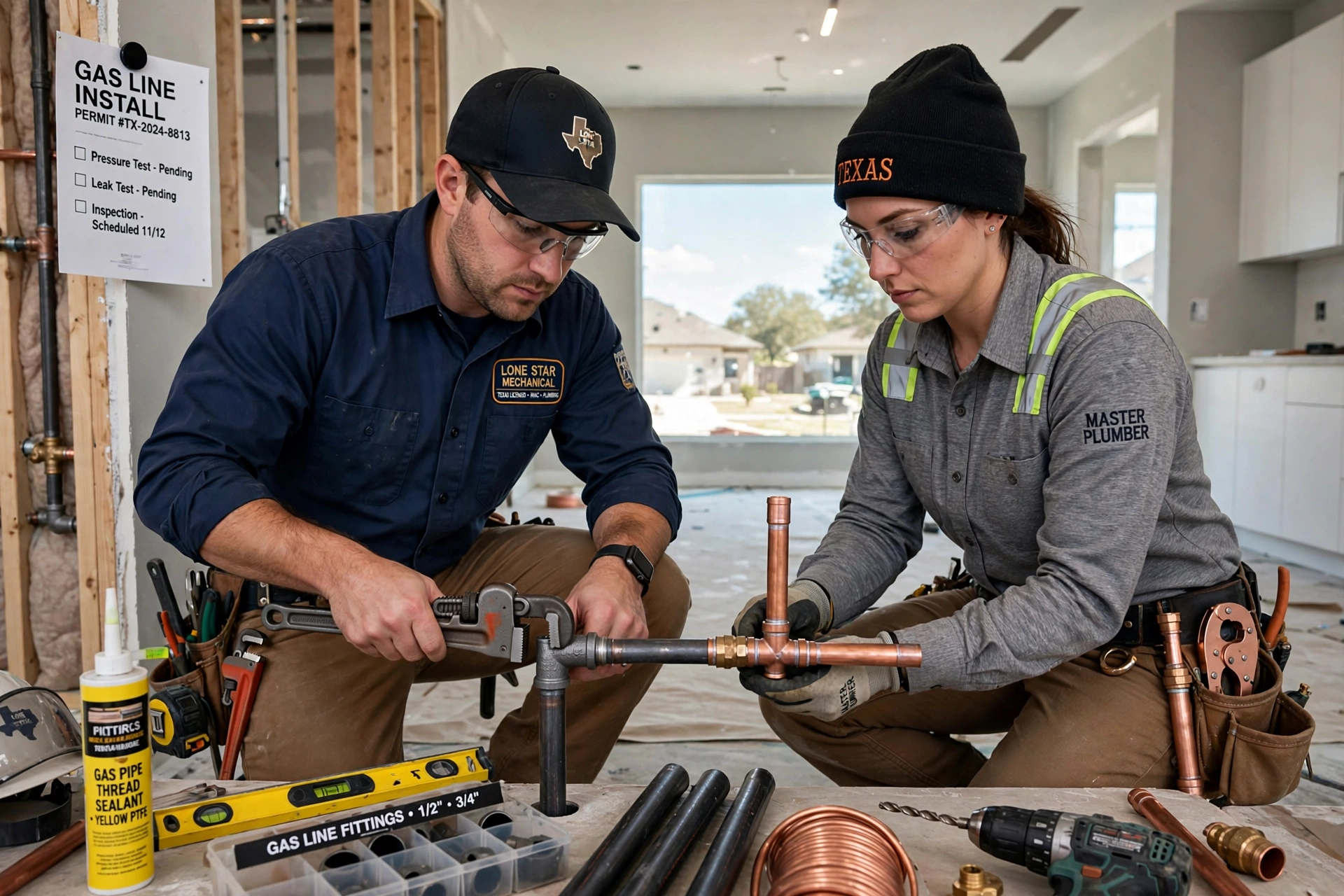
Real experiences from customers who chose our Gas Line Repair services.
“I had a gas leak in my home, and the team responded quickly. They were professional and resolved the issue within hours. Highly recommend!”
Sarah T.
Homeowner, Round Rock
“Their gas line repair service was excellent. They explained everything and worked efficiently. I felt safe knowing my gas lines were in good hands.”
Mark L.
Business Owner, Round Rock
“I appreciated their 24/7 emergency service. When I had a problem late at night, they were there within an hour. Great service!”
Emily R.
Resident, Round Rock
Gas line work in Round Rock is priced on the scope of the job, not a flat figure. The cost factors that matter most are the length of pipe involved — a two-hundred-foot yard line on a larger lot is a different project than a ten-foot indoor repair — whether excavation or trenching is required, the pipe material, how much of the system must be pressure-tested afterward, permit and inspection requirements, and access conditions such as mature trees, concrete, or outbuildings in the work path. We assess every job on site and provide a clear written estimate before work begins, so you know exactly what the repair involves.
Yes — long yard lines are one of our most common Round Rock jobs. We trace the route with locating equipment, pressure-test isolated segments to find the fault, and repair or replace the damaged section, typically upgrading old steel to modern polyethylene with tracer wire. If the line has failed in multiple places, we can replace the entire underground run in one project.
Watch for the smell of gas outdoors along the route from the meter to the house, strips of dead or yellowing grass following the pipe path, hissing sounds near the meter or riser, and gas bills that climb without increased usage. Indoors, a persistent odor near appliances or in utility areas also warrants a check. Any of these signs means the system should be evaluated — call us and we will diagnose it.
It is worth verifying. Homes built during Round Rock's 2000s boom commonly have CSST gas piping, and Central Texas lightning makes proper bonding essential. We check that the system is bonded to the home's grounding, that the tubing is routed and supported correctly with no kinking or fastener damage, and that terminations show no strike-related damage. Where bonding is missing we add it; where tubing is compromised we replace the section. It is a straightforward inspection with clear outcomes — and one of the highest-value safety checks in the newer subdivisions.
Yes. Outdoor kitchens, pool heaters, fire pits, and standby generators are popular across Round Rock's subdivisions, and each needs a properly sized supply. We calculate the total BTU demand of everything on the system, verify the meter has capacity and coordinate a utility upgrade if it does not, run the new underground line at proper depth with tracer wire, and pressure-test before it goes into service.
Round Rock is an incorporated city in Williamson County, so gas line permits and inspections typically run through the City of Round Rock. Requirements vary by project type — new installations and full replacements generally need permits and inspections, while minor repairs may not. We advise on what your specific job requires and make sure the work meets applicable code before inspection.
It depends on the material and the ground it sits in. Older buried steel in Round Rock's clay soil with a high water table often develops corrosion trouble after 25 to 40 years. Modern polyethylene pipe does not corrode and flexes with soil movement, so it lasts far longer when properly installed and bedded. If your property still has original buried steel, an inspection can tell you how much service life it has left.
Our gas line installation service ensures your new gas lines are installed safely and comply with local codes, providing reliable service for your home.
View Gas Line InstallationRegular gas line inspections help identify potential issues before they become serious problems, ensuring the safety and efficiency of your gas systems.
View Gas Line InspectionOur gas leak detection service uses advanced technology to locate leaks quickly, preventing hazardous situations and ensuring your home's safety.
View Gas Leak DetectionWe provide professional gas appliance hookup services, ensuring your appliances are connected safely and function optimally for your home.
View Gas Appliance HookupWe're here to help you with your gas line needs. Reach out during business hours for quick responses and assistance.
Phone
(512) 877-2533Address
1789 S Bagdad Rd, Leander, TX 78641, USA, Leander, Texas
Hours
Mon–Fri: 7AM – 7PM
Sat: 8AM – 4PM
Sun: Emergency Only
24/7 Emergency Available