Gas Line Repair Leander TX
Get Estimate

Gas Fireplace Installation in Leander, TX

A gas fireplace gives you the fire without the work — real flames at the flip of a switch, no wood to haul, no ash to clean, no chimney sweeping. We install gas log sets, fireplace inserts, and complete gas fireplace units in Leander homes, including converting tired wood-burning fireplaces to clean, convenient gas. Every installation gets a properly sized gas supply line, correct clearances, and thorough testing before the first fire.


Fireplace projects sit at the intersection of gas piping, venting, and finish carpentry — which is why they reward a contractor who plans all three together. We handle the gas line sizing and routing, coordinate the venting path, and make sure clearances to mantels and combustibles are right. The result is a fireplace that looks like it was always meant to be there and burns safely for years.

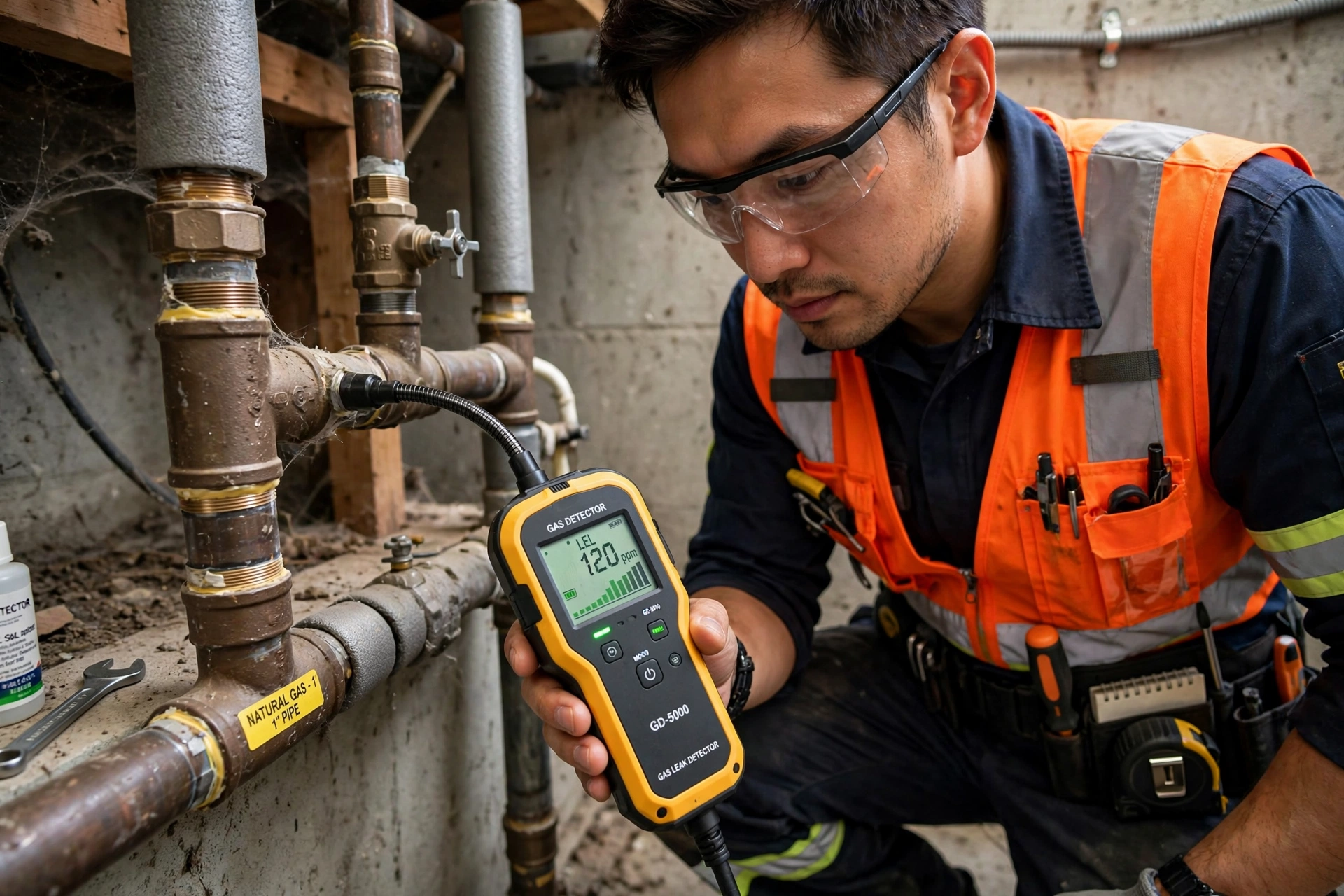
Gas technician applying pipe thread sealant to a galvanized steel fitting on a new fireplace gas supply line in Leander, TX
Experienced Experienced & Bonded
Fully Insured Insured & Bonded
24/7 Emergency Emergency Calls Answered
Careful Workmanship Checked and Tested Before We Leave

Your Gas Fireplace Options: Log Sets, Inserts, and New Units

Not every gas fireplace is the same product, and the right choice depends on what you are starting with — an existing masonry fireplace, a factory-built wood unit, or a blank wall. We install all three of the main options in Leander homes, and we will give you a straight recommendation based on your fireplace, your heating goals, and your budget. Here is how the options compare.

Gas log sets for existing fireplaces

A gas log set drops into your existing wood-burning firebox: realistic ceramic logs over a gas burner, using the chimney you already have. It is the simplest conversion — the firebox, hearth, and chimney stay — and it transforms a fireplace you never use into one you light with a switch or remote. Log sets suit homeowners who want ambiance and convenience from a fireplace that is structurally sound but practically abandoned.

Gas fireplace inserts

An insert is a self-contained gas firebox that slides inside your existing fireplace opening, sealed with a surround panel. Because it is a closed system with its own venting — usually a liner up the existing chimney — inserts are far more efficient than open log sets and actually heat the room rather than sending warmth up the flue. If you want your fireplace to pull real heating duty on cold Leander evenings, an insert is the stronger choice.

New built-in gas fireplaces

For new construction, additions, or rooms with no fireplace at all, we install complete factory-built gas fireplace units — including direct-vent models that vent straight through an exterior wall with no chimney. These give you design freedom: linear modern units, traditional looks, corner installations. The gas line, venting, framing, and finishing all get planned together from day one.

Outdoor gas fireplaces and fire features

The same technology works beautifully outside. We install gas fireplaces and fire features for covered patios and outdoor living spaces — where Leander’s long warm seasons mean you will use them most of the year. Outdoor units need weather-appropriate models and routing, which we plan alongside any patio gas work.

Vented vs. Vent-Free: What Leander Homeowners Should Know

The vented-versus-vent-free question comes up in nearly every fireplace consultation, and it deserves an honest answer rather than a sales pitch. Vented gas fireplaces — including log sets in an open chimney and direct-vent sealed units — exhaust combustion byproducts outside. The flame looks natural, the room air stays clean, and there are no real limits on how long you can enjoy the fire.

Vent-free (ventless) units take a different approach: they burn very cleanly by design and release their heat — and a small amount of combustion byproducts, including water vapor — directly into the room. That makes them highly efficient at heating, since no warmth escapes up a vent. The tradeoffs are real, though: added indoor moisture, a slight odor some people notice, and manufacturer limits on run time and room size.

For most Leander homes, we recommend vented options — direct-vent inserts and units especially. They give you the realistic flame, steady heat, and zero indoor air quality questions, which matters in well-sealed modern homes. Vent-free can make sense in specific situations, like a rarely used secondary space, but it should be a deliberate choice with eyes open — not a default because the box was cheaper.

There is also a middle path many homeowners love: a direct-vent insert in the existing fireplace. You keep the masonry look and the hearth you already have, but gain a sealed, efficient, thermostat-friendly firebox. If your wood fireplace has sat cold for years because of the hassle, this is the upgrade that actually gets used — flip a switch on a chilly January evening instead of building a fire from scratch.

Sizing and Routing the Gas Supply Line

Every gas fireplace — log set, insert, or new unit — needs a gas supply line sized for its BTU rating at its distance from the meter. This is straightforward engineering, but it is where fireplace projects most often go wrong when the gas side is an afterthought. A starved burner produces a weak, uneven flame and can soot up logs and glass; a properly sized line gives you the full, even flame the unit was designed for.

We start with the unit’s rated input and measure the run from the gas supply: through walls, across the attic or crawl space, to the firebox. Longer runs and higher-BTU units need larger pipe — simple physics, but easy to get wrong when someone reuses an old half-inch line that once fed a small log lighter. If the existing piping cannot carry the load, we run a new dedicated line rather than hoping the old one is enough.

Routing takes planning in a finished home. The ideal path is short, accessible, and out of sight — often through the attic and down inside a wall chase, or beneath the house where access allows. We protect the line where it passes through framing, keep it clear of electrical and HVAC, and plan the entry into the firebox so the shutoff valve lands exactly where it should: accessible, but discreet.

Every fireplace gas line gets its own accessible shutoff valve — usually just outside the firebox or in an adjacent cabinet — plus a sediment trap where the piping design calls for one. And before the unit is ever fired, the new piping is pressure tested and every joint leak-checked. Gas work behind a fireplace you cannot easily reach later deserves verification while it is still open.

Placement, Clearances, and Framing

A fireplace is a heat source in a finished room, so clearances — the required distances between hot surfaces or vents and combustible materials — are the safety core of the installation. Every listed gas fireplace and insert ships with manufacturer-specified clearances for the mantel, the surround, the hearth extension, and the venting. We build to those specs exactly, because they are written from testing, not tradition.

Mantels are the most common clearance question. Wood mantels, trim, and built-in shelving near the fireplace opening need specific distances above and beside the firebox, and those distances vary by unit. We verify the numbers for your specific model before the finish carpentry goes in — moving a mantel after it is installed is nobody’s idea of fun.

Venting paths need the same care. Direct-vent units use a sealed coaxial vent — exhaust out, combustion air in — that can run horizontally through a wall or vertically through the roof, with strict limits on length and elbows. Inserts typically get a liner up the existing chimney. We plan the vent route early, because it affects framing, and we never improvise a vent path that the manufacturer did not approve.

For new built-in units, the framing itself is part of the job: a properly dimensioned chase, non-combustible facing materials where required, and access panels where service will one day be needed. A fireplace that looks perfect but cannot be serviced is a future problem — so we frame for the technician who will maintain it ten years from now, not just for today’s photos.

From First Call to First Fire

01

We assess your fireplace and recommend the right unit

What we do: We look at what you have — the existing firebox and chimney condition, the gas supply situation, the room size, and how you want to use the fireplace. Then we recommend the option that fits: log set, insert, or new unit — and explain the tradeoffs honestly, including when keeping your wood setup makes more sense.

→ You get a recommendation based on your home, not on what is easiest to sell.

02

Gas line, venting, and unit go in

What we do: We run or upsize the gas supply line, install the shutoff, set the venting path, and install the unit to manufacturer specs — clearances, framing, and all. The new gas piping is pressure tested before anything is closed up, and the permit inspection happens at the right point in the sequence.

→ The hidden work is verified while it is still visible and reachable.

03

Testing, adjustment, and your walkthrough

What we do: We fire the unit, check the flame pattern, verify ignition and safety controls, leak-check every connection, and adjust the logs or media for the best-looking flame. Then we walk you through operation — lighting, remote or thermostat, and seasonal care — so your first solo fire feels completely routine.

→ You light your first fire knowing exactly how everything works.

Gas Fireplace Installation in Leander Homes

Central Texas winters are mild — until they are not. Most years a gas fireplace in Leander is about ambiance: a warm glow on cool evenings from November through February. But the February 2021 freeze rewrote everyone’s sense of what “prepared” means, and a gas fireplace with a standing pilot or battery-backup ignition kept more than a few living rooms livable when the power failed. It is comfort most days and resilience on the worst one.

Where We Install Gas Fireplaces

  • Crystal Falls

    Many homes here have factory-built wood fireplaces that rarely get used — prime candidates for gas insert conversions that turn a cold decoration into the warmest seat in the house.

  • Travisso

    Hill Country homes where outdoor living meets indoor comfort; we install interior gas units here alongside patio fire features for year-round enjoyment.

  • Bridlewood

    Established homes with original masonry fireplaces — gas log sets and inserts breathe new life into fireboxes that have sat unused for years.

Local Conditions We Factor In

  • Hard freezes and power outages

    The 2021 freeze taught Central Texas that heat cannot depend entirely on the grid. A gas fireplace with pilot or battery-backup ignition provides warmth even during outages — worth discussing when you choose your unit.

  • Expansive clay soil and slab foundations

    Most Leander homes sit on slabs over clay that moves seasonally. Gas lines routed beneath or through the slab need protection from that movement — we plan routing and sleeving with local soil behavior in mind.

Talk Through Your Fireplace Project With Us

Call Gas Line Repair Leander TX at (512) 877-2533 and tell us about your fireplace — what you have now and what you want. We will explain your options, check what your gas supply can support, and give you a clear quote for the full installation.

Fireplace Problems We Solve in Leander

Fireplaces cause a special kind of frustration: a beautiful feature of the home that never gets used. These are the situations we turn around most often.

Problem

A wood fireplace nobody uses anymore

It is dirty, it is drafty, the chimney needs sweeping, and building a fire feels like a project — so the fireplace sits cold year after year.

Our Fix

We convert it to gas — a log set for simplicity or an insert for real heating. The masonry character stays; the hassle goes. Most homeowners tell us they use the fireplace more in the first month than in the previous five years.

Problem

No gas line where the fireplace is

You want gas, but the nearest gas piping is on the other side of the house — or there is no gas service to that room at all.

Our Fix

We route a new dedicated gas line to the firebox: sized for the unit, cleanly run through attic or beneath the home, with an accessible shutoff. Distance is a planning factor, not a dealbreaker.

Problem

An old gas unit with a weak or sooty flame

Yellow, lazy flames, soot on the logs or glass, or a pilot that will not stay lit — signs of a fuel, venting, or burner problem that only gets worse.

Our Fix

We diagnose whether the issue is gas supply, the burner, or venting — then repair or replace as makes sense. If the unit itself is past its prime, we will say so honestly and quote the replacement.

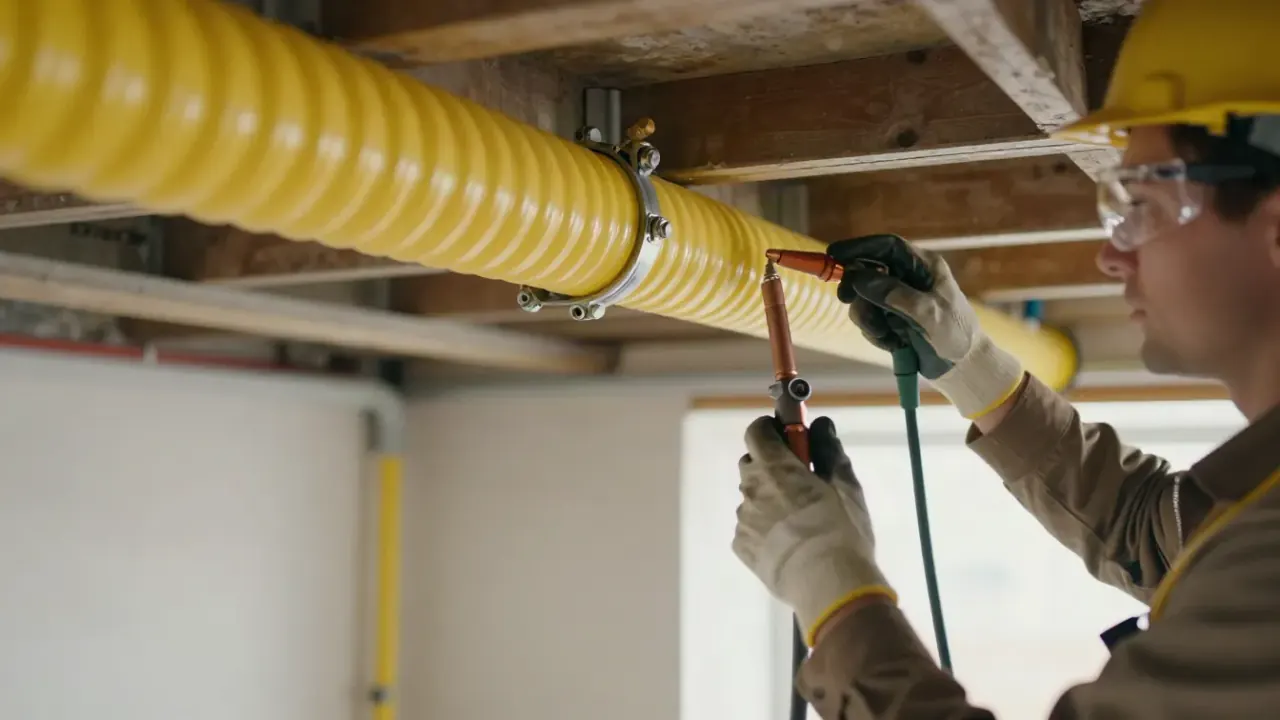
Finished yellow CSST gas line run feeding a fireplace installation in a Leander, Texas home

Benefits of a Gas Fireplace

Ask anyone who converted from wood to gas and you will hear the same thing: they should have done it years earlier. Here is why.

  • Instant fire, zero chores

    Flip a switch or press a remote and you have flames — no hauling wood, no kindling, no ash bucket, no chimney sweep scheduling. When the evening is done, the fire is off in seconds. The convenience is what turns a fireplace from decoration into a daily pleasure.

  • Real supplemental heat

    A gas insert or direct-vent unit actually warms the room — many Leander homeowners find their fireplace handles chilly evenings without touching the central heat. Zone heating the living space you are actually in, rather than the whole house, is simple efficiency.

  • Cleaner air and a cleaner home

    No wood smoke, no ash dust on the furniture, no sparks or embers to worry about. Sealed direct-vent units do not even use your indoor air for combustion. For households with allergies or anyone tired of the mess, the difference is immediate.

  • Reliable warmth when it matters

    On an ordinary winter evening, a gas fireplace is ambiance. During a power outage in a hard freeze — and Leander has seen one — a unit with pilot or battery-backup ignition is a heat source that does not need the grid. Comfort plus resilience.

Gas Fireplace Installation Cost in Leander

Fireplace projects vary widely — a simple log set in an existing firebox is a different job than a new direct-vent unit requiring a long gas run and venting. Call (512) 877-2533, describe your fireplace and what you want, and we will give you a clear quote covering the unit, the gas line, the venting, and the finishing. You will know the full picture before we begin.

How we price the work

Based on the unit, the gas run, and the venting — call for a clear quote

Our quotes break down what the project actually involves: the fireplace unit or insert itself, gas line sizing and routing, venting components, and any framing or finishing. Straightforward numbers, no padding, no surprises.

What changes the price

01

The unit you choose

A basic log set costs less than a high-efficiency direct-vent insert or a linear designer unit. We will show you options across budgets and explain what the extra money buys.

02

Length and difficulty of the gas run

A fireplace near existing gas piping is a short run; one across the house needs more piping and labor. We measure the actual route and price it honestly.

03

Venting and finishing

Chimney liners, direct-vent terminations, framing, and surround finishing all add scope. We plan these with you upfront so the quote reflects the finished project — not just the box.

Our Approach to Every Gas Job

How We Work

  • Fuel-gas code practices — fireplace gas lines installed to fuel gas code practices and local requirements
  • Manufacturer specs, followed exactly — clearances, venting, and framing built to the unit’s listed instructions
  • Tested before the first fire — new piping pressure tested and every joint leak-checked before lighting

Our Experience With Fireplaces in Leander

Fireplace installation rewards contractors who respect all three trades involved — gas, venting, and finish. Here is what we bring to your project:

  • Gas log set, insert, and built-in unit installations across Leander, from simple conversions to new construction.
  • Gas line sizing and routing for fireplace BTUs — including long runs through attics and beneath homes.
  • Venting planning: chimney liners for inserts and direct-vent terminations for new units, per manufacturer specs.
  • Clearance verification and finish coordination, so the fireplace looks right and services easily for years.
Get Started Today
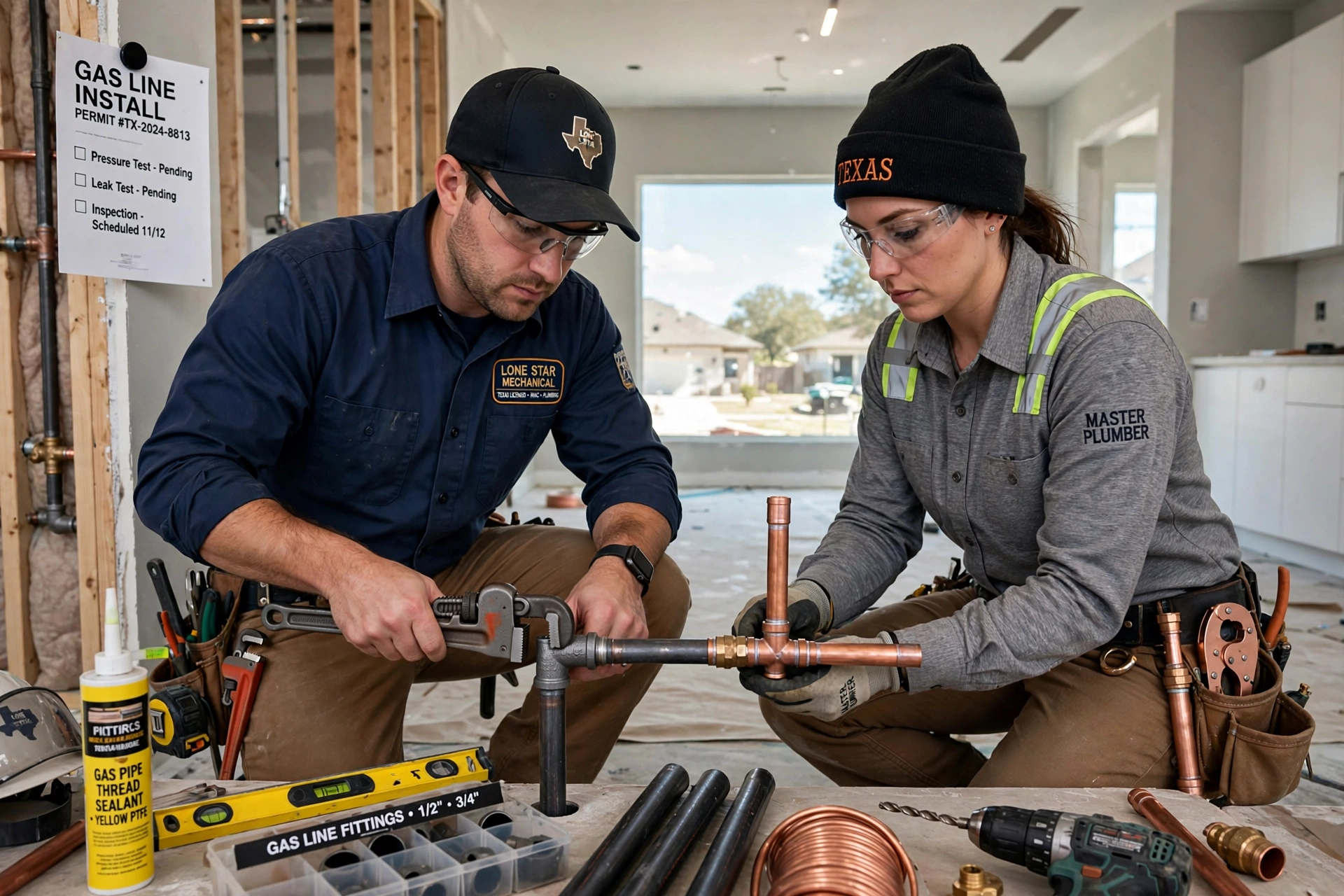
Technician wearing safety glasses tightening a gas pipe fitting with a large wrench during a fireplace install in Leander, TX

Frequently Asked Questions

Can you convert my wood-burning fireplace to gas?

In most cases, yes. If the firebox and chimney are structurally sound, we can install a gas log set using the existing chimney, or fit a gas insert with a new chimney liner for much better heating efficiency. We start by inspecting the fireplace’s condition — a deteriorating firebox or chimney may need masonry attention first, and we will tell you honestly if that is the case. Then we run the gas line, set the unit, and handle the venting. Call (512) 877-2533 and we will assess what you have.

Should I choose vented or vent-free gas logs?

We generally recommend vented for Leander homes. Vented units — log sets burning up an open chimney or sealed direct-vent units — give you a natural-looking flame with combustion byproducts exhausted outside and no indoor air quality questions. Vent-free units are more efficient at heating since no warmth escapes, but they add moisture to indoor air and carry run-time and room-size limits. For a fireplace you will actually live with, vented is the choice we stand behind.

Do I need a new gas line for a gas fireplace?

Often, yes — or at least an evaluation of the existing one. Fireplaces draw significant BTUs, and the old half-inch line that once fed a log lighter may not carry a modern insert’s full rating at its distance from the meter. We calculate the load over the measured run; if the existing piping is adequate, we use it — if not, we run a properly sized dedicated line with its own shutoff. Either way, the new piping is pressure tested before the unit is fired.

How long does a gas fireplace installation take?

A gas log set in an existing fireplace with gas already nearby can often be completed in a day. An insert conversion — with a new gas run and chimney liner — typically takes two to three days. A brand-new built-in unit with venting and framing is a larger project, usually the better part of a week including inspections. The permit timeline also factors in. Describe your project when you call (512) 877-2533 and we will give you a realistic schedule.

Will a gas fireplace actually heat my room?

It depends on the type. Open gas log sets are mostly ambiance — beautiful, but much of their heat goes up the chimney. A gas insert or direct-vent unit, on the other hand, is a genuine heater: sealed combustion, efficiency far above an open fireplace, and many models with thermostats or remotes. Plenty of our Leander customers heat their main living area with an insert on chilly evenings without running the furnace. Tell us your heating goal and we will match the unit to it.

What is the difference between a pilot light and electronic ignition?

A standing pilot burns a small flame continuously, so the fireplace lights instantly and — importantly — can still operate during a power outage. Electronic ignition lights the pilot only when you call for fire, saving the small amount of gas a standing pilot uses over a season, but most electronic systems need household power or battery backup to light. After the 2021 freeze, many Leander homeowners specifically ask about outage-proof operation — we will explain both options and help you choose.

Does a gas fireplace need maintenance?

Less than wood, but it is not zero. Annual attention keeps it safe and good-looking: cleaning the glass, checking the burner and logs or media placement, verifying ignition and safety controls, and inspecting the venting. Gas leaves no creosote like wood does, which is the big maintenance win — but the safety controls and venting still deserve a professional eye once a year. We can service the units we install.

Do I need a permit to install a gas fireplace in Leander?

In most cases, yes — gas piping work and new fireplace installations typically require a city permit and inspection in Leander. We handle the permit side and schedule inspections at the right points: gas piping tested before concealment, and the finished installation verified. Permitted work protects you at resale and with insurance, and it is simply how the job should be done.
Get Your Gas Fireplace Installed in Leander

Turn the fireplace you ignore into the one you love. Whether it is a log set conversion, an efficient insert, or a brand-new unit, call now or send a request — we will assess your fireplace, explain your options, and quote the full job.

Call Now Request Service

Get in Touch With Us

Tell us about your fireplace — what is there now and what you are hoping for. We will explain the options that fit your home and give you a clear, complete quote. Reach out during business hours for the fastest response.

Or call us right now at (512) 877-2533 — we answer.

Gas Line Repair Leander TX


  • Address

    1789 S Bagdad Rd, Leander, TX 78641, USA, Leander, Texas

  • Hours

    Mon–Fri: 7AM – 7PM
    Sat: 8AM – 4PM
    Sun: Emergency Only
    24/7 Emergency Available

Call (512) 877-2533 Get Quote
Call Quote