Frequently Asked Questions
Why do gas line quotes vary so much from one home to another?
Because every job is genuinely different. The length of pipe involved, the material, whether it runs exposed, in-wall, or underground, the difficulty of the soil, permit requirements, and whether the fix is a spot repair or a full replacement all move the scope — and the quote reflects the scope. Two homes with the ‘same’ problem can have very different projects behind that problem.
Does homeowners insurance cover gas line repairs?
Most policies cover sudden, accidental damage — a line ruptured by an outside event, for example — but exclude wear, corrosion, and age-related failure. Coverage varies widely by policy, so check yours and ask your agent specifically about utility line coverage before you need it. Either way, document the system’s condition with professional inspections.
Is a permit required for gas line work in Leander?
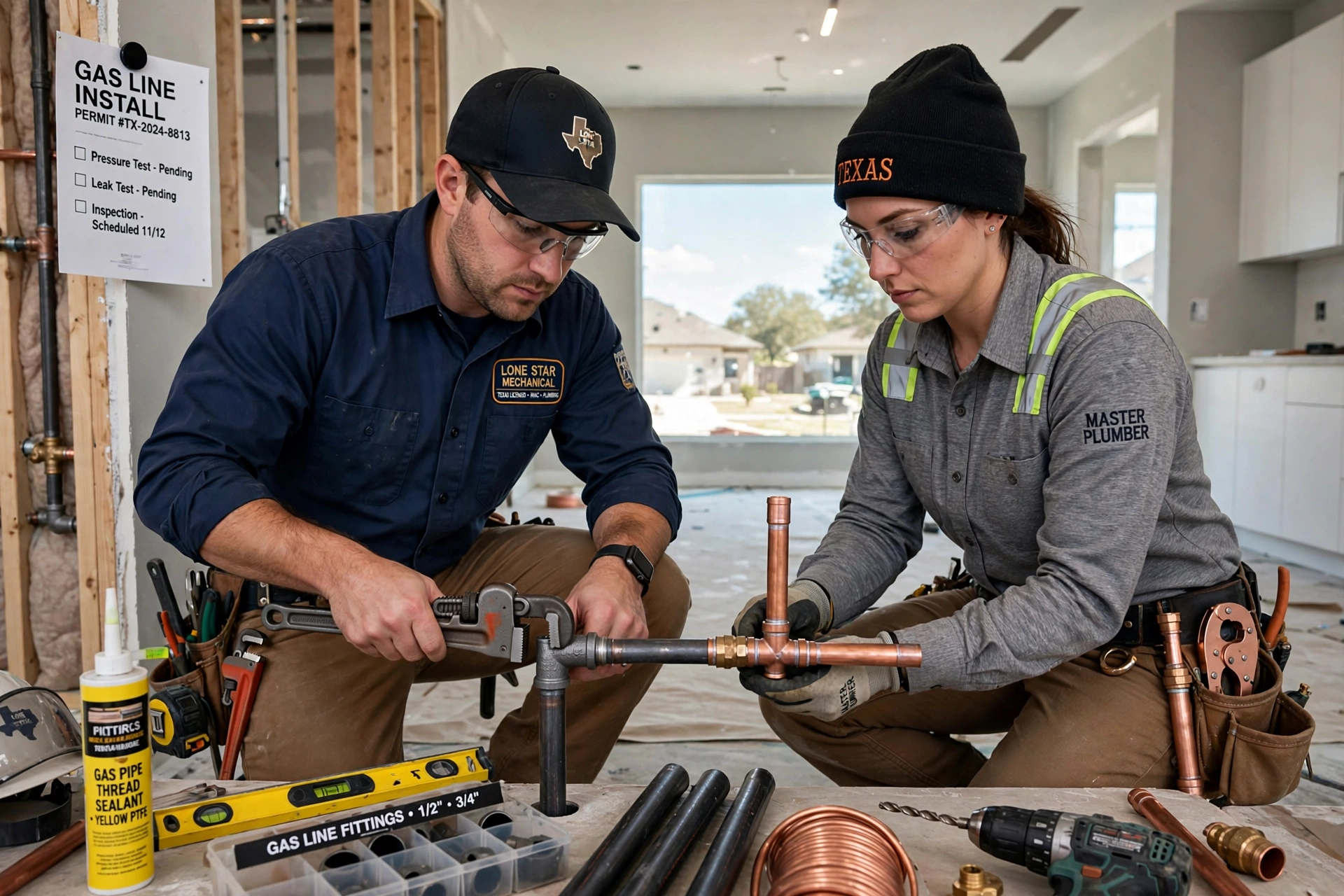
In most Texas municipalities, permits and inspections are required for new gas line installations and significant repairs or replacements. Minor work like replacing an appliance connector may not need one, but anything involving the piping system usually does. A reputable contractor pulls the permit and schedules the inspection as part of the job.
Can I repair or install a gas line myself to save money?
No. Gas piping work involves pressurized flammable gas, code compliance, proper sizing, pressure testing, and inspections — and in most Texas cities it legally requires permits and qualified installers. DIY gas work risks leaks, code violations, failed inspections, and insurance problems. The savings aren’t real if the work isn’t safe and legal.
How long does a typical gas line repair take?
Simple repairs can often be completed in a single visit once the problem is located. Larger projects — underground replacements, repipes, or work requiring permits and inspections — take longer because each stage (excavation, installation, pressure testing, inspection, restoration) has to happen in sequence. Your contractor should give you a realistic timeline with the quote.
What should I ask a contractor before agreeing to gas line work?
Ask whether the quote includes permits and inspection fees, what material will be used and why it suits your soil and location, whether trenching and surface restoration are included, how the repair will be verified, and what the timeline looks like. Clear answers to those five questions separate professional quotes from guesses.